


Lymphoma is a tumor arising from the malignant transformation of lymphocytes. Early symptoms are often non-specific, with common manifestations including lymphadenopathy (swollen lymph nodes), fever, and night sweats.It is classified into two main categories based on histological characteristics: Hodgkin lymphoma and non-Hodgkin lymphoma.
Global prevalence of lymphoma
Lymphoma can occur at any age. The risk of non-Hodgkin lymphoma increases with age;approximately half of diagnosed patients are over 65. Hodgkin lymphoma shows a bimodal age distribution, commonly affecting young adults aged 20–40 and older adults over 55. Incidence is higher in individuals with compromised immune systems;Epstein-Barr virus (EBV) and *Helicobacter pylori* infections are associated with certain subtypes.
Lymphoma staging and symptoms
1.Early symptoms of lymphoma
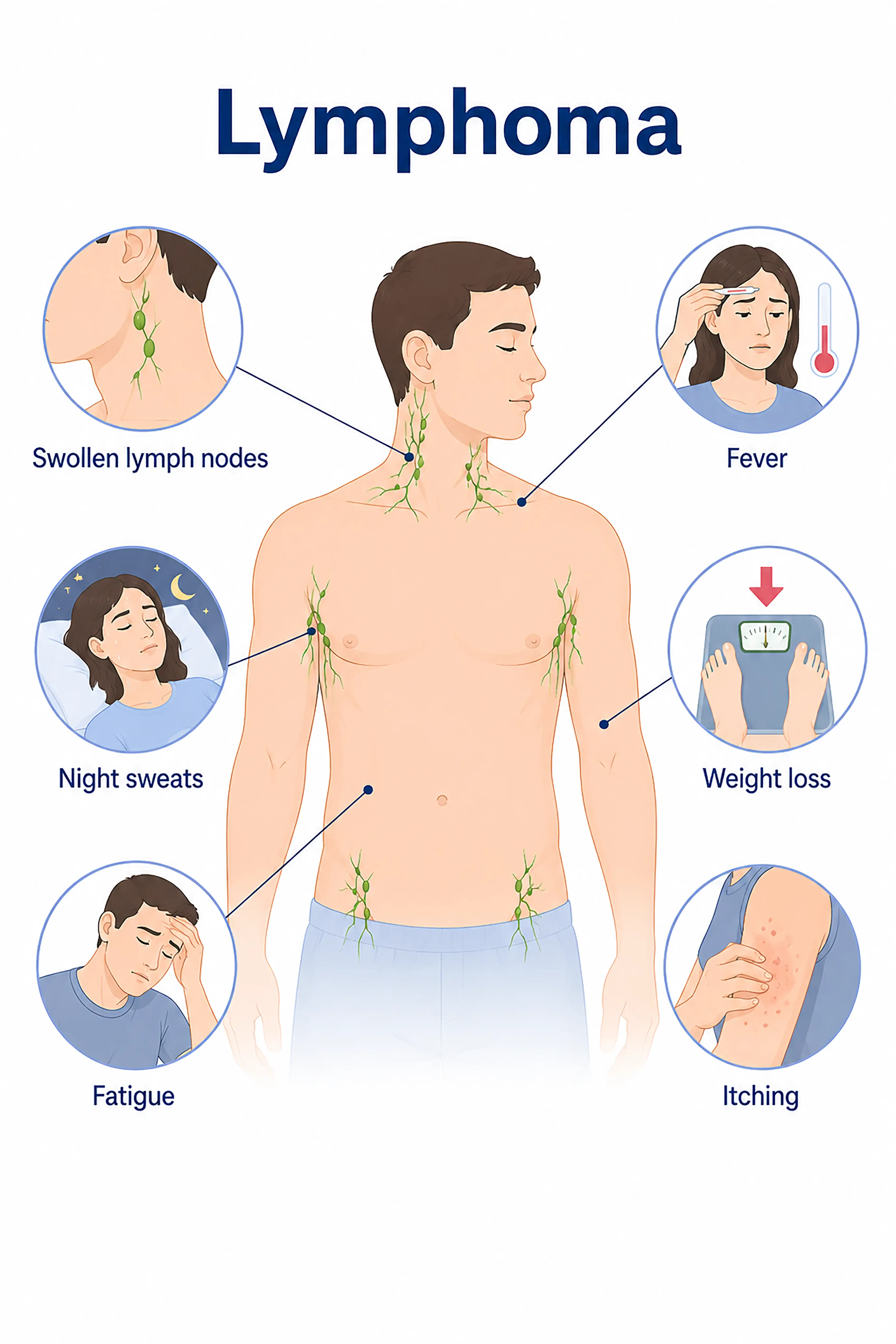
Painless lymph node enlargement;the nodes are firm in texture and mobile, typically located in the neck, armpits, or groin. Without other uncomfortable symptoms, this condition is easily mistaken for inflammation.
2.Intermediate-stage lymphoma symptoms
Lymph nodes enlarge and coalesce into a mass; systemic symptoms such as persistent low-grade fever, night sweats, weight loss, and pruritus (itching) appear, potentially accompanied by fatigue.
3.Advanced lymphoma symptoms
Tumor extensively invades bone marrow and distant organs, leading to severe anemia, liver failure, dyspnea, septic shock, and multi-organ failure.
When to Seek Medical Attention
Early signs of lymphoma include painless swollen lymph nodes, fever, and night sweats.Please consult a doctor via the "Chat with a Doctor" feature for early detection.During the online consultation, the doctor will ask about your symptoms and changes in your lymph nodes, and guide you on undergoing a lymph node biopsy.
Lymphoma staging
Stage 0 lymphoma
This staging system is not applicable to lymphomas.Lymphomas are staged using the Ann Arbor staging system (Stages I–IV) based on the regions of lymph node involvement and distant metastasis.
Stage I lymphoma
Involvement of a single lymph node region; typically manifests as painless enlargement of a single lymph node, with no significant systemic symptoms.
Stage II lymphoma
Involvement of two or more lymph node regions on the same side of the diaphragm, accompanied by multiple enlarged lymph nodes and systemic symptoms.
Stage III lymphoma
Lymph nodes are involved both above and below the diaphragm, accompanied by extensive lymphadenopathy and significant systemic symptoms.
Stage IV lymphoma
Extensive involvement of one or more extranodal organs—such as the bone marrow, liver, and lungs—resulting in functional impairment of the affected organs.
Detailed Symptoms of Lymphoma
1.Enlarged lymph nodes
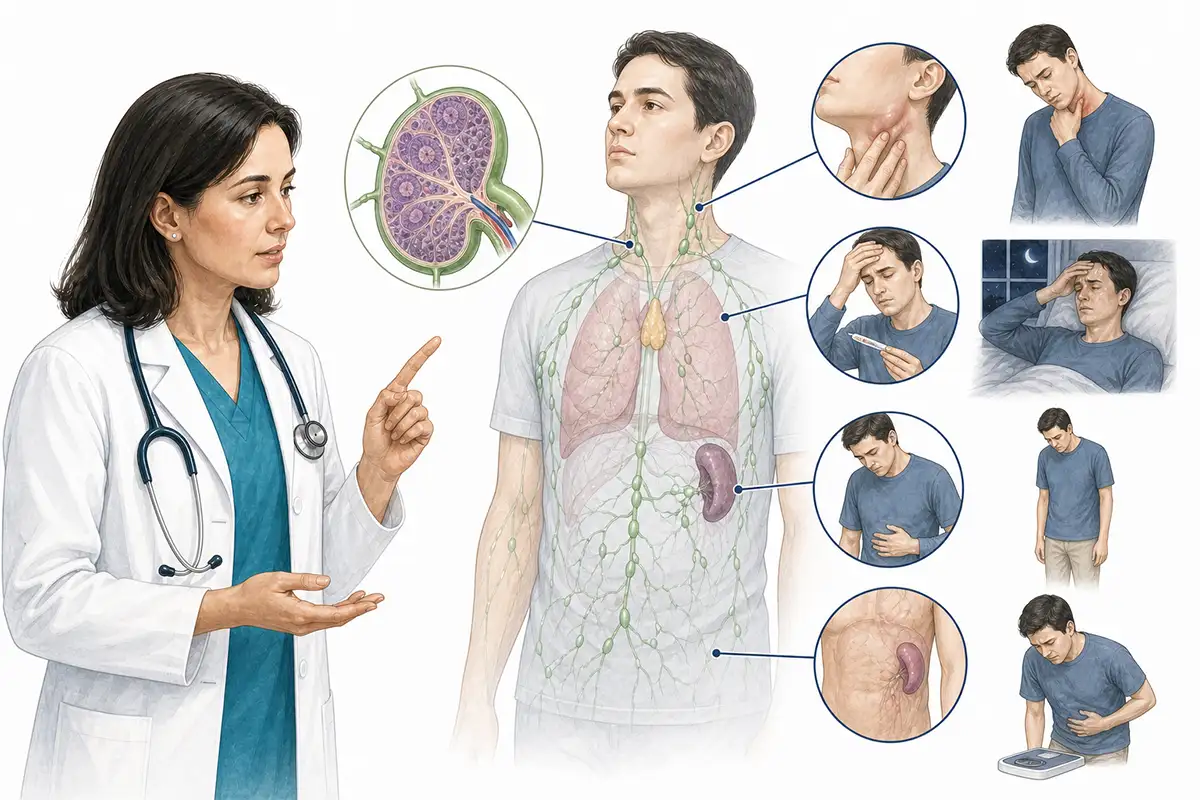
Painless lymphadenopathy is the most common initial symptom; the nodes are firm and mobile, typically located in the neck, axilla, or groin, and usually non-tender.
2.Fever and night sweats
Key characteristics include persistent low-grade fever (around 38°C), significant night sweats, fluctuating body temperature, and fever unrelated to infection.
3.Rapid weight loss
A weight loss of more than 10% within six months, accompanied by loss of appetite and generalized fatigue, is classified as one of the "B symptoms."
4.Severe pruritus
Generalized pruritus—particularly common in patients with Hodgkin lymphoma—is associated with irritation caused by tumor metabolites and responds poorly to standard antipruritic medications.
5.Anemia and fatigue
Bone marrow involvement leads to reduced red blood cell production, resulting in pallor, fatigue, and decreased exercise tolerance.
6.Hepatosplenomegaly
Hepatomegaly and splenomegaly occur, accompanied by right upper quadrant discomfort, abdominal distension, and loss of appetite.
7.Abdominal pain and distension
Enlarged abdominal lymph nodes can cause abdominal pain, distension, symptoms of intestinal obstruction, and ascites.
8Onset of breathing difficulties
Enlarged mediastinal lymph nodes compress the trachea, causing dyspnea and cough; pleural effusion can exacerbate these symptoms.
9.Alcohol-induced pain present
Lymph node pain after alcohol consumption is a characteristic manifestation of Hodgkin lymphoma and serves as a diagnostic clue.
Conclusion
Most cases of Hodgkin lymphoma are curable, whereas the prognosis for non-Hodgkin lymphoma varies by subtype.Accurate pathological diagnosis and staging form the basis for selecting personalized treatment plans.


