


Lymphoma is a tumor resulting from the malignant proliferation of lymphocytes.Lymphocytes—including B cells, T cells, and NK cells—are vital components of the immune system; lymphomas can originate in lymph nodes or extranodal lymphoid tissue.
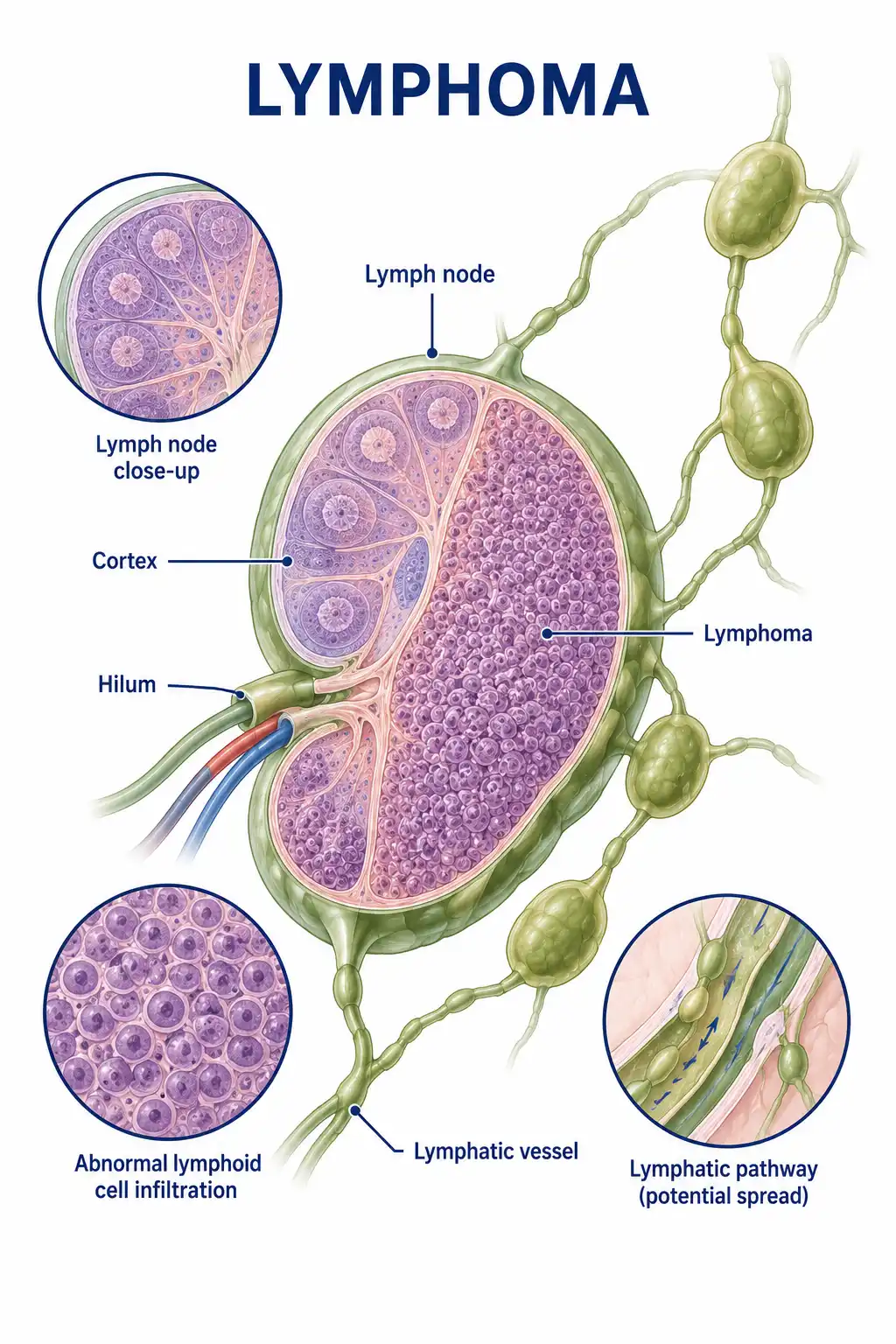
Global overview of lymphoma
Lymphoma is one of the most common malignancies worldwide, with an incidence rate that is rising year by year.Hodgkin lymphoma accounts for 10%–15% of lymphoma cases, while non-Hodgkin lymphoma accounts for 85%–90%.It affects all age groups, with some subtypes being common in children.
Consult a doctor regarding cancer-related issues
Patients presenting with painless lymph node enlargement, fever, night sweats, weight loss, or unexplained anemia should promptly consult a hematologist or oncologist.
Main types of lymphoma
1. Diffuse large B-cell lymphoma
The most common type of non-Hodgkin lymphoma, accounting for approximately 30%–40% of cases; it is highly aggressive but responsive to chemotherapy.
2. Follicular lymphoma
The second most common type of non-Hodgkin lymphoma; it is classified as an indolent lymphoma, characterized by slow growth and difficulty to cure.
3. Hodgkin lymphoma
Characterized by the presence of Reed-Sternberg cells; classified into nodular lymphocyte-predominant and classical types, generally associated with a favorable prognosis.
4. Mantle cell lymphoma
Aggressive B-cell lymphoma frequently involves the gastrointestinal tract and carries a poor prognosis.
5. Peripheral T-cell lymphoma
A malignant tumor originating from mature T cells; comprises diverse subtypes. Prognosis is generally poorer than that of B-cell lymphoma.
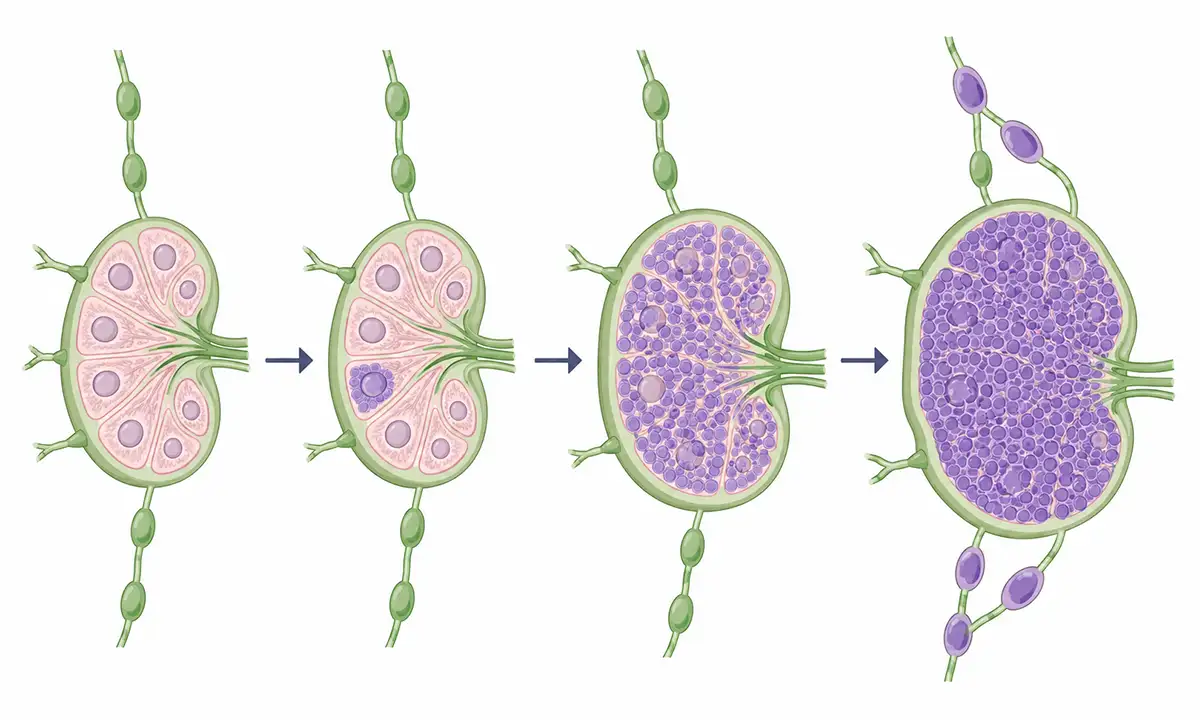
Typical symptoms and signs of lymphoma
1. Lymphadenopathy (enlarged lymph nodes)
Painless, progressive lymph node enlargement is the most common symptom, typically occurring in the cervical, axillary, and inguinal regions.
2. B symptoms
Unexplained fever, night sweats, and weight loss exceeding 10% are known as "B symptoms" and indicate disease progression.
3. Fatigue and anemia
Bone marrow involvement or anemia of chronic disease leads to pallor, fatigue, and palpitations upon exertion.
4. Skin itching
Some patients experience generalized skin itching (pruritus), particularly those with Hodgkin lymphoma.
5. Compression symptoms
Enlarged mediastinal lymph nodes compress the trachea, causing cough and dyspnea, while enlarged retroperitoneal lymph nodes compress the ureters, leading to hydronephrosis.
6. Extranodal manifestations
Lymphoma can affect extranodal organs such as the gastrointestinal tract, central nervous system, and bones, causing corresponding symptoms.
What are the diagnostic methods for lymphoma
1. Lymph node biopsy
Complete excision of the lymph node followed by pathological examination is the gold standard for diagnosis; the pathological type and immunophenotype must be determined.
2. Bone marrow aspiration and biopsy
Assess for bone marrow involvement; holds significant value for staging and prognostic assessment.
3. Imaging examination
CT, MRI, or PET-CT are used to assess systemic lymph node involvement and for staging.
4. Flow cytometry
Detection of lymphocyte immunophenotype to help determine B-cell or T-cell lineage.
5.Molecular genetic testing
Detection of IgH gene rearrangements and MYC/BCL2/BCL6 rearrangements aids in diagnosis and prognostic evaluation.
6. LDH test
Elevated lactate dehydrogenase (LDH) levels indicate a high tumor burden and serve as an important prognostic indicator.
Lymphoma Treatment Methods
1. Chemotherapy
The R-CHOP regimen is the standard treatment for diffuse large B-cell lymphoma, while the ABVD regimen is the standard treatment for Hodgkin lymphoma.
2. Immunotherapy
The combination of a CD20 monoclonal antibody (rituximab) and chemotherapy has significantly improved survival rates for B-cell lymphoma.
3. Targeted therapy
Targeted drugs such as BTK inhibitors, PI3K inhibitors, and BCL-2 inhibitors are used for relapsed or refractory lymphoma.
4. Radiotherapy
For consolidation therapy in early-stage localized disease or for residual lesions following chemotherapy.
5. Hematopoietic stem cell transplantation
Autologous or allogeneic hematopoietic stem cell transplantation is used for relapsed or refractory lymphoma and can significantly prolong survival.
6. CAR-T cell therapy
Chimeric antigen receptor (CAR) T-cell therapy has achieved breakthrough efficacy in the treatment of relapsed/refractory B-cell lymphoma.
7. Supportive therapy
Includes comprehensive measures such as preventing infection, correcting anemia, providing nutritional support, and offering psychological counseling.
8. Follow-up monitoring
Undergo regular imaging and tumor marker monitoring to evaluate treatment efficacy and detect recurrence early.
Conclusion
Lymphoma is a group of highly heterogeneous hematologic malignancies, primarily characterized by painless lymph node enlargement.Through a combination of chemotherapy, immunotherapy, and targeted therapy, most patients can achieve long-term survival.


