


Global disease prevalence: Lung cancer is one of the most common malignant tumors worldwide, with particularly high incidence rates in developed countries and regions where smoking prevalence is high;it poses a severe threat to human life and health.
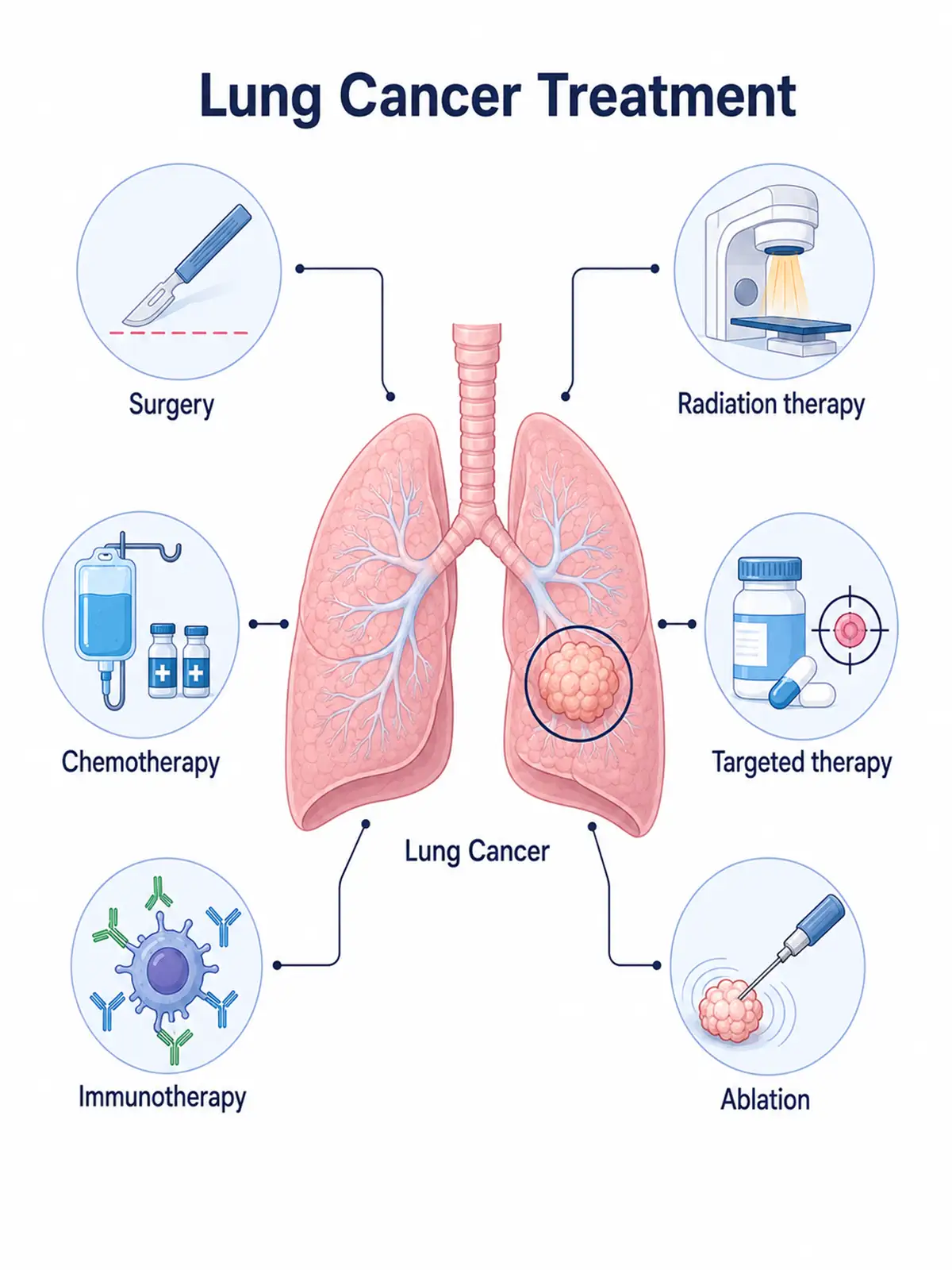
Stage-based treatment for lung cancer
Early treatment (localized tumor, reduced volume, favorable outcome)
Combines surgical resection of the lesion with adjuvant radiotherapy and chemotherapy to effectively control tumor progression, resulting in longer postoperative survival and a favorable prognosis.
Intermediate-stage treatment (addressing local spread, inhibiting growth, and delaying progression)
A comprehensive treatment approach—combining surgery with radiotherapy, chemotherapy, and targeted therapy—is employed to control further tumor spread and slow disease progression.
Treatment for advanced disease (distant metastasis; aimed at symptom relief and survival prolongation)
Systemic therapies—including chemotherapy, targeted therapy, and immunotherapy—serve as the primary treatment modalities to alleviate clinical symptoms and prolong patient survival as much as possible.
Consequences of failing to receive timely treatment in the early stage: If standardized treatment is not administered promptly in the early stage, the tumor will grow rapidly and metastasize to surrounding tissues and distant organs, causing the optimal window for intervention to be missed and significantly increasing the difficulty of treatment.
Why choose Fosun Health for lung cancer treatment
Fosun Health leverages its hospitals' platforms—including M6 CyberKnife, VitalBeam, Da Vinci or thoracoscopic surgery, interventional ablation, and molecular testing—combined with proprietary oncology drug resources from Henlius.The anti-PD-1 monoclonal antibody Hansizhuang (serplulimab) is approved for indications including squamous and non-squamous non-small cell lung cancer (NSCLC) and extensive-stage small cell lung cancer (SCLC); Hanbeitai (bevacizumab) is available for eligible patients with non-squamous NSCLC.
The team selects treatment modalities—including surgery, radiotherapy, targeted therapy, or immunotherapy—based on pathological type, staging, and results regarding driver genes and PD-L1 expression. The M6 CyberKnife system can track localized lesions that move with respiration;this precision radiotherapy helps minimize radiation exposure to the normal lung, heart, esophagus, and spinal cord, thereby reducing the risk of certain treatment-related adverse effects, while also integrating pulmonary function assessment, respiratory rehabilitation, and follow-up for brain and bone metastases.
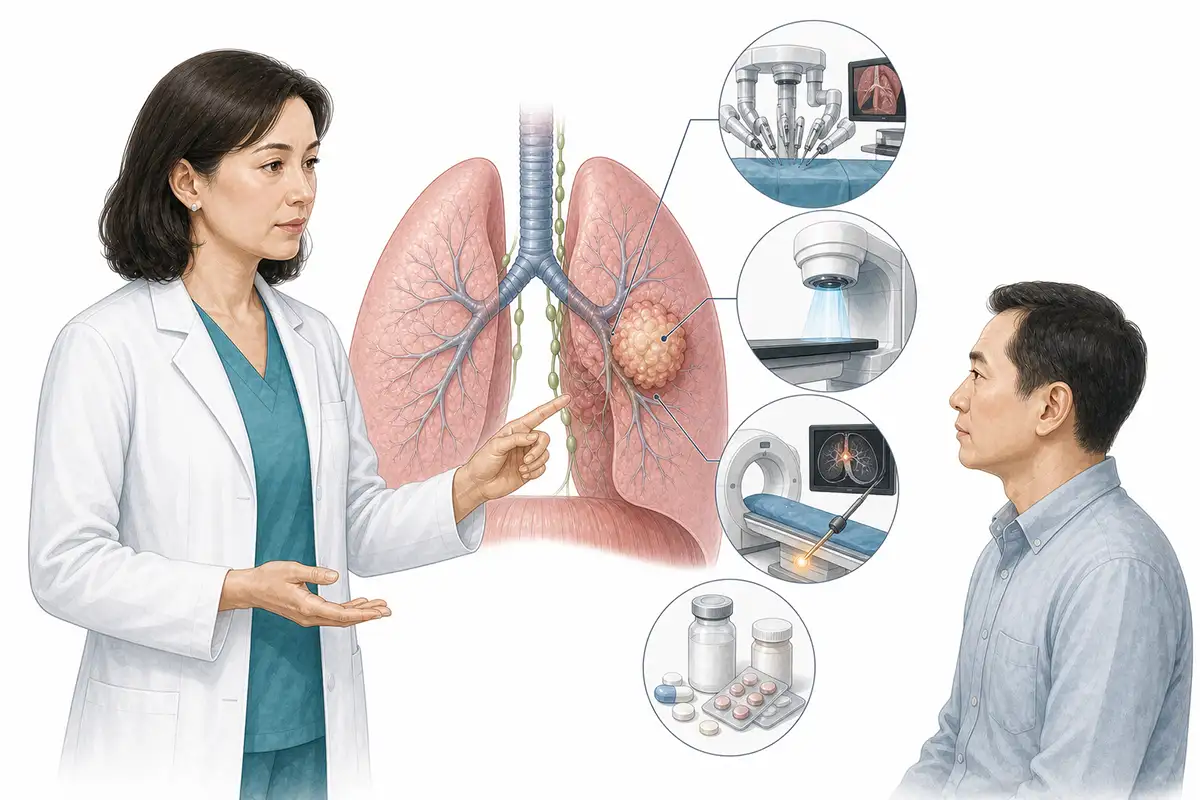
Lung Cancer Treatment Methods
1.M6 CyberKnife treatment
Utilizes respiratory tracking and robotic multi-angle focused irradiation; suitable for small, early-stage non-small cell lung cancer (NSCLC) in patients ineligible for surgery, as well as for localized recurrence, oligometastasis, or selected re-irradiation sites.
Treatment advantages:
① Track respiratory motion: Reduce localization errors caused by the movement of lung lesions.
② Protect normal lung tissue: Reduce radiation dose to the heart, esophagus, spinal cord, and chest wall.
③ Hypofractionated treatment: Shortens the treatment course and reduces the burden of travel for the patient.
④ Applicable to well-defined boundaries: Used only for localized lesions suitable for stereotactic radiotherapy.
2.VitalBeam precision radiotherapy
Indicated for concurrent chemoradiotherapy in locally advanced disease, selective pre- or post-operative radiotherapy, and the treatment of hilar, mediastinal, and metastatic lesions.
Treatment advantages:
① Covers primary lesions and lymph nodes: Suitable for complex target areas involving the hilum and mediastinum.
② Protection of cardiopulmonary organs: Reduces radiation dose to normal lung tissue, the heart, and the esophagus.
③ Facilitates combination therapy: Can be integrated with chemotherapy, immunotherapy, targeted therapy, or surgery.
④ Suitable for various treatment stages: Curative, adjuvant, or palliative regimens can be selected based on disease stage.
3.Da Vinci robotic or thoracoscopic lung cancer surgery
Suitable for resectable early-stage non-small cell lung cancer and selected cases of locally advanced disease.
Treatment advantages:
① Precise handling of hilar structures: Clear identification of blood vessels, bronchi, and nerves.
② Protect lung function: Select segmentectomy or lobectomy while ensuring oncological safety.
③ Standardized lymph node dissection: Provide samples for accurate pathological staging and molecular testing.
④ Reduction of chest wall trauma: Facilitates postoperative respiratory training and rapid recovery.
4.CT-guided microwave or radiofrequency ablation
Suitable for early-stage small lesions, local recurrence, or oligometastatic lung lesions in patients who cannot tolerate surgery.
Treatment advantages:
① Direct lesion management: Local ablation is performed under imaging guidance.
② Reduction of surgical burden: Suitable for some elderly patients or those with multiple comorbidities.
③ Protects surrounding tissues: Plans the needle trajectory based on the spatial relationship between the lesion and the airways, blood vessels, and chest wall.
④ Strict indications: Requires assessment of the risks of pneumothorax, hemorrhage, and bronchial injury.
5.Iodine-125 seed implantation therapy:
Indicated for lung cancer patients assessed by a multidisciplinary team (MDT) as having unresectable, locally residual or recurrent disease with clearly defined lesion boundaries, and for whom prior external beam radiotherapy is limited.
6.Chemotherapy
Uses anticancer drugs to kill cancer cells systemically and effectively control tumor progression; widely used for small-cell lung cancer and in patients with intermediate-to-advanced stage disease.
7.Targeted therapy
Precision treatment targeting cancer cells with specific gene mutations (such as EGFR) offers good efficacy and mild side effects.
8.Immunotherapy
Activates the body's immune system to recognize and attack cancer cells, providing a new option for patients with advanced lung cancer.
9.Interventional therapy:
For lung cancer patients presenting with symptoms such as hemoptysis, airway obstruction, or superior vena cava obstruction, interventions such as vascular embolization, stent placement, or selective perfusion may be used to control symptoms.
10 Cryoablation:
Suitable for patients with early-stage small lung cancer lesions, local recurrence, or oligometastatic disease who cannot tolerate surgery; local lesions can be controlled via image-guided cryoablation.
Post-treatment care
Strictly quit smoking and limit alcohol intake; maintain a regular daily routine and a balanced, nutritious diet; engage in moderate exercise and attend scheduled follow-ups as advised.
Post-treatment examinations
Regular chest CT scans, tumor marker testing, and pulmonary function tests are required after treatment to detect changes in the condition in a timely manner.
Conclusion
Successful treatment of lung cancer hinges on early detection, diagnosis, and intervention; selecting the appropriate treatment plan based on pathological type and stage, along with adhering to long-term follow-up, helps improve the patient's quality of life and extend survival time.


