


Lung cancer is a tumor arising from the malignant transformation of bronchial mucosa or alveolar epithelial cells. Early symptoms lack specificity; common manifestations include cough, blood-tinged sputum, and chest pain.Approximately 75% of patients are symptomatic at the time of diagnosis.
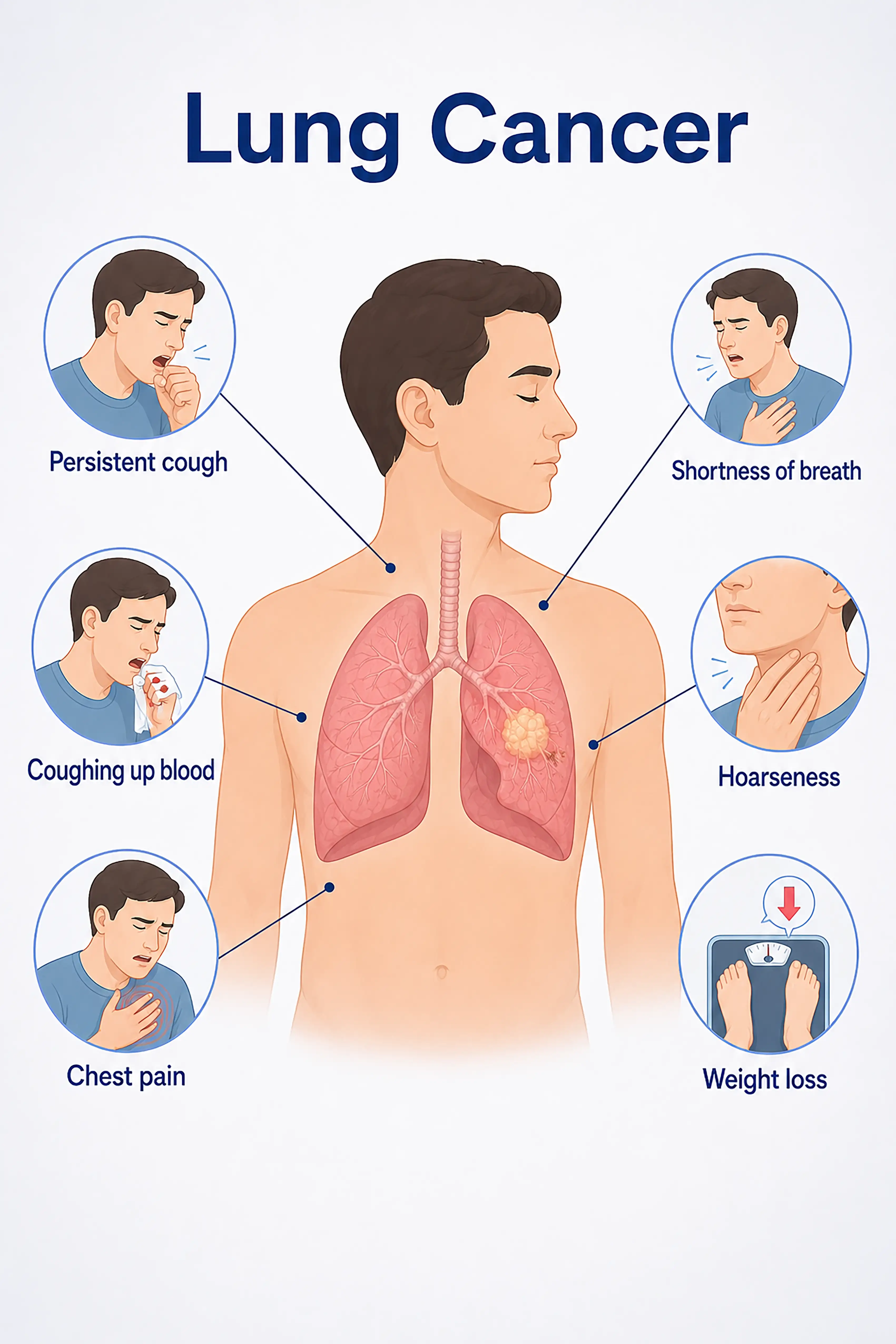
Global incidence of lung cancer
In 2022, there were approximately 2.4 million new cases of lung cancer worldwide, with an estimated 1.8 million deaths.Lung cancer is the leading cause of cancer-related deaths globally.In my country, lung cancer ranks first among malignant tumors in terms of both incidence and mortality.Smoking is the most significant risk factor; approximately 85% of lung cancer cases are associated with smoking.
Symptoms associated with lung cancer stages
1.Early symptoms of lung cancer
The tumor is confined to the bronchus or lung parenchyma; there are usually no obvious symptoms, though an irritating dry cough, small amounts of white sputum, or mild chest tightness may occur. It is easily mistaken for a cold or bronchitis.
2.Symptoms of mid-stage lung cancer
Worsening cough with blood-streaked sputum, persistent chest pain, shortness of breath upon exertion, accompanied by weight loss and fatigue; hoarseness suggests mediastinal involvement.
3.Symptoms of advanced lung cancer
Tumor extensively invades surrounding tissues and metastasizes distantly; symptoms include persistent severe pain, severe dyspnea, massive hemoptysis, superior vena cava syndrome, and multi-organ failure.
When to Seek Medical Attention
Early signs of lung cancer include a persistent cough lasting more than two weeks, blood-streaked sputum, chest pain, and unexplained weight loss.Please consult a doctor via the "Chat with a Doctor" feature for early detection.During the online consultation, the doctor will ask about your smoking history and symptoms, and advise you on undergoing a chest CT scan.
Lung cancer staging
Stage 0 lung cancer
Cancer cells are confined to the bronchial epithelium; this is classified as carcinoma in situ. It is usually asymptomatic and is often detected incidentally during low-dose CT screening.
Stage I lung cancer
Tumor diameter is less than 3 cm and confined to the lung, with no lymph node metastasis; may present with an irritating dry cough or no obvious symptoms.
Stage II lung cancer
The tumor measures 3–7 cm in diameter or is accompanied by ipsilateral hilar lymph node metastasis; coughing worsens, and symptoms such as blood-tinged sputum and chest pain appear.
Stage III lung cancer
Tumor invasion of the chest wall or phrenic nerve, or presence of mediastinal lymph node metastasis, resulting in persistent chest pain, hoarseness, and severe dyspnea.
Stage IV lung cancer
The tumor metastasizes to the brain, bones, liver, and adrenal glands, presenting with headache, bone pain, jaundice, and severe wasting symptoms.
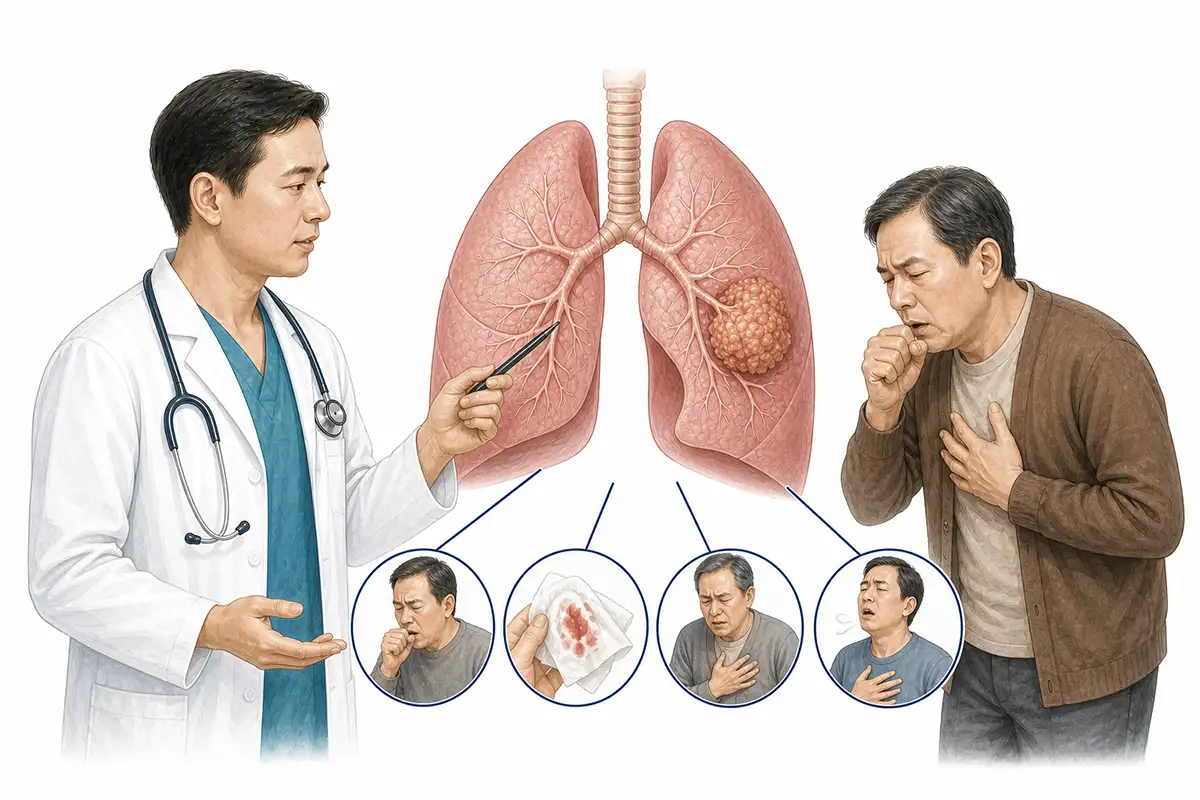
Detailed Overview of Lung Cancer Symptoms
1.Prolonged, persistent cough
A persistent, irritating dry cough or a change in the nature of a cough lasting more than two weeks—unresponsive to standard cough suppressants—is the most common initial symptom of lung cancer; 50%–75% of patients present with a cough at the time of diagnosis.
2.Blood-streaked sputum
Sputum containing bright red blood streaks or old blood clots during coughing; caused by the tumor invading bronchial mucosal blood vessels, resulting in intermittent, recurrent bleeding.
3.Severe chest pain and tightness
Tumor invasion of the pleura or chest wall causing persistent chest pain that worsens with respiration, accompanied by chest tightness, shortness of breath, and reduced exercise tolerance.
4.Pronounced dyspnea
Progressively worsening dyspnea caused by bronchial obstruction leading to atelectasis, or by compression of lung tissue due to massive pleural effusion.
5Prolonged hoarseness
Compression of the recurrent laryngeal nerve by the tumor or metastatic lymph nodes causes vocal cord paralysis and persistent hoarseness, indicating mediastinal lymph node involvement.
6Rapid weight loss
Significant weight loss over a short period, accompanied by loss of appetite, fatigue, and systemic wasting symptoms, indicates that the disease has entered an advanced stage.
7.Superior vena cava syndrome
Compression of the superior vena cava by a mediastinal tumor leads to edema of the head, face, and upper limbs, jugular venous distension, and chest wall varicosities—a condition known as superior vena cava syndrome.
8.Bone pain and headache
Bone metastases cause localized bone pain and pathological fractures, while brain metastases can lead to headaches, vomiting, and neurological deficits.
9.Paraneoplastic syndrome
Tumor secretion of ectopic hormones leads to paraneoplastic syndromes such as hyponatremia, hypercalcemia, Cushing syndrome, or myasthenic syndrome.
Conclusion
The prognosis of lung cancer is closely related to its pathological type and stage; early detection and comprehensive treatment—primarily surgery—can prolong survival.Quitting smoking is the most effective way to prevent lung cancer, and low-dose CT screening aids in early detection.


