


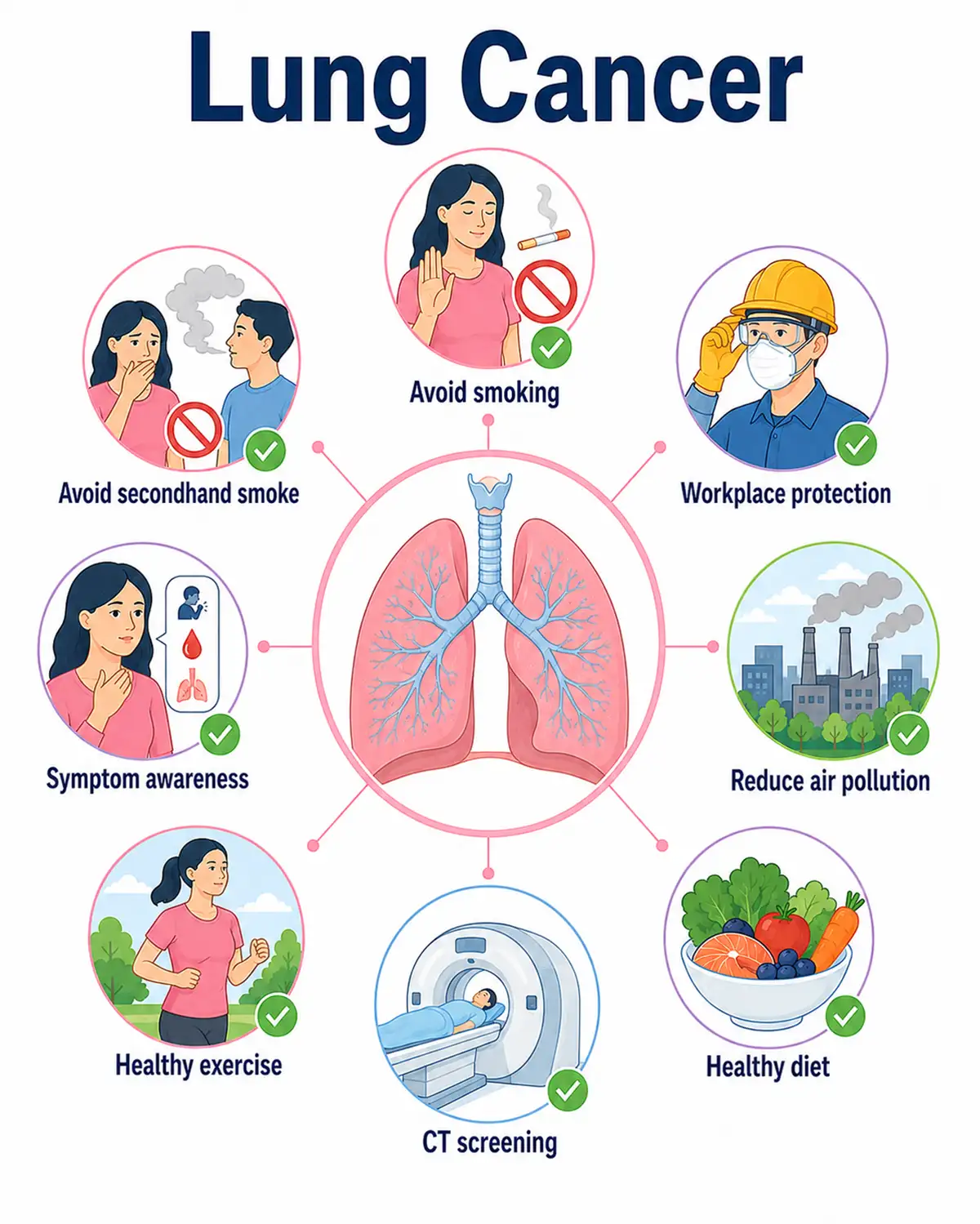
1. Smoking cessation
Smoking is the leading risk factor for lung cancer; the risk is reduced by half ten years after quitting. Quitting is beneficial at any time, so take action immediately.
2. Avoiding secondhand smoke
Long-term exposure to secondhand smoke increases the risk of lung cancer; smoke-free environments should be maintained at home and in the workplace to protect one's own health and that of others.
3. Occupational protection
Personnel working with asbestos, arsenic, chromium, or radon should implement occupational protection measures and wear protective equipment to reduce the inhalation of carcinogens.
4. Reducing contamination
Reduce outdoor activities and wear protective masks during smoggy weather; install range hoods in kitchens to minimize the inhalation of cooking fumes and improve indoor and outdoor air quality.
5. Balanced diet
Increase the intake of fresh fruits and vegetables rich in carotene and vitamin E; these antioxidants can reduce free radical damage to lung tissue.
6. Regular exercise
Moderate aerobic exercise enhances lung function and immunity; physical activity helps clear harmful particles deposited in the lungs, thereby reducing the risk of disease.
7.Low-dose CT
Long-term smokers or high-risk individuals over the age of 50 should undergo annual low-dose chest CT screening to facilitate the early detection and timely management of small pulmonary nodules.
Conclusion
Lung cancer is the leading cause of cancer-related deaths globally and poses a severe health threat.Quitting smoking, avoiding occupational exposure and air pollution, and undergoing regular low-dose CT screening to ensure early detection and timely intervention are crucial.


