


1. Smoking factor
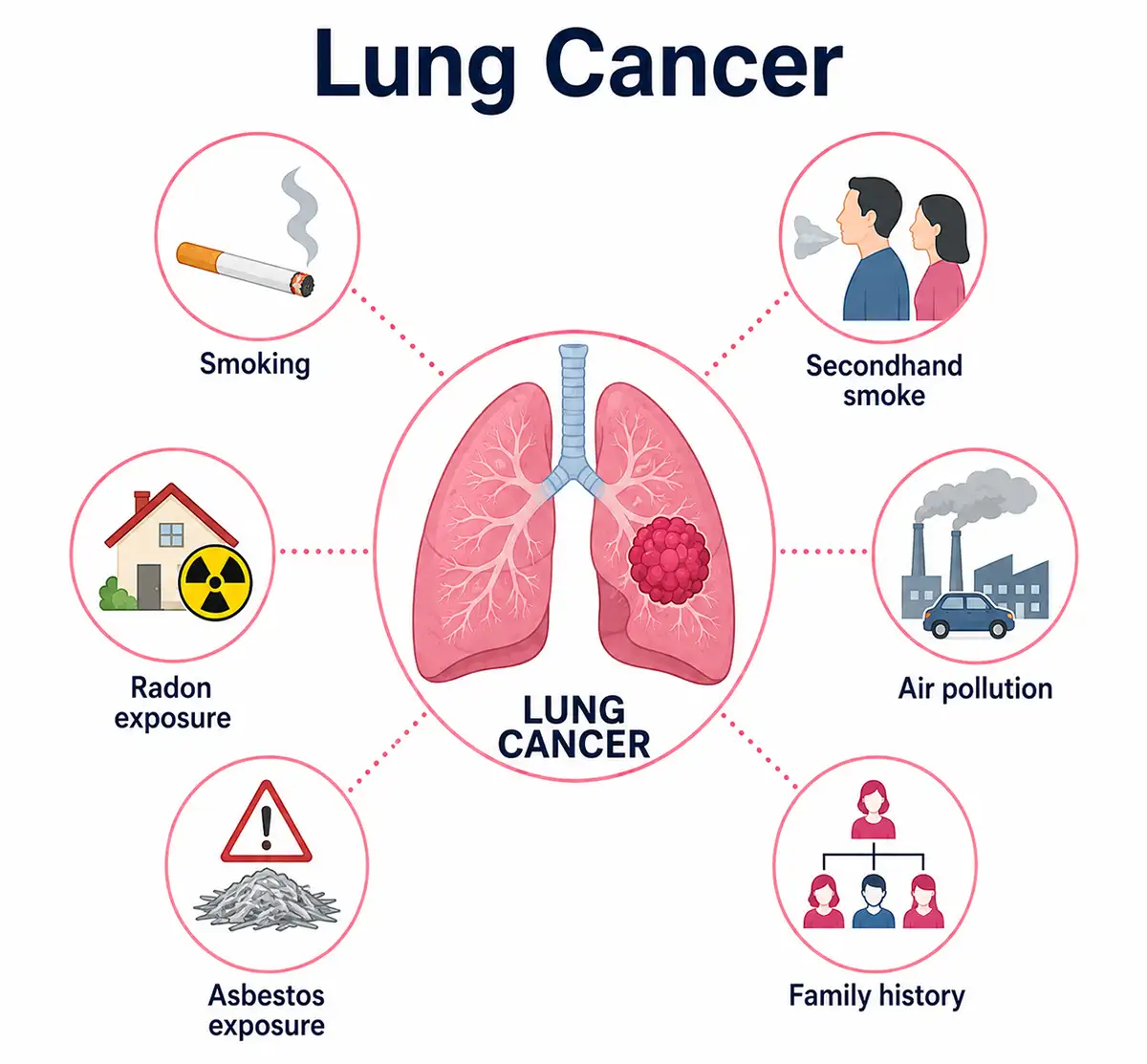
Smoking is the primary risk factor for lung cancer; tobacco smoke contains over 70 types of carcinogens, and more than 80% of lung cancer patients have a history of smoking.
2. Second-hand smoke
Long-term exposure to secondhand smoke also increases the risk of developing lung cancer; passive smokers face a 20% to 30% higher risk of lung cancer compared to those not exposed.
3. Occupational exposure
Workers with long-term exposure to harmful substances such as asbestos, arsenic, chromium, nickel, and radon gas face a significantly higher risk of lung cancer compared to the general population.
4. Air pollution
Long-term exposure to air pollutants such as PM2.5 and to kitchen fumes can damage DNA in lung cells and increase the risk of developing lung cancer.
5. Genetic factors
Lung cancer shows a tendency for familial clustering; individuals with a first-degree relative affected by lung cancer face a two- to three-fold increase in risk.
6. Chronic lung disease
In patients with chronic lung diseases such as chronic obstructive pulmonary disease (COPD) and pulmonary fibrosis, long-term pulmonary inflammation can increase the risk of developing lung cancer.
7. Age and gender
The incidence of lung cancer increases with age and is most common in people over fifty; while the incidence rate is higher in men than in women, the rate among women is rising year by year.
Conclusion
Lung cancer is caused by the combined effects of factors such as smoking and environmental pollution; it is the leading cause of cancer-related deaths globally and poses a severe health threat.Quitting smoking, avoiding occupational exposure and air pollution, and undergoing regular low-dose CT screening for early detection and timely intervention are crucial.


