


Lung cancer is a tumor resulting from the malignant proliferation of bronchial and alveolar epithelial cells.The lungs are the core organs of the respiratory system responsible for gas exchange, and lung cancer can originate in any part of the bronchi.
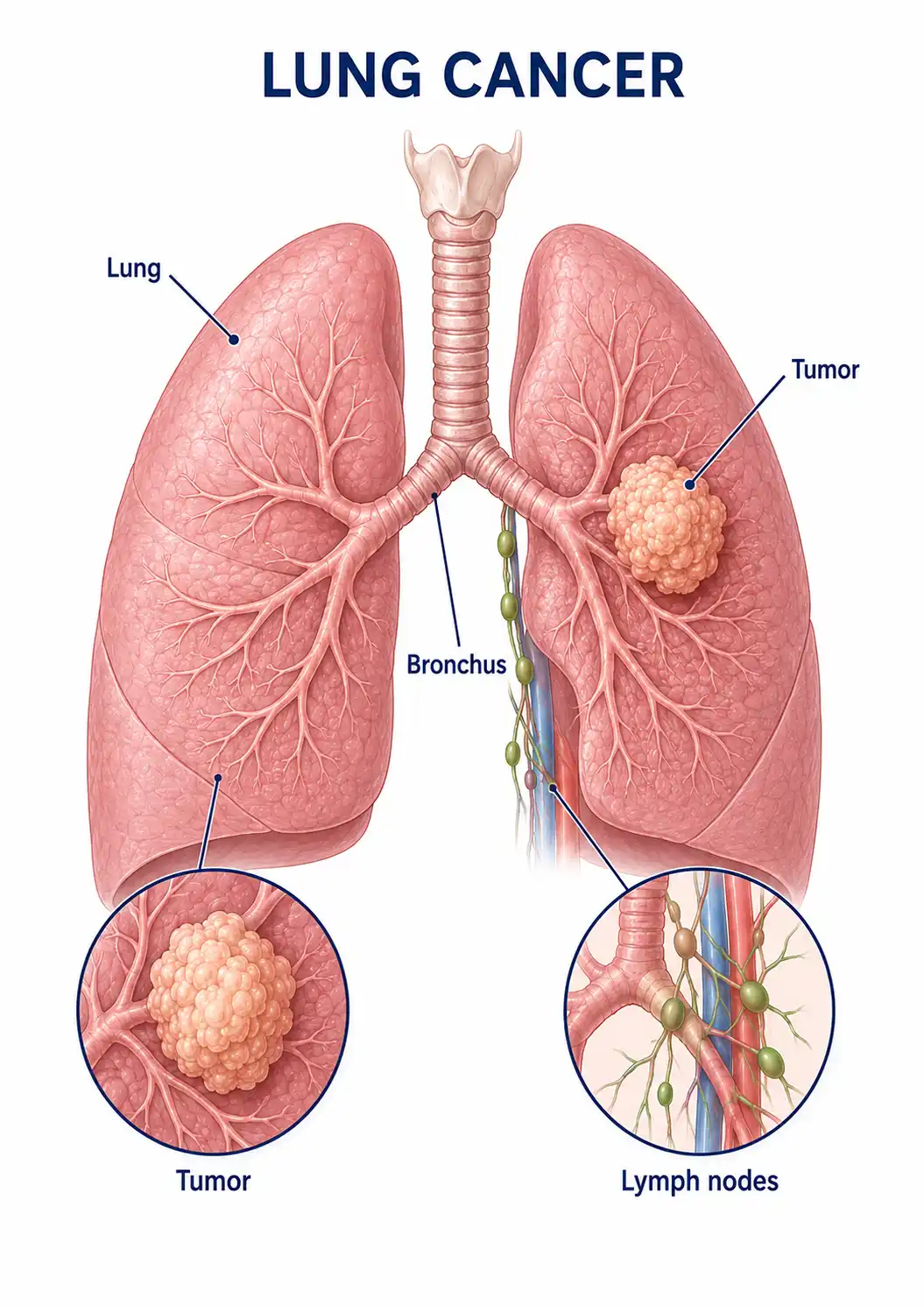
Global overview of lung cancer
Lung cancer ranks first globally in both incidence and mortality among malignant tumors. In my country, the incidence of lung cancer is rising annually;it has become the leading malignant tumor in men and the second most common in women, with a strong association with smoking and air pollution.
Consult a doctor regarding cancer-related issues
Individuals experiencing symptoms such as persistent cough, blood-tinged sputum, chest pain, difficulty breathing, or hoarseness—especially long-term smokers or those with a family history of lung cancer—should promptly consult a pulmonologist or thoracic surgeon.
Major types of lung cancer
1. Types of adenocarcinoma
It is the most common type of non-small cell lung cancer, accounting for approximately 40% of cases; it typically occurs in the peripheral regions of the lung, is more common in women and non-smokers, and is frequently associated with driver gene mutations.
2. Squamous cell carcinoma
It typically arises in the main and lobar bronchi and is closely associated with smoking; it grows relatively slowly and often presents with hemoptysis and obstructive pneumonia.
3. Small-cell lung cancer
Accounts for approximately 15% of lung cancer cases; characterized by rapid growth and early metastasis. It is strongly associated with smoking and is sensitive to chemotherapy and radiotherapy, though prone to recurrence.
4. Large-cell carcinoma type
A type of non-small cell lung cancer characterized by poor differentiation and high-grade malignancy, lacking the specific differentiation features of adenocarcinoma or squamous cell carcinoma.
5. Types of carcinoid tumors
A type of neuroendocrine tumor characterized by slow growth and low-grade malignancy; it comprises two subtypes: typical carcinoid and atypical carcinoid.
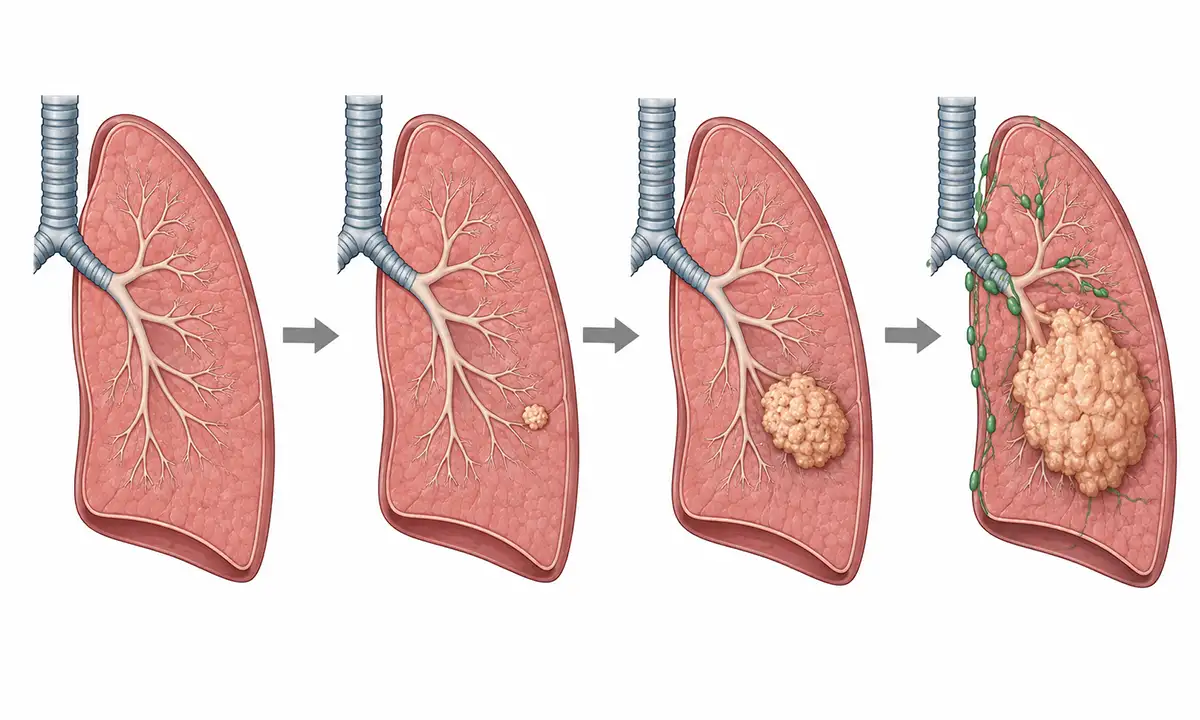
Typical symptoms and signs of lung cancer
1. Persistent cough
Persistent cough or a change in the nature of an existing cough—such as shifting from a dry cough to one producing sputum, or a worsening cough that fails to resolve—is the most common early symptom of lung cancer.
2. Blood-tinged sputum
Intermittent appearance of blood streaks or small amounts of bright red blood in the sputum during coughing is a significant warning sign of lung cancer and requires serious attention.
3. Chest pain
Persistent dull or aching chest pain occurs, worsening with coughing or deep breathing, suggesting possible tumor invasion of the pleura or chest wall.
4. Dyspnea
Shortness of breath and dyspnea caused by airway obstruction or pleural effusion; symptoms worsen with exertion and, in severe cases, shortness of breath is felt even at rest.
5. Hoarseness
Hoarseness resulting from compression of the recurrent laryngeal nerve by the tumor or metastatic lymph nodes indicates mediastinal lymph node metastasis and signifies disease progression.
6. Weight loss
Unexplained weight loss, fatigue, and loss of appetite occurring over a short period are systemic manifestations of malignant tumors.
What are the diagnostic methods for lung cancer
1. Chest CT scan
Chest CT is the preferred imaging modality for diagnosing lung cancer; it can detect pulmonary nodules and masses, and assess tumor size, location, and local invasion.
2. Bronchoscopy
Bronchoscopy allows for direct visualization of endobronchial lesions and biopsy, serving as a crucial method for diagnosing central-type lung cancer.
3. Pathological biopsy
Involves obtaining tissue samples via bronchoscopic biopsy, percutaneous lung puncture, or lymph node puncture; pathological examination is the gold standard for confirming a lung cancer diagnosis.
4. Molecular testing
Tumor tissue is tested for driver genes such as EGFR, ALK, and ROS1 to determine the presence of mutations amenable to targeted therapy.
5. Tumor markers
Serum markers such as CEA, CYFRA21-1, and NSE can assist in diagnosis and treatment efficacy assessment, though they lack specificity.
6. PET-CT scan
Whole-body PET-CT assesses tumor metabolic activity and detects distant metastases that are difficult to identify via conventional imaging, aiding in accurate staging.
Lung cancer treatment methods
1. Surgical treatment
Lobectomy combined with systematic lymph node dissection is the standard surgical procedure for early-stage non-small cell lung cancer; minimally invasive thoracoscopic surgery offers reduced trauma and faster recovery.
2. Chemotherapy
Platinum-based doublet chemotherapy is a fundamental treatment regimen for lung cancer and can be used for preoperative neoadjuvant therapy, postoperative adjuvant therapy, and systemic treatment in patients with advanced disease.
3. Targeted therapy
Targeted drugs addressing driver gene mutations such as EGFR and ALK can precisely inhibit tumor growth and significantly prolong survival in patients with advanced-stage disease.
4. Immunotherapy
PD-1 and PD-L1 inhibitors activate the body's immune system to kill cancer cells and have become important treatment options for advanced lung cancer lacking driver gene mutations.
5. Radiotherapy
Radiotherapy is used for early-stage patients ineligible for surgery, as adjuvant therapy post-surgery, and for palliative symptom relief in advanced stages;stereotactic radiotherapy offers high precision.
6. Radiofrequency ablation
Radiofrequency ablation and microwave ablation are suitable for patients with early-stage peripheral lung cancer who cannot tolerate surgery;they induce tumor necrosis using thermal energy.
7. Comprehensive treatment
An individualized comprehensive treatment plan is formulated based on pathological type, stage, and molecular characteristics;multidisciplinary team collaboration is key to improving therapeutic outcomes.
8. Follow-up monitoring
Regular post-treatment chest CT scans and tumor marker tests are required to monitor for recurrence and metastasis; long-term follow-up is crucial for the timely detection of changes in the condition.
Conclusion
Lung cancer is the most common malignant tumor worldwide; early symptoms are often inconspicuous, and it is closely linked to smoking.Quitting smoking, conducting low-dose CT screening for high-risk populations, and achieving early detection and standardized comprehensive treatment can help improve patient prognosis.


