


Leukemia is a malignant clonal disease of hematopoietic stem and progenitor cells; leukemic cells proliferate rapidly in the bone marrow and inhibit normal hematopoiesis.Early symptoms are often atypical and easily confused with common illnesses like the flu;common manifestations include fever, anemia, a tendency to bleed, and bone pain.
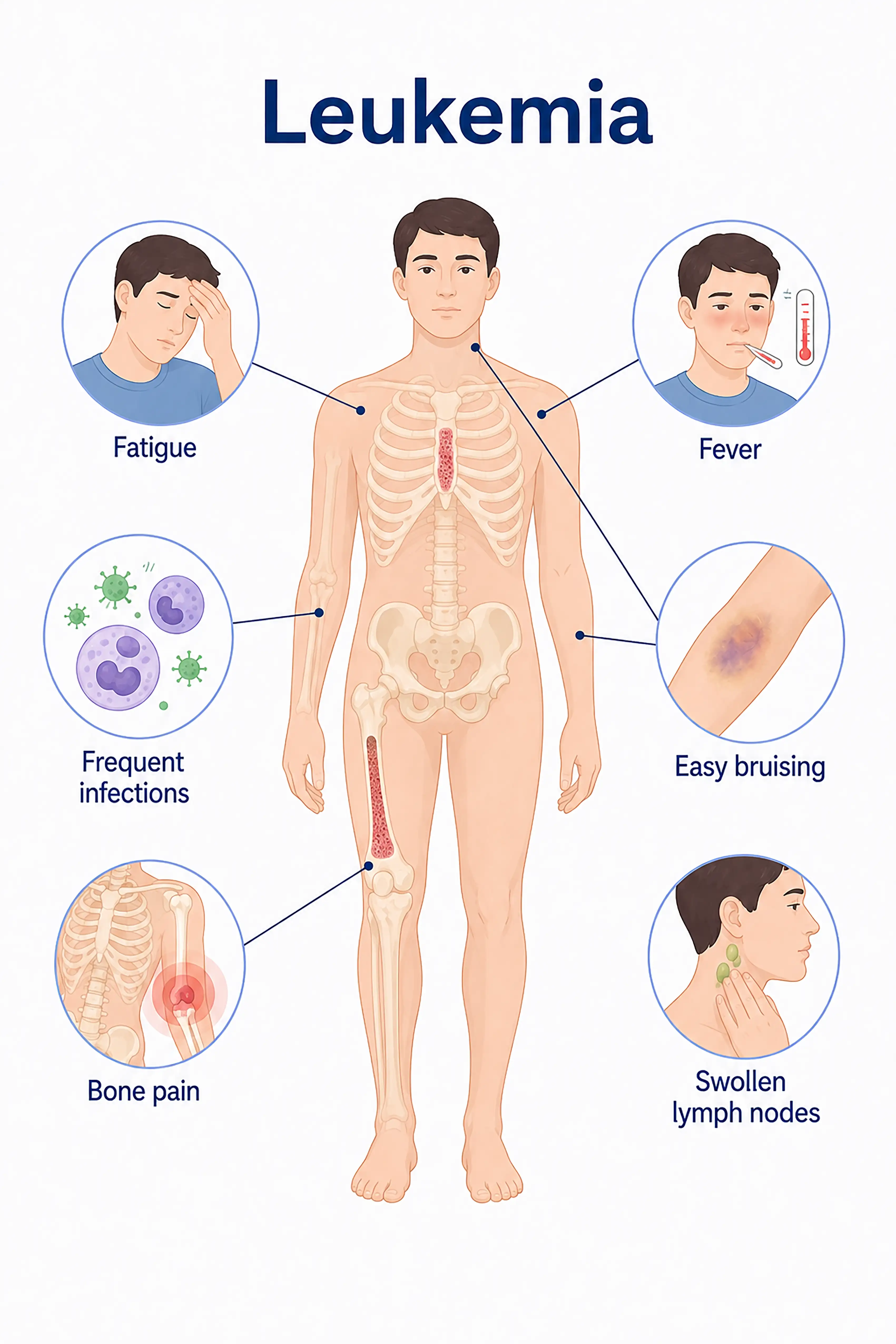
Global prevalence of leukemia
Leukemia is a common hematologic malignancy worldwide that can occur at any age.Acute lymphoblastic leukemia is the most common malignancy in children, while acute myeloid leukemia and chronic lymphocytic leukemia are more common in adults.Symptoms vary by type, but common signs include fever, fatigue, frequent infections, weight loss, enlargement of lymph nodes and the liver/spleen, a tendency to bleed, and bone pain.
Symptoms associated with leukemia stages
1.Early symptoms of leukemia
Symptoms are mild and atypical, potentially including fatigue, low-grade fever, pallor, and a slight tendency toward bleeding (such as skin petechiae or nosebleeds); these can easily be mistaken for a cold or fatigue.
2.Intermediate-stage leukemia symptoms
Worsening anemia leads to significant fatigue and shortness of breath; thrombocytopenia causes increased bleeding in the skin and mucous membranes; a lack of normal granulocytes results in recurrent infections and fever; enlargement of the liver, spleen, and lymph nodes may occur.
3.Advanced leukemia symptoms
Extensive bleeding leads to massive intracranial or gastrointestinal hemorrhage; severe infection leads to sepsis; bone pain intensifies; and hyperleukocytic stasis causes dyspnea, blurred vision, and impaired consciousness.
When to Seek Medical Attention
Early signs of leukemia include persistent fever, paleness, skin petechiae and ecchymoses, persistent nosebleeds, and bone pain.Please consult a doctor via the "Chat with a Doctor" feature for early detection.During the online consultation, the doctor will ask about your symptoms and their duration, and guide you through necessary tests, such as a complete blood count (CBC) and bone marrow examination.
Staging of leukemia
Leukemia Stage 0
This staging system is not applicable to leukemia.Leukemia is primarily classified based on cell type (lymphoid or myeloid) and disease course (acute or chronic).
Leukemia Stage I
In the early stages of leukemia, blood cell counts show mild abnormalities; there may be slight anemia and thrombocytopenia, but symptoms are often not obvious.
Leukemia Stage II
An elevated proportion of leukemic cells leads to marked symptoms of anemia, bleeding, and infection, as well as enlargement of the liver, spleen, and lymph nodes.
Leukemia Stage III
Leukemic cells extensively infiltrate tissues, accompanied by severe cytopenia and organ infiltration, resulting in serious symptoms.
Leukemia Stage IV
Leukemia can be life-threatening when accompanied by severe complications such as cerebral hemorrhage, sepsis, and multiple organ failure.
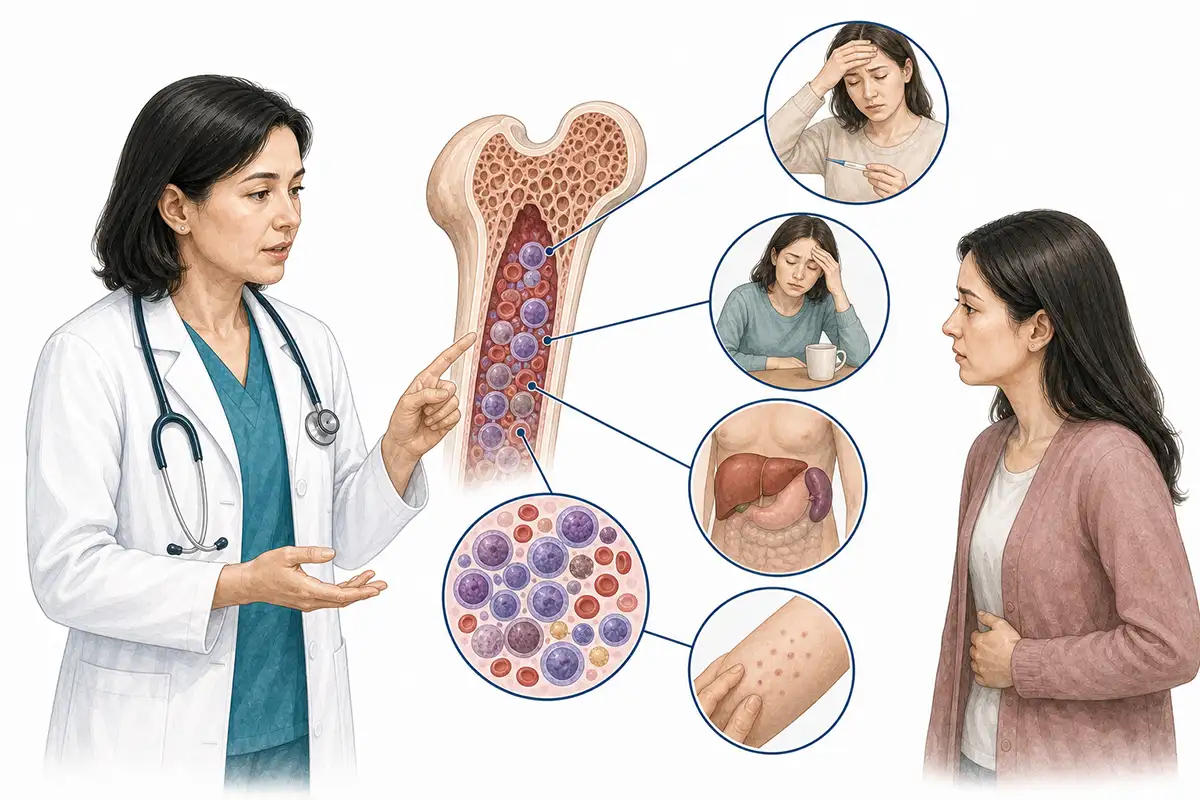
Detailed Symptoms of Leukemia
1.Frequent fever and infections
A lack of normal granulocytes leads to reduced immunity, resulting in fever of unknown origin and recurrent infections of the oral cavity, respiratory tract, and skin/soft tissues; the fever may persist without resolution.
2.Anemia and fatigue
Suppression of normal hematopoiesis leads to a reduction in red blood cells, resulting in symptoms of anemia such as pallor, fatigue, weakness, palpitations and shortness of breath upon exertion, and dizziness.
3.Signs of bleeding tendency
Thrombocytopenia leads to cutaneous petechiae and ecchymoses, nosebleeds, bleeding gums, and menorrhagia; severe cases may involve intracranial and gastrointestinal hemorrhage.
4.Bone and joint pain
Leukemic cell infiltration of the periosteum and bone marrow cavity causes pain in the sternum, limb bones, and joints; this is particularly pronounced in pediatric patients and worsens at night.
5.Liver, spleen, and lymph nodes
Leukemic cell infiltration causes enlargement of the liver, spleen, and systemic lymph nodes; superficial lymph node enlargement is most commonly observed in the neck, axillae, and groin.
6Rapid weight loss
Increased metabolic consumption by the tumor leads to significant weight loss over a short period, accompanied by loss of appetite and night sweats (particularly pronounced at night).
7.Skin petechiae
Severe thrombocytopenia causes pin-point red hemorrhagic spots (petechiae) on the skin that do not blanch upon pressure; these are most commonly found on the limbs.
8.Oral lesions
Gingival hyperplasia/swelling, oral ulcers, and pharyngeal inflammation are common oral manifestations of leukemia, associated with leukocyte infiltration and compromised immunity.
9.Central nervous system symptoms
Infiltration of the central nervous system by leukemic cells can cause symptoms of meningeal irritation, such as headache, vomiting, blurred vision, and nuchal rigidity (neck stiffness).
Conclusion
Leukemia presents with diverse and atypical symptoms; medical attention should be sought promptly if unexplained fever, anemia, or bleeding occurs.Precise classification is crucial for selecting treatment plans and assessing prognosis.


