


Leukemia is a group of malignant clonal diseases involving hematopoietic stem and progenitor cells.Leukemic cells proliferate and accumulate extensively in the bone marrow and other hematopoietic tissues, suppressing normal hematopoiesis and infiltrating other organs and tissues.Based on disease course and cell lineage, the main types include acute lymphoblastic leukemia, acute myeloid leukemia, chronic lymphocytic leukemia, and chronic myeloid leukemia.
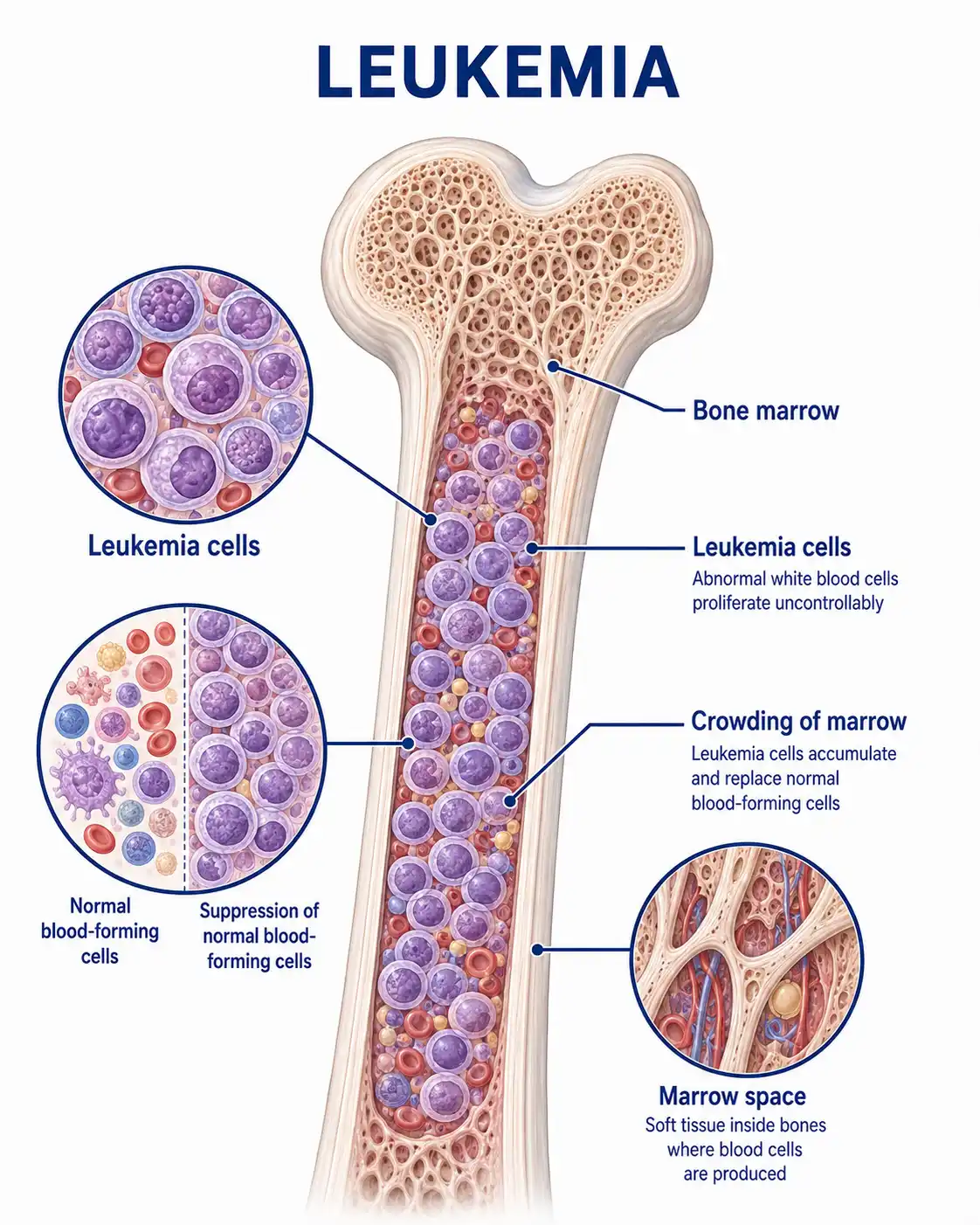
Global overview of leukemia
Leukemia is one of the most common hematologic malignancies worldwide.Acute lymphoblastic leukemia has the highest incidence among childhood malignancies, with cure rates exceeding 80%.Acute myeloid leukemia is more common in adults, with incidence increasing with age.Chronic lymphocytic leukemia has a higher incidence in Western countries and is most frequently seen in the elderly.
Consult a doctor regarding cancer-related issues
If symptoms such as persistent fever, pallor, fatigue, skin petechiae or ecchymoses, nosebleeds, gum bleeding, bone or joint pain, or enlargement of the liver, spleen, or lymph nodes occur, one should promptly consult a hematologist.Confirmed patients should have an individualized treatment plan developed under the guidance of a hematology specialist.
Main types of leukemia
1.Acute lymphoblastic leukemia
Malignant proliferation of primitive lymphocytes; commonly seen in children; characterized by acute onset and rapid progression; sensitive to chemotherapy, with long-term remission rates exceeding 80% in children.
2.Acute myeloid leukemia
Characterized by the clonal proliferation of myeloid blasts, this condition is more common in adults, with incidence increasing with age; induction chemotherapy is required to achieve complete remission, and some high-risk patients require hematopoietic stem cell transplantation.
3.Chronic lymphocytic leukemia
Clonal proliferation of mature small lymphocytes; commonly seen in elderly patients and slow-progressing. "Watchful waiting" may be adopted in the early stages, and some patients do not require immediate treatment.
4.Chronic myeloid leukemia
Characterized by the presence of the Philadelphia (Ph) chromosome and driven by the BCR-ABL fusion gene, this condition manifests as a marked increase in granulocytes and responds remarkably well to targeted therapy with tyrosine kinase inhibitors.
5.Hairy cell leukemia
A rare form of indolent B-cell leukemia characterized by marked splenomegaly; it responds well to purine analogues such as cladribine and carries a favorable prognosis.
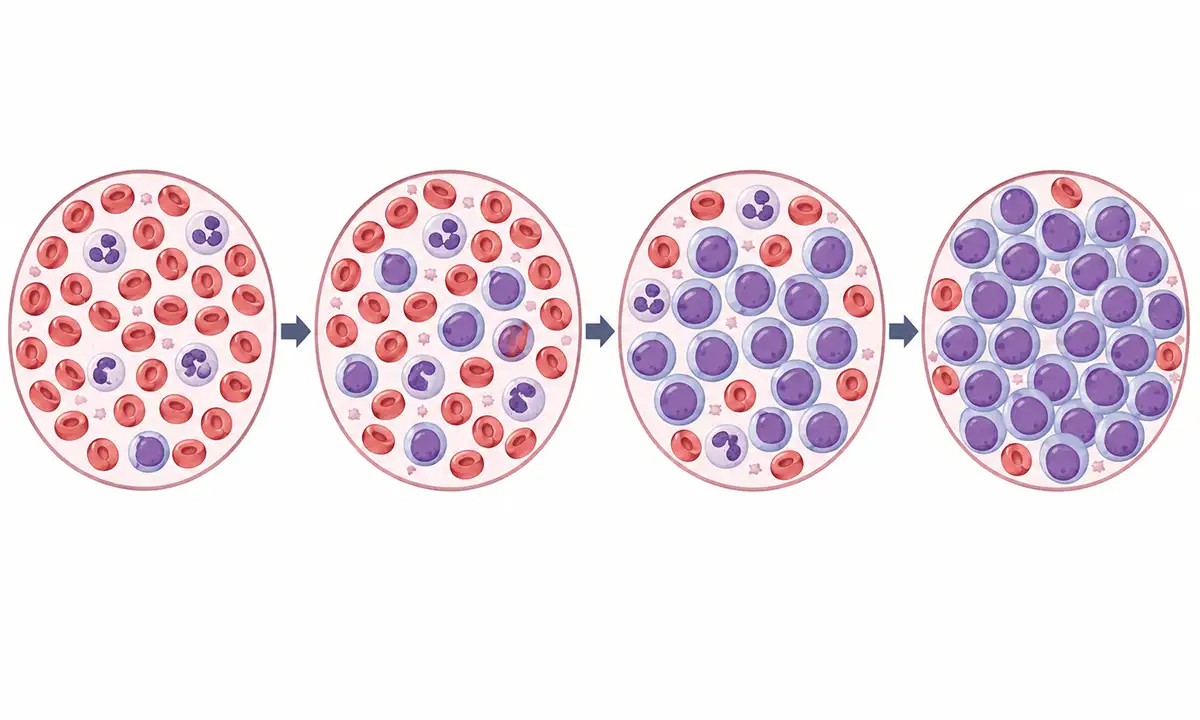
Typical symptoms and signs of leukemia
1.Symptoms associated with anemia
Leukemic cells suppress normal bone marrow hematopoiesis, leading to a reduction in red blood cells and symptoms of anemia such as pallor, fatigue, weakness, palpitations and shortness of breath upon exertion, and dizziness.
2.Frequent fever due to infection
A lack of normal granulocytes leads to impaired immune function; patients may experience fever of unknown origin and recurrent infections of the oral cavity, respiratory tract, and skin/soft tissues.
3.Pronounced bleeding tendency
Thrombocytopenia causes bleeding from the skin and mucous membranes, manifesting as petechiae, ecchymoses, nosebleeds, bleeding gums, and menorrhagia; severe cases may involve intracranial hemorrhage.
4.Bone and joint pain
Infiltration of the periosteum and joints by leukemic cells causes sternal tenderness, bone pain in the limbs, and joint swelling and pain; these symptoms are particularly evident in pediatric patients.
5.Hepatosplenomegaly and lymphadenopathy
Leukemic cell infiltration causes enlargement of the liver, spleen, and systemic lymph nodes; superficial lymph node enlargement is most pronounced in the neck, axillae, and groin.
6.Gingival hyperplasia and swelling
In acute monocytic leukemia and acute myelomonocytic leukemia, cellular infiltration of the gingiva leads to gingival swelling, hyperplasia, bleeding, and oral pain.
How is leukemia diagnosed
1.Complete blood count (CBC)
Peripheral blood leukocyte count is elevated or decreased; hemoglobin and platelet levels are reduced; varying numbers of blast cells and immature cells are visible on blood smears.
2.Bone marrow aspiration smear
A diagnosis of acute leukemia is confirmed when bone marrow shows marked or extreme hypercellularity and the proportion of blast cells meets specific criteria; this serves as the gold standard for diagnosis.
3.Flow cytometry
Immunophenotyping determines the origin and differentiation stage of leukemia cells, precisely distinguishes between lymphoid and myeloid lineages, and aids in accurate subtyping and diagnosis.
4.Karyotype analysis
Detection of characteristic chromosomal translocations and gene abnormalities (e.g., t(8;21), t(15;17), Ph chromosome) to guide risk stratification and treatment selection.
5.Molecular genetic testing
Testing for fusion genes and gene mutations—such as FLT3-ITD, NPM1, and CEBPA—aids in diagnosis, prognostic assessment, and the selection of targeted therapies.
6.Lumbar puncture
Cerebrospinal fluid is sampled to check for leukemic cell infiltration and assess for central nervous system leukemia, guiding decisions regarding the need for intrathecal chemotherapy.
Leukemia Treatment Methods
1.Chemotherapy:Chemotherapy is the primary treatment for leukemia.Acute leukemia is treated with induction chemotherapy to achieve complete remission, followed by consolidation/intensification and maintenance therapy.For chronic leukemia, chemotherapy regimens are selected based on the specific type.
2.Targeted therapy: Targeted drugs that act on specific gene mutations can precisely kill leukemia cells.Tyrosine kinase inhibitors such as imatinib are used for chronic myeloid leukemia, with BCR-ABL inhibitors demonstrating significant efficacy.
3.Immunotherapy: Immune checkpoint inhibitors and monoclonal antibodies can activate the body's immune system to fight leukemia cells.Targeted immunotherapies, such as anti-CD20 and anti-CD33 monoclonal antibodies, are highly effective in specific subtypes.
4.CAR-T cell therapy (Chimeric Antigen Receptor T-cell therapy): Uses genetically modified patient T-cells to target and kill leukemia cells;shows outstanding efficacy against relapsed/refractory B-cell acute lymphoblastic leukemia.
5.Hematopoietic stem cell transplantation: Allogeneic hematopoietic stem cell transplantation is a key method for curing various types of high-risk leukemia.A conditioning regimen is used to eliminate leukemia cells, while donor stem cells reconstitute normal hematopoietic and immune functions.
6.Supportive care:Supportive care involves active prevention and treatment of infection, hemorrhage, and anemia. Component blood transfusions are used to replenish red blood cells and platelets;granulocyte colony-stimulating factor (G-CSF) is used to boost white blood cell counts;and anti-infective therapy is administered throughout the course of treatment.
7.Radiotherapy application: Total-body irradiation is a key component of pre-transplant conditioning regimens.Local radiotherapy can be used for the prevention and treatment of central nervous system leukemia and for the local control of extramedullary lesions.
8. Follow-up monitoring: After treatment, undergo regular check-ups including complete blood counts (CBC), bone marrow aspiration, and monitoring for minimal residual disease (MRD).Take precautions against infection, avoid exposure to toxic substances, and maintain a regular daily routine and a healthy diet.
Conclusion
Leukemia treatment is based on chemotherapy, combined with comprehensive approaches such as targeted therapy, immunotherapy, and hematopoietic stem cell transplantation.Precise classification and personalized treatment are crucial for improving prognosis; with medical advancements, cure rates and the quality of life for leukemia patients continue to improve.


