


Leukemia is a common hematologic malignancy worldwide, accounting for 3%–4% of all malignant tumors.In my country, the incidence of leukemia is approximately 4–6 per 100,000 people.Acute lymphoblastic leukemia is the most common malignancy in children, whereas acute myeloid leukemia is more common in adults.Five-year survival rates vary by type, ranging from 20% to 90%.
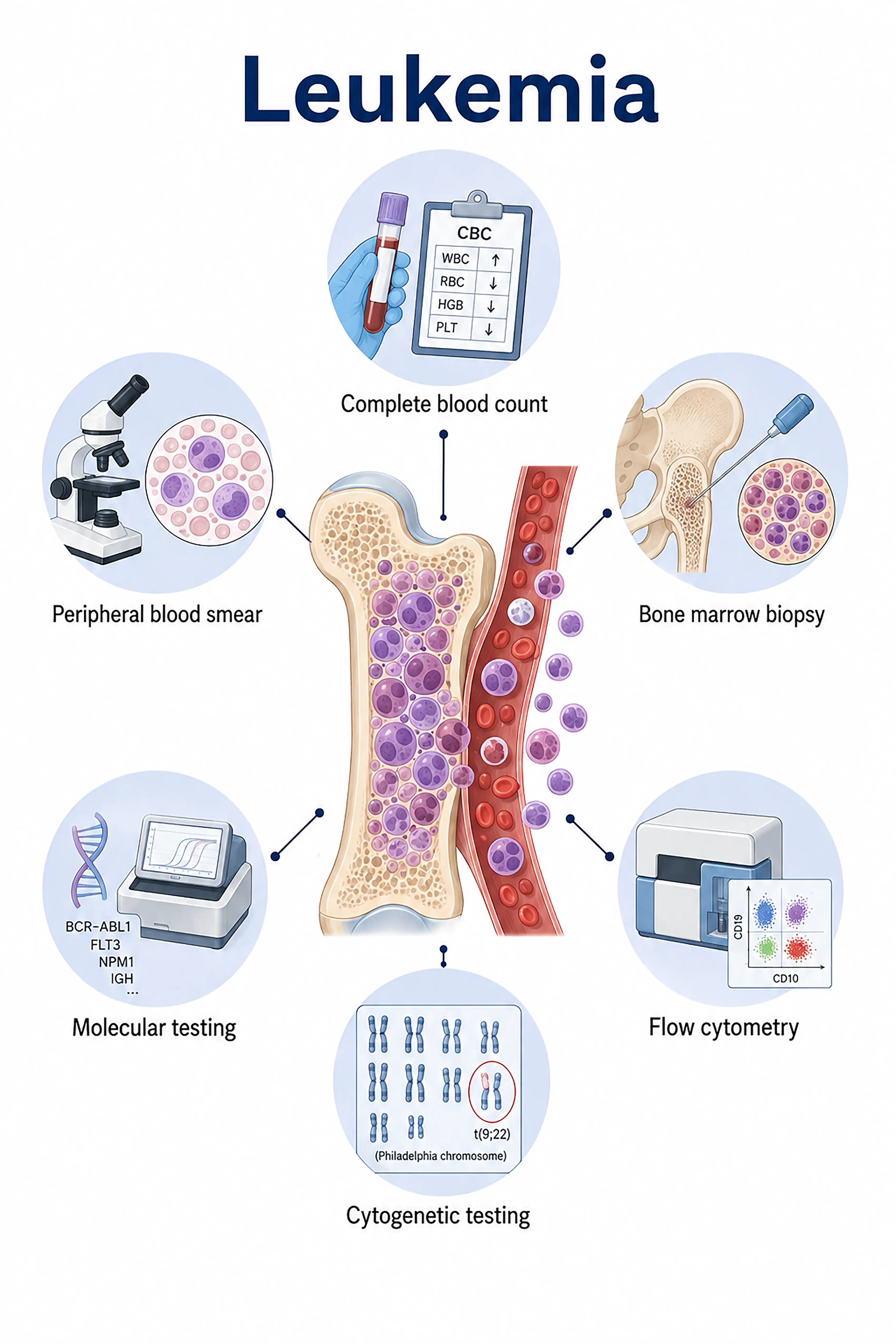
Diagnosis based on leukemia stages
1.Early diagnosis of leukemia
Peripheral blood analysis reveals abnormally high or low white blood cell counts, accompanied by anemia and thrombocytopenia.Peripheral blood smears show the presence of blasts and immature cells; bone marrow aspiration smears indicate a blast count exceeding 20%, with the diagnosis confirmed through cell morphology and flow cytometry analysis.
2.Intermediate-stage leukemia diagnosis
Presentation includes fever, bleeding, anemia, and enlargement of the liver, spleen, and lymph nodes.Bone marrow aspiration and biopsy reveal an increased proportion of blast cells; immunophenotyping determines the cell lineage (myeloid or lymphoid), and karyotype analysis assesses genetic abnormalities.
3.Advanced leukemia diagnosis
Extensive infiltration leading to multi-organ dysfunction.Bone marrow aspiration reveals heavy infiltration by leukemic cells; whole-body imaging assesses extramedullary infiltration, and molecular testing guides targeted therapy.
If leukemia is not diagnosed promptly, leukemic cells proliferate rapidly and suppress normal hematopoiesis, leading to severe infection, hemorrhage, and multi-organ failure, which are life-threatening.
When to Seek Medical Attention
Early signs of leukemia include persistent fever, paleness, skin petechiae and ecchymoses, nosebleeds, and bone pain.Please consult a doctor via the "Chat with a Doctor" feature for early detection.During the online consultation, the doctor will ask about your symptoms and their duration, and guide you through necessary tests, such as a complete blood count (CBC) and bone marrow examination.
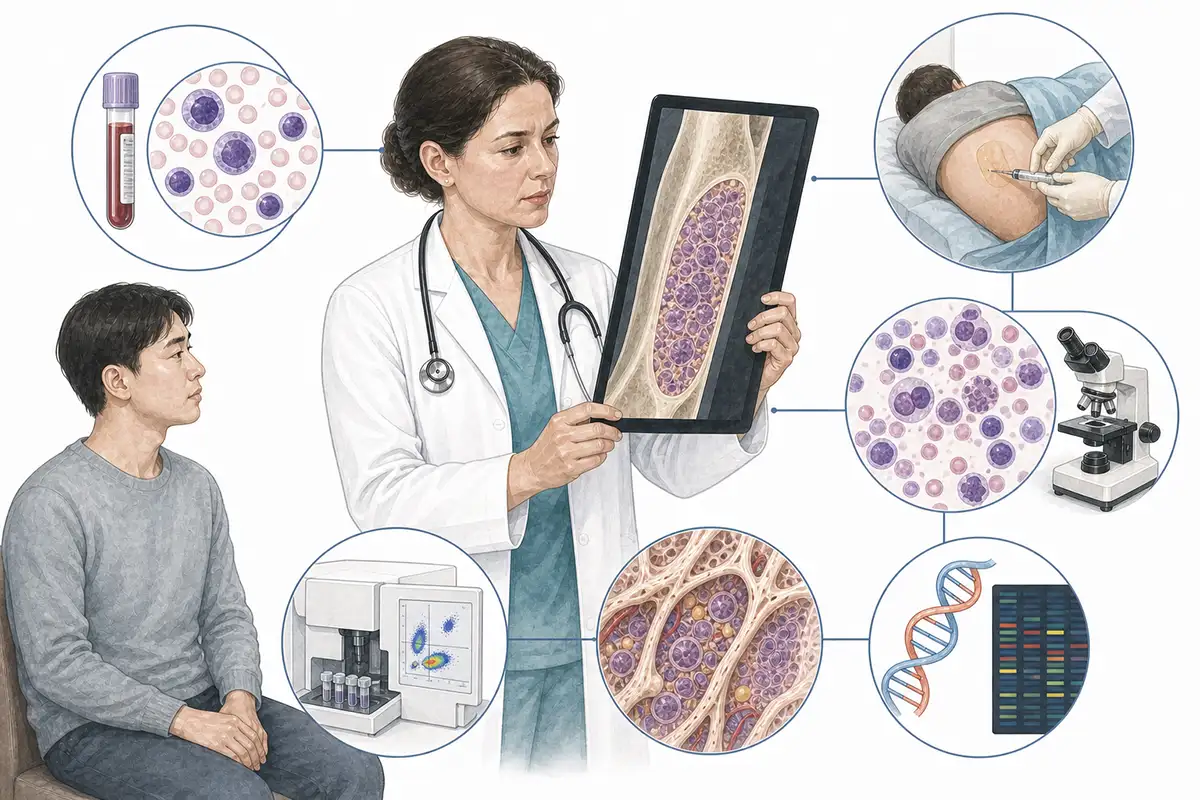
Basis for Leukemia Diagnosis
1.Complete blood count (CBC)
A complete blood count (CBC) is the primary screening tool for leukemia; typical findings include abnormally high or low white blood cell counts, accompanied by decreased hemoglobin and platelet counts.
2.Peripheral blood smear
Microscopic observation of peripheral blood smears revealing primitive and immature cells (blasts) serves as a key clue indicating leukemia.
3.Bone marrow aspiration smear
Stained smears of bone marrow fluid obtained via aspiration are examined; a blast cell count of ≥20% is the gold standard for diagnosing acute leukemia, allowing for the observation of cellular morphological characteristics.
4.Flow cytometry
Determines the origin and differentiation stage of leukemia cells through immunophenotypic analysis; distinguishes between myeloid and lymphoid leukemias and serves as a core technology for classification and diagnosis.
5.Chromosomal karyotype analysis
Detection of characteristic chromosomal translocations and gene rearrangements (e.g., t(8;21), t(15;17), Ph chromosome) is crucial for disease classification and prognostic assessment.
6.Genetic testing
Test for gene mutations such as FLT3-ITD, NPM1, CEBPA, and BCR-ABL to guide the selection of targeted therapies; this forms the basis for precision therapy.
7.Bone marrow biopsy
Bone marrow tissue sections are used to assess the degree of bone marrow cellularity, fibrosis, and patterns of leukemic cell infiltration, aiding in diagnosis and the evaluation of treatment efficacy.
8.Lumbar puncture
Cerebrospinal fluid is sampled to check for leukemic cell infiltration and assess for central nervous system leukemia, guiding intrathecal chemotherapy treatment.
9.Whole-body imaging examination
Chest CT and abdominal ultrasound are used to assess hepatosplenomegaly and lymphadenopathy, and to detect extramedullary infiltration lesions.
Daily Self-Check
Seek medical attention promptly if symptoms such as unexplained fever, pallor, skin petechiae, nosebleeds, or bone pain occur.Regular complete blood count (CBC) tests help detect abnormalities early.
Conclusion
Diagnosis of leukemia relies on complete blood counts (CBC), bone marrow aspiration, and flow cytometry.Early diagnosis and precise classification are essential for formulating personalized treatment plans.


