


Renal cancer is a tumor arising from the malignant transformation of epithelial cells in the renal tubular system; early symptoms are often inconspicuous, with approximately 50% of patients showing no obvious signs in the early stages, and the disease is frequently detected incidentally during routine health check-ups.
Global incidence of renal cancer
Renal cancer is one of the common malignant tumors of the urinary system. It has a peak incidence between the ages of 65 and 75, affecting men more frequently than women at a ratio of approximately 2:1.Smoking and obesity are high-risk factors.With the widespread adoption of health check-ups, the detection rate of small, asymptomatic, and localized renal cancers is steadily increasing.
Symptoms associated with renal cancer stages
1.Early symptoms of kidney cancer
The tumor is confined to the kidney and typically presents without obvious symptoms; some patients are diagnosed incidentally via ultrasound during health check-ups, and early detection rates have risen with the increased prevalence of such screenings.
2.Symptoms of mid-stage kidney cancer
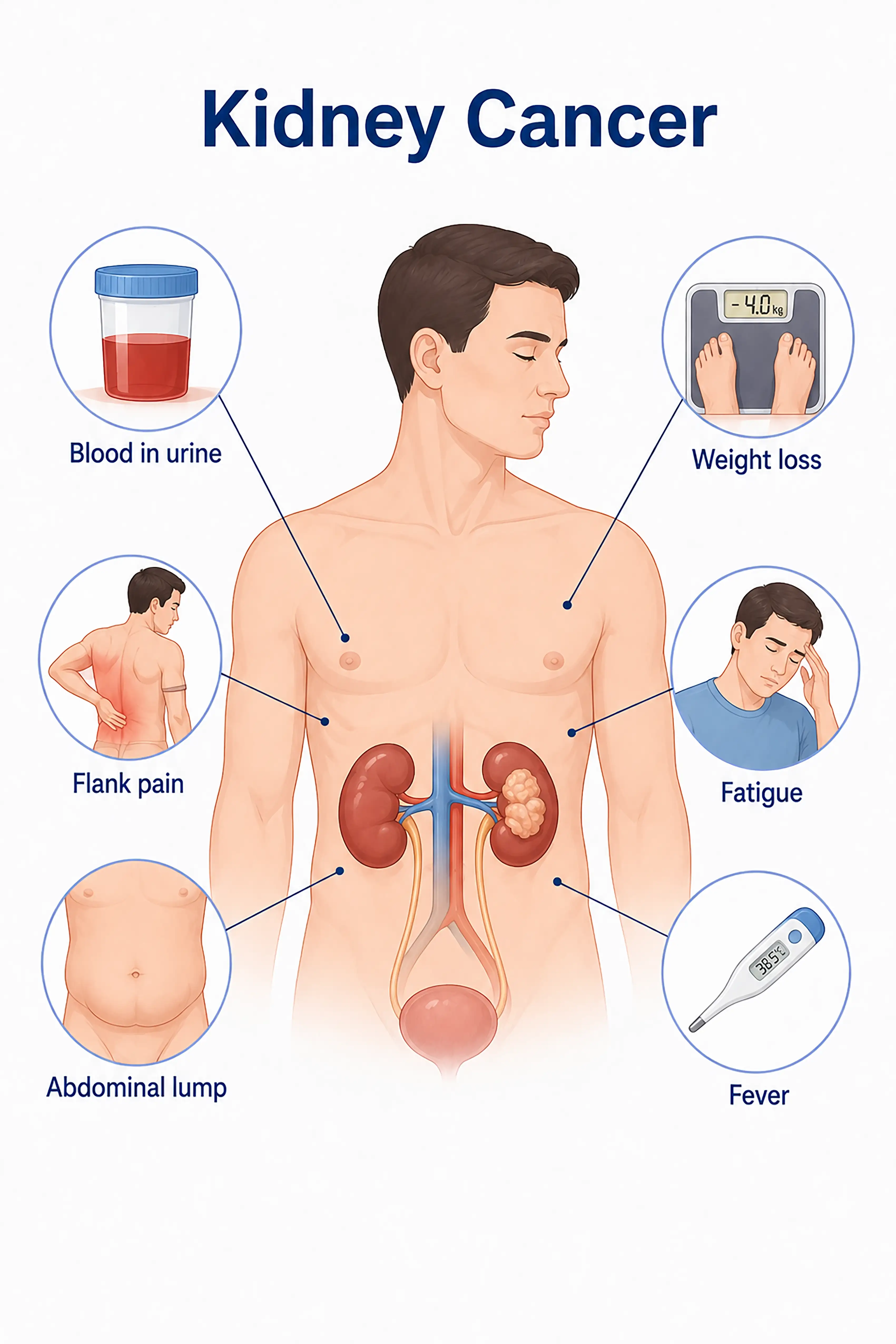
Symptoms include intermittent, painless, gross hematuria (blood visible in the urine throughout the voiding process), persistent dull or aching pain in the flank on the affected side, a palpable flank mass, fatigue, and weight loss.
3.Symptoms of advanced kidney cancer
Tumor invasion of surrounding tissues or distant metastasis results in persistent severe pain, massive hematuria, severe weight loss, bone pain, cough, and other symptoms of metastasis.
When to Seek Medical Attention
Early signs of kidney cancer include painless hematuria, lower back pain, and an abdominal mass.Please consult a doctor via the "Chat with a Doctor" feature to facilitate early detection.During the online consultation, the doctor will ask about your symptoms and risk factors, and guide you through the process of undergoing renal ultrasound and CT scans.
Staging of renal cancer
Stage 0 renal cancer
Cancer cells are confined to the renal tubules; this is classified as carcinoma in situ. It is often asymptomatic and may be incidentally detected via imaging during a physical examination.
Stage I renal cancer
Tumor diameter is less than 7 cm and confined to the kidney; often asymptomatic or presenting only with mild lumbar discomfort.
Stage II renal cancer
Tumor diameter >7 cm, still confined within the kidney; may present with hematuria and flank pain.
Stage III renal cancer
Symptoms worsen significantly when the tumor invades the renal vein or surrounding tissues, or is accompanied by regional lymph node metastasis.
Stage IV renal cancer
Symptoms related to metastasis appear when the tumor invades adjacent organs or metastasizes to distant sites such as the lungs, bones, and liver.
Detailed Symptoms of Kidney Cancer
1.Presence of painless hematuria
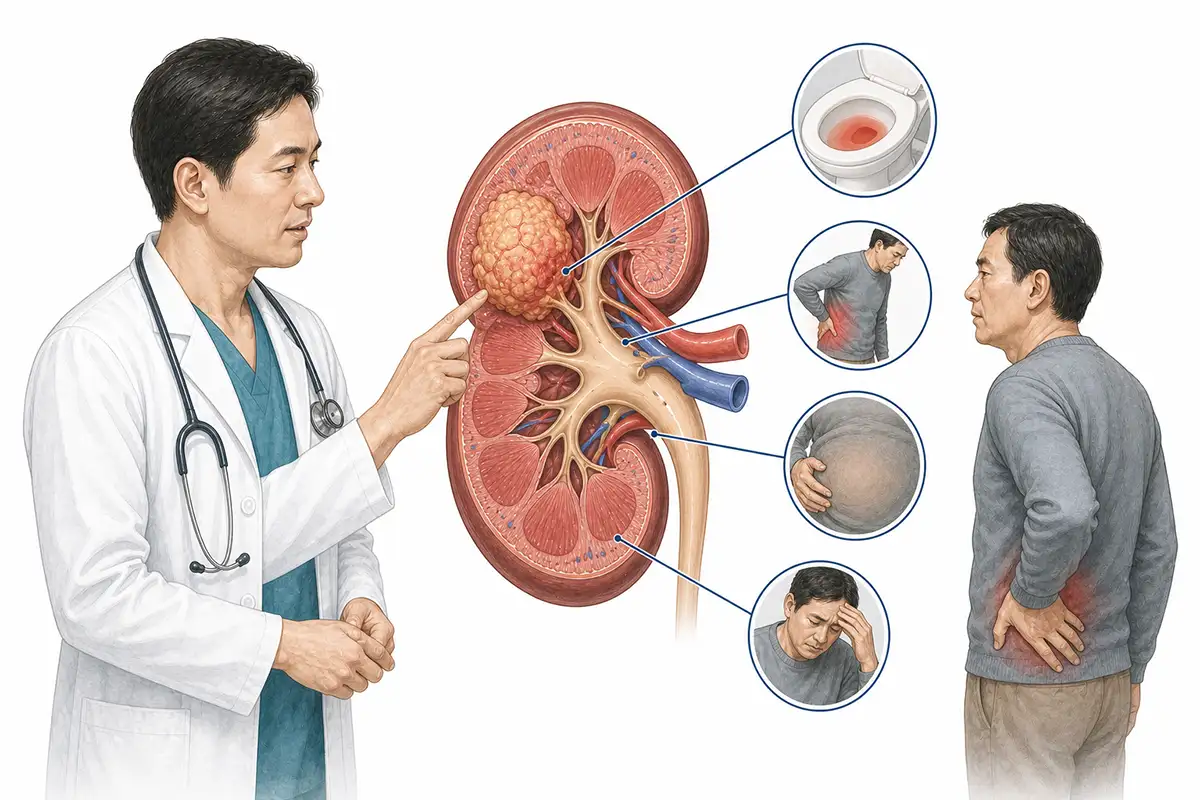
Intermittent, painless, total gross hematuria is the most typical symptom of renal cancer; the urine appears pink, red, or cola-colored, with fluctuating severity—it may resolve spontaneously but tends to recur.
2.Onset of lower back pain
Tumor growth stretches the renal capsule or invades lumbar muscles, causing persistent dull or aching pain—usually in the lumbar region on the affected side—that worsens with physical activity.
3.Abdominal mass
When the tumor is large, a hard, irregular mass may be palpable in the lumbar or upper abdominal region; it moves with respiration, indicating significant tumor size.
4.Rapid weight loss
Significant short-term weight loss due to tumor-induced metabolic consumption and reduced appetite, accompanied by systemic symptoms such as fatigue and anemia.
5.Fever and night sweats
Some patients experience unexplained low-grade fever or night sweats, which are associated with the release of pyrogens during tumor necrosis.
6.Anemia and fatigue present
Chronic blood loss and tumor-induced systemic depletion lead to anemia, manifesting as facial pallor, fatigue, dizziness, and reduced exercise tolerance.
7.Onset of hypertension
Tumor secretion of active substances like renin causes elevated blood pressure, or tumor compression of the renal artery leads to renovascular hypertension.
8.Bone pain and cough
Tumor metastasis to bones causes localized bone pain and pathological fractures; lung metastasis leads to cough, hemoptysis, and dyspnea.
9.Paraneoplastic syndrome
Renal cancer cells secrete ectopic hormones, leading to paraneoplastic syndromes such as polycythemia, hypercalcemia, and abnormal liver function.
Conclusion
Early symptoms of renal cancer are often inconspicuous, making regular medical check-ups crucial for early detection.Surgery is the primary treatment modality, while targeted therapy and immunotherapy offer new hope for patients with advanced-stage disease.


