


Renal cancer is a tumor resulting from the malignant proliferation of epithelial cells in the renal tubules of the kidney parenchyma.The kidneys are located in the retroperitoneal space—one on the left and one on the right—and their primary functions include filtering blood, producing urine, and maintaining internal homeostasis.
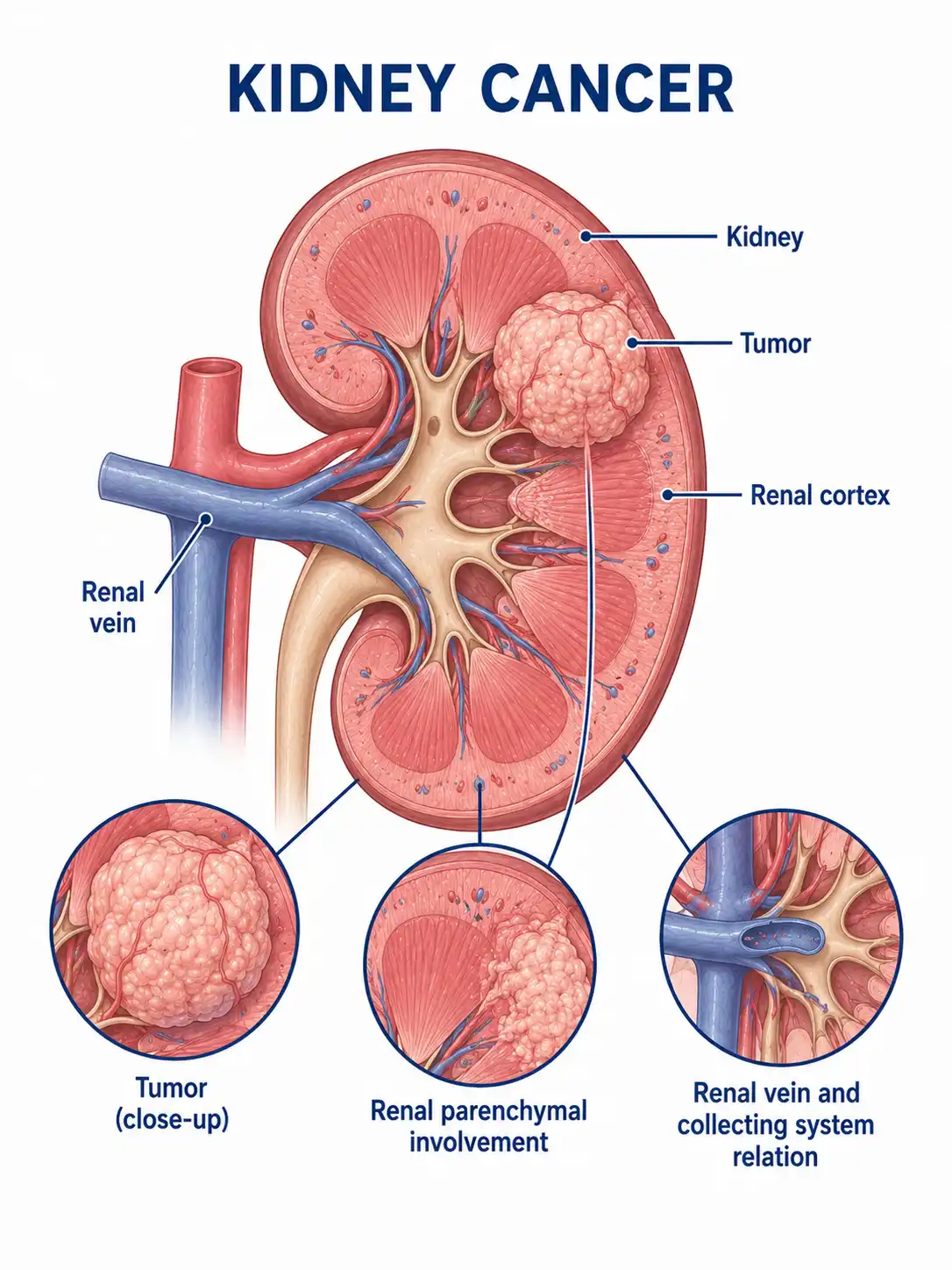
Global overview of renal cancer
Renal cancer ranks high in incidence among urological tumors worldwide.In my country, the incidence of renal cancer is rising year by year;the rate in men is approximately double that in women, and it most commonly affects individuals aged 50–70.
Consult a doctor regarding cancer-related issues
Individuals presenting with symptoms such as painless gross hematuria, flank pain, an abdominal mass, or unexplained weight loss should promptly consult a urologist.
Main types of renal cancer
1. Clear cell carcinoma
It is the most common type of renal cancer, accounting for approximately 70%–80% of cases; it originates from proximal renal tubular epithelial cells, is highly vascular, and is relatively sensitive to targeted therapy.
2. Papillary renal cell carcinoma
Accounts for approximately 10%–15% of renal cancer cases; classified into Type I and Type II. It has a higher incidence of multifocal and bilateral involvement, and the prognosis is better than that of clear cell carcinoma.
3. Chromophobe cell carcinoma
Accounts for approximately 5% of renal cancer cases; originates from the epithelial cells of the collecting ducts. It has a lower degree of malignancy and a relatively favorable prognosis.
4. Collecting duct carcinoma
Relatively rare; originates from Bellini's collecting ducts; highly malignant and aggressive with a poor prognosis.
5. Renal medullary carcinoma
Extremely rare;it predominantly affects individuals with the sickle cell trait, is highly malignant, and often presents with metastasis at the time of diagnosis.
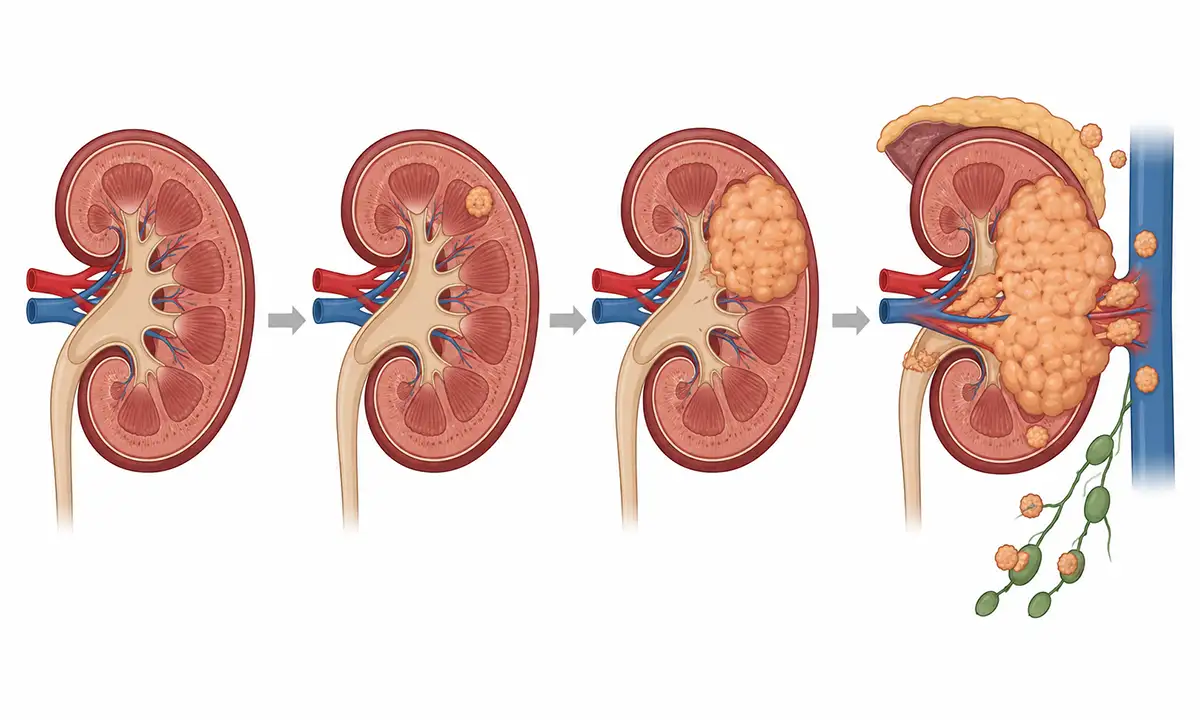
Typical symptoms and signs of renal cancer
1. Painless hematuria
Intermittent, painless gross hematuria is the most typical symptom of renal cancer; the severity of hematuria does not necessarily correlate with tumor size, and because it can resolve spontaneously, patients often delay seeking medical attention.
2. Lower back pain
Persistent dull or aching flank pain occurs when the tumor enlarges, stretching the renal capsule or invading surrounding tissues; the passage of blood clots through the ureter may trigger renal colic.
3. Abdominal mass
As the tumor enlarges, a hard, irregular mass becomes palpable in the lumbar or upper abdominal region, moving with respiration.
4. Weight loss
Unexplained weight loss, fatigue, and loss of appetite are systemic manifestations of malignant tumors, indicating disease progression.
5. Fever and anemia
Absorption of necrotic tumor tissue causes low-grade fever, while chronic blood loss leads to anemia, manifesting as facial pallor and fatigue.
6. Paraneoplastic syndromes
Some patients exhibit paraneoplastic syndromes—such as hypertension, hypercalcemia, and polycythemia—associated with bioactive substances secreted by the tumor.
Diagnostic methods for renal cancer
1. Ultrasound examination
Abdominal ultrasound is the preferred method for screening for renal cancer; it can detect space-occupying lesions in the kidney and assess tumor size as well as cystic or solid characteristics.
2. Contrast-enhanced CT scan
Contrast-enhanced abdominal CT is the primary modality for diagnosing renal cancer; it typically demonstrates a "rapid-in, rapid-out" enhancement pattern and allows for tumor staging.
3. Magnetic resonance imaging (MRI)
MRI offers diagnostic accuracy for renal cancer comparable to that of CT and is suitable for patients with renal insufficiency or allergies to iodinated contrast agents.
4. Chest CT scan
Chest CT is used to rule out pulmonary metastasis and is an essential component of routine preoperative staging examinations.
5. Routine urinalysis
Urinalysis can detect microscopic hematuria, while urinary cytology helps rule out the possibility of urothelial carcinoma.
6. Renal needle biopsy
For cases with inconclusive imaging findings or small tumors intended for active surveillance, image-guided needle biopsy may be performed to establish a definitive pathological diagnosis.
Renal Cancer Treatment Methods
1. Radical nephrectomy
Surgical removal of the affected kidney, perirenal fat, ipsilateral adrenal gland, and regional lymph nodes is the standard surgical approach for locally advanced renal cancer.
2. Nephron-sparing surgery
Partial nephrectomy involves removing the tumor along with a small amount of surrounding normal kidney tissue; it is suitable for patients with small, early-stage tumors or a solitary kidney.
3. Laparoscopic surgery
Laparoscopic resection for renal cancer is minimally invasive and allows for rapid recovery; it has become a standard procedure, while robot-assisted surgery offers greater precision.
4. Ablation therapy
Radiofrequency ablation and cryoablation are suitable for patients with small renal cell carcinomas who cannot tolerate surgery, inducing tumor necrosis through heat or cold.
5. Targeted therapy
Tyrosine kinase inhibitors, such as sunitinib and pazopanib, are first-line targeted therapies for advanced renal cancer.
6. Immunotherapy
Combining PD-1 inhibitors with CTLA-4 inhibitors or targeted therapies significantly improves survival rates in patients with advanced renal cancer.
7.Active surveillance
For elderly patients with small renal cell carcinoma and serious comorbidities, regular imaging follow-up may be chosen following fully informed consent.
8. Follow-up monitoring
Postoperative follow-up involving regular abdominal and chest CT scans is crucial to monitor for recurrence and metastasis.
Conclusion
Renal cancer is a common malignant tumor of the urinary system, often presenting with no obvious early symptoms.Early detection via imaging examinations and comprehensive treatment—centered on standardized surgery—help improve patient prognosis.


