


Global disease prevalence: Eye cancer is a rare malignant tumor worldwide; retinoblastoma is relatively common in infants and young children, and some cases show a familial genetic predisposition.
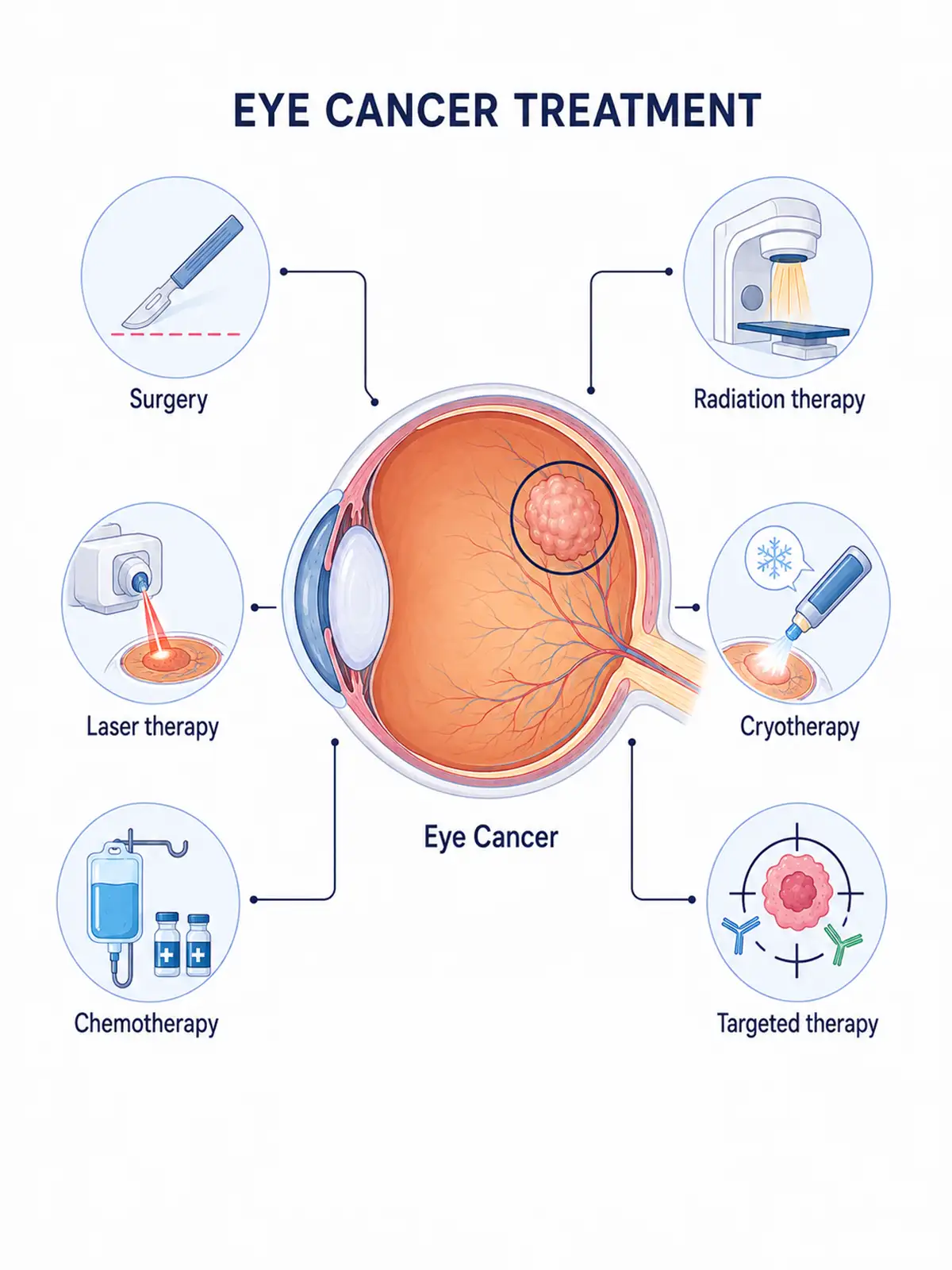
Treatment based on eye cancer stage
Early treatment (involving localized tumors and tumor shrinkage with good outcomes)
utilizing local therapies such as laser treatment or cryotherapy—can effectively control tumor progression while preserving the eyeball and visual function to the greatest extent possible.
Advanced-stage treatment (addressing severe involvement, alleviating symptoms, and prolonging survival)
primarily employs systemic therapies such as chemotherapy and surgery to alleviate clinical symptoms and maximize patient survival time.
Consequences of failure to receive timely treatment in the early stage: If standardized treatment is not administered promptly in the early stage, the tumor will continue to grow and metastasize to the orbit and intracranial structures; missing the optimal window for intervention will lead to disease progression.
Why choose Fosun Health for eye cancer treatment
Eye cancer diagnosis and treatment at Fosun Health are managed by a specialized ophthalmic oncology center; the team possesses extensive experience in the early diagnosis of retinoblastoma, eye-sparing treatments, and stereotactic radiosurgery.Leveraging a global medical network, patients have access to cutting-edge international treatment regimens, including laser photocoagulation, cryotherapy, transpupillary thermotherapy (TTT), CyberKnife M6 stereotactic radiosurgery, chemotherapy, and post-enucleation rehabilitation.
For complex cases such as advanced or recurrent eye cancer, a multidisciplinary team (MDT)—comprising experts in ophthalmology, radiation oncology, medical oncology, and reconstructive surgery—collaborates to formulate the optimal treatment plan; a cross-border consultation mechanism enables patients to obtain second opinions from leading international ophthalmic oncology centers.
Foshan Fosun Chancheng Hospital is equipped with the CyberKnife M6 precision radiotherapy system, enabling high-precision stereotactic radiosurgery for intraocular tumors with an accuracy of 0.1 mm; this approach destroys tumors while maximizing the preservation of vision and ocular structures.The hospital's ophthalmic oncology team is highly experienced in the comprehensive treatment of pediatric retinoblastoma, employing a combination of laser therapy, cryotherapy, and precision radiotherapy to offer eye-sparing treatment options for young patients.
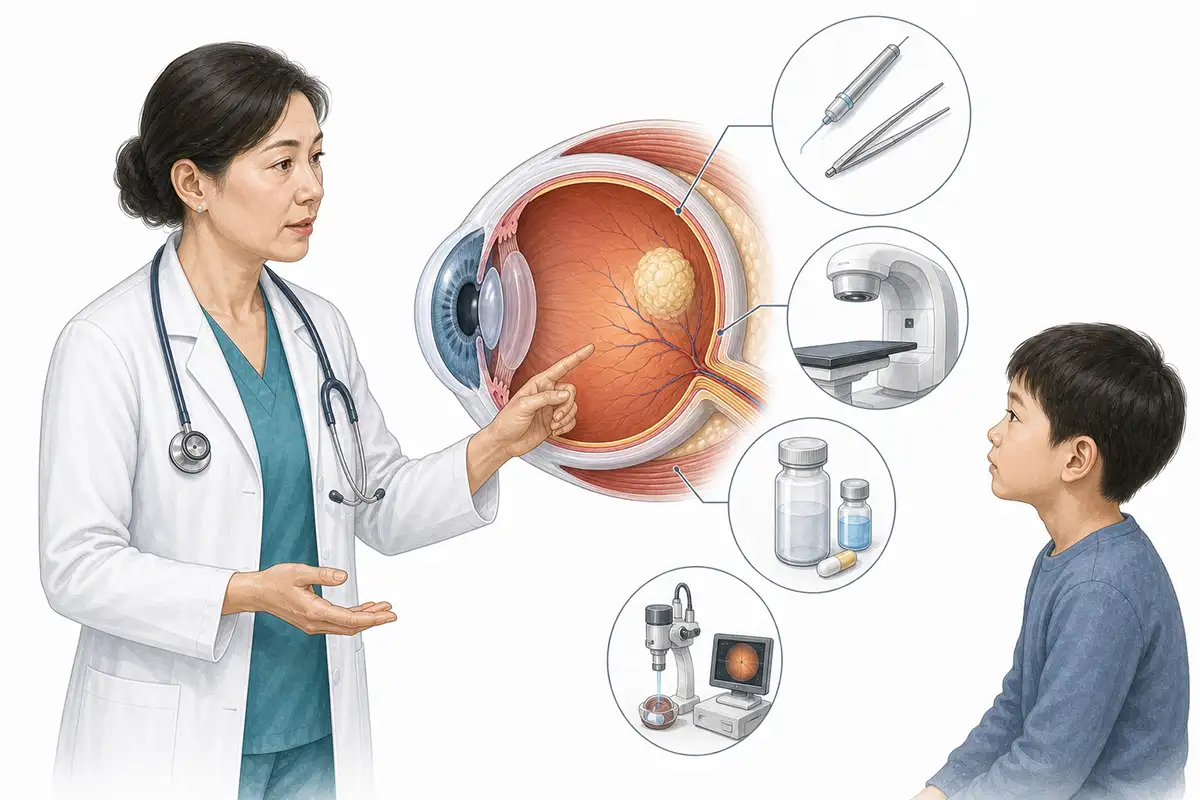
Eye cancer treatment methods
1.CyberKnife precision radiotherapy
For certain orbital and ocular malignancies—particularly lesions that cannot be directly surgically resected or require precise local irradiation—CyberKnife precision radiotherapy may be evaluated based on tumor location, size, and its relationship with critical structures such as the optic nerve.
Treatment advantages:
① Precise focusing: High-precision irradiation targeting localized ocular or orbital lesions.
② Non-surgical treatment: No traditional surgical resection required.
③ Protection of vital structures: Optimize the radiation dose based on the distance between the lesion and structures such as the optic nerve and eyeball.
④ Treatment of local recurrence: Can be used for select cases of residual or recurrent lesions following prior treatment.
2.Local resection of ocular tumor and eye-sparing therapy
For selected patients with localized intraocular tumors, eye-sparing treatment modalities—such as local resection or local intraocular therapy—may be selected based on tumor type, size, location, and visual function.
Treatment advantages:
① Local control: Direct or local treatment of intraocular tumors.
② Preserve the eyeball: Some patients can avoid immediate enucleation.
③ Preservation of visual function: Formulate treatment plans based on tumor location to preserve residual visual function as much as possible.
④ Personalized selection: Select an appropriate treatment method based on tumor type and ocular anatomical structure.
3. VitalBeam linear accelerator precision radiotherapy
For certain patients with orbital malignancies—including those with unresectable tumors or cases involving local residual disease or recurrence—precision radiotherapy may be evaluated based on the extent of the lesion and the status of surrounding critical structures.
Treatment advantages:
① Precision irradiation: Formulate an individualized radiotherapy plan based on the location and extent of the lesion.
② Local control: Targets confirmed orbital or ocular lesions for treatment.
③ Dose optimization: Minimizes radiation exposure to the lens, optic nerve, and other normal tissues.
④ Non-surgical option: It can be used for certain lesions unsuitable for direct surgery.
4.Interventional therapy
For certain patients with intraocular malignant tumors, local interventional therapy may be evaluated based on specific pathological type, tumor size, location, and ocular condition; for example, ophthalmic artery interventional chemotherapy may be used for some cases of retinoblastoma.
5.Cryotherapy
Destroys cancer cells through cycles of extreme-low-temperature freezing and thawing; often combined with other treatments to enhance efficacy and serves as a key therapeutic modality.
6.Particle implantation
For certain patients with intraocular malignancies, brachytherapy using radioactive seeds may be evaluated based on tumor type, size, and location; for instance, radioactive plaque brachytherapy may be used for some uveal melanomas.
7.Enucleation
For certain patients—such as those with large tumor volumes, severe damage to ocular structures, an inability to preserve functional vision, or unsuitability for other eye-sparing treatments—enucleation may be evaluated.
Treatment advantages:
① Removal of intraocular lesion: Direct excision of the affected eye and the primary tumor tissue.
② Local control: Suitable for certain advanced-stage tumors or those causing severe structural damage to the eyeball.
③ Clarify pathology: Intact eyeball specimens can be used for pathological assessment.
④ Reduction of local complications: For tumors that severely affect ocular structures, it can mitigate problems caused by persistent local lesions.
8.Laser therapy
Uses laser thermal energy to directly destroy small, early-stage tumors; minimally invasive, preserving ocular structure and visual function while achieving favorable therapeutic outcomes.
9.Comprehensive therapy
Formulate an individualized comprehensive treatment plan—combining chemotherapy, laser therapy, surgery, and other modalities based on the patient's specific condition—to enhance therapeutic efficacy.
10 Supportive care
Approaches such as nutritional support, psychological counseling, and vision rehabilitation can comprehensively improve the patient's physical condition and quality of life.
Post-treatment care
Regularly monitor vision and the condition of the fundus; avoid eye trauma; attend scheduled follow-ups and actively cooperate with further treatment as advised.
Post-treatment examinations
Regular fundus examinations, orbital imaging follow-ups, and visual acuity assessments are required after treatment to detect tumor recurrence or changes in the condition in a timely manner.
Conclusion
Eye cancer poses a serious threat; successful treatment hinges on early detection, diagnosis, and intervention, as well as selecting the appropriate treatment plan and adhering to follow-up care to preserve both vision and life.


