


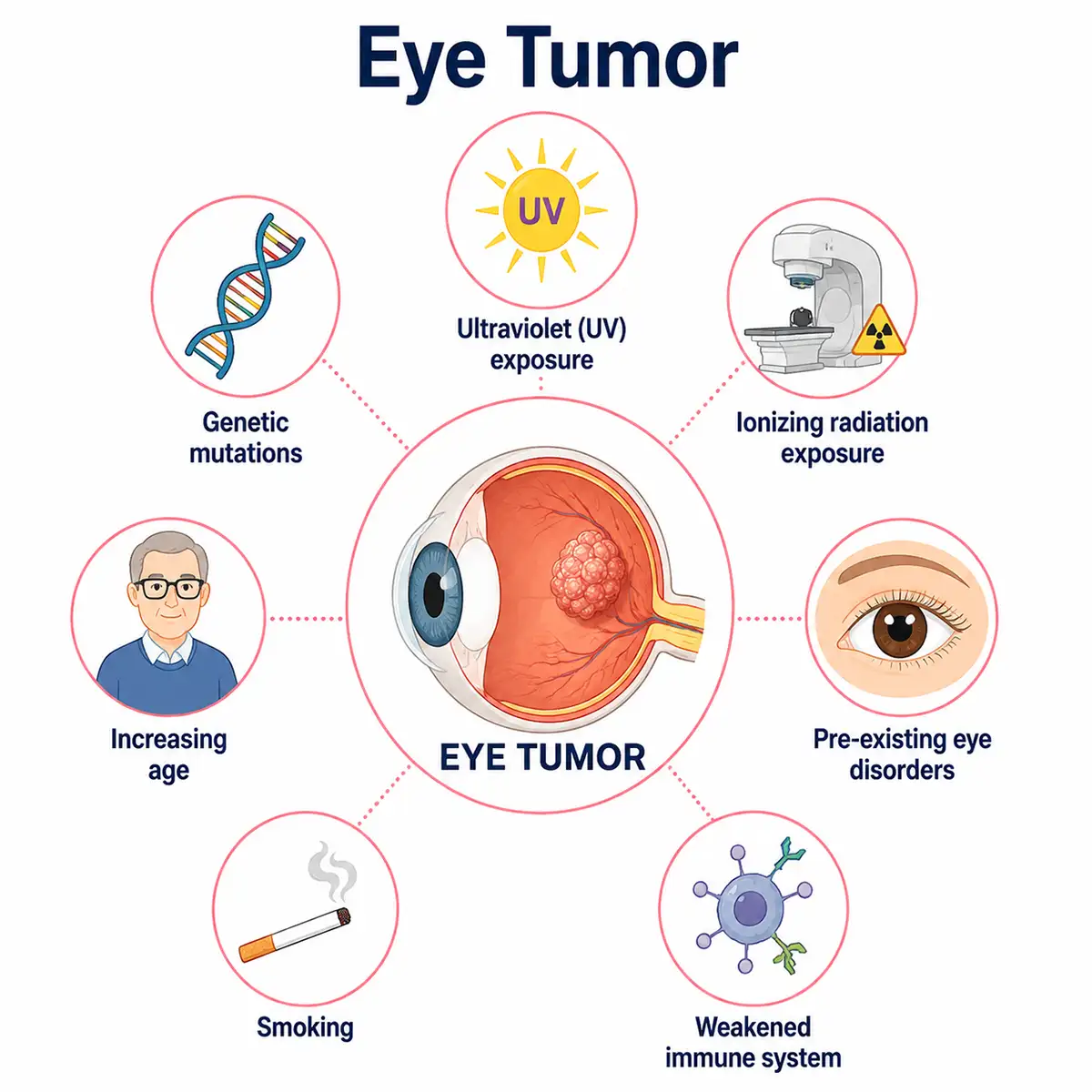
1. RB1 mutation
Biallelic inactivation of the RB1 tumor suppressor gene is a necessary condition for the development of retinoblastoma; hereditary cases present bilaterally and are transmissible to offspring.
2. Ultraviolet (UV) exposure
Long-term ultraviolet (UV) exposure is a significant risk factor for uveal melanoma; outdoor workers and individuals with light skin tones are at higher risk.
3. Malignant transformation of pigmented nevi
Congenital and acquired intraocular pigmented nevi can undergo malignant transformation into uveal melanoma, particularly in the case of large choroidal nevi.
4. Genetic syndromes
Patients with familial atypical multiple mole-melanoma syndrome (FAMMM) are at increased risk for both uveal melanoma and retinoblastoma.
5. Light-colored iris
Individuals with blue eyes or light-colored irises are at higher risk of developing uveal melanoma, a phenomenon linked to insufficient protective effects from melanin.
6. Age factor
Retinoblastoma is most common in children under five years of age, whereas uveal melanoma typically affects middle-aged and elderly individuals between 50 and 60 years old.
7. Ocular trauma
Recurrent ocular trauma and chronic inflammatory irritation may be associated with the development of certain intraocular malignancies, though a definitive causal relationship has not been established.
Conclusion
Eye cancer results from the interplay of various factors, such as RB1 gene mutations and ultraviolet (UV) exposure; retinoblastoma is the most common intraocular malignancy in children and poses a serious threat.Pediatric eye screenings and avoiding exposure to intense light are crucial for early detection and timely intervention.


