


1. Avoidance of radiation
Children should avoid radiological examinations and treatments involving the head and neck; ionizing radiation is a known causative factor for retinoblastoma and requires serious attention.
2. Genetic screening
Individuals with a family history of retinoblastoma should undergo *RB1* gene testing; patients with the hereditary form have a nearly 100% risk of developing the disease and require early monitoring.
3. Pediatric screening
Infants and young children should undergo regular fundus examinations and red reflex tests; early detection of retinoblastoma can increase the rate of eye preservation.
4. Sun and eye protection
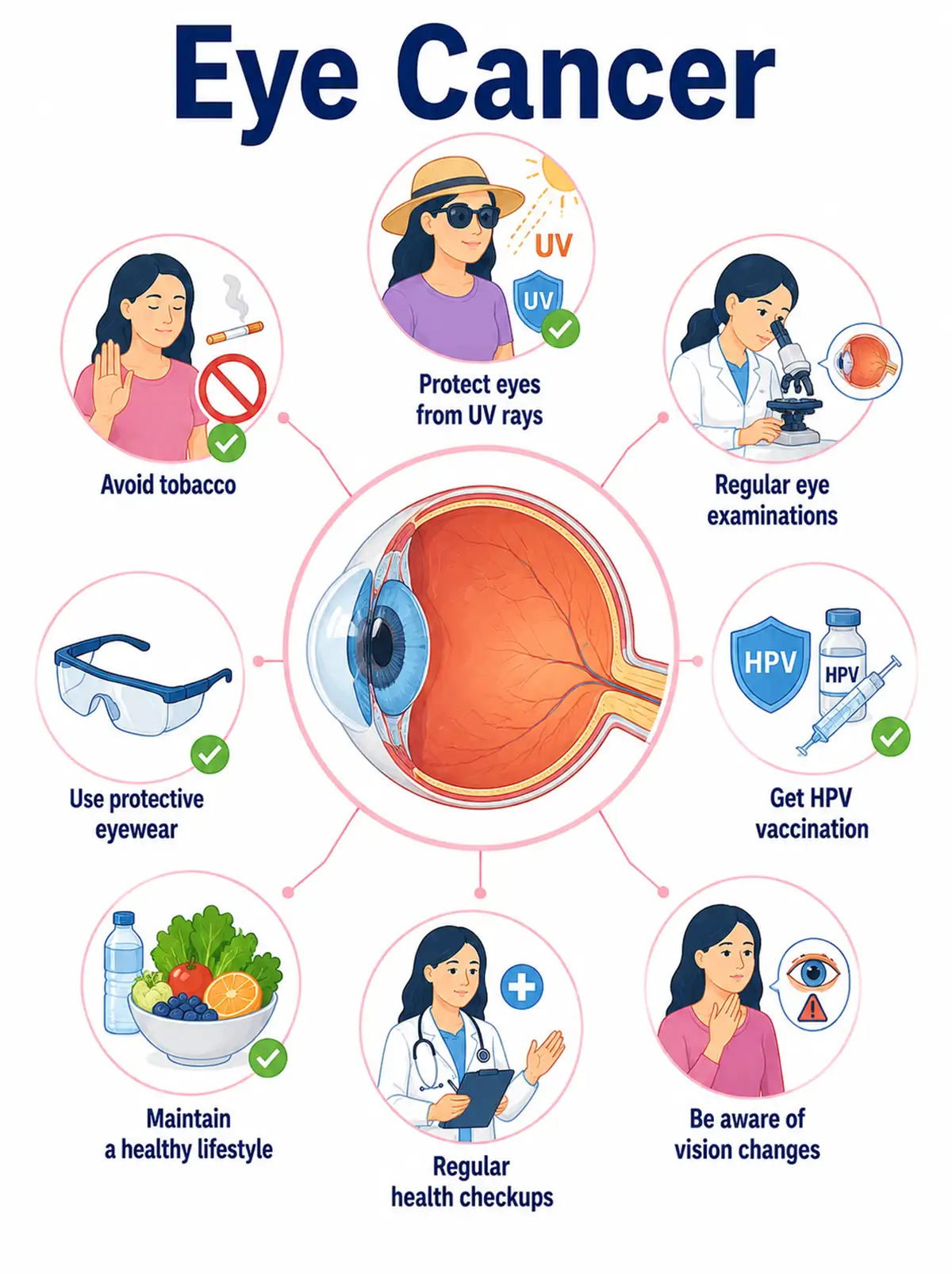
During prolonged outdoor activities, UV-protective sunglasses should be worn to minimize UV damage to the fundus and reduce the risk of uveal melanoma.
5. Regular ophthalmological examinations
Adults should undergo annual eye examinations, including fundus examinations, to allow ophthalmologists to detect intraocular space-occupying lesions early and conduct timely evaluations.
6. Focus on vision
Seek medical attention promptly if you experience decreased vision, visual field defects, an increase in "floaters," or redness of the sclera (whites of the eyes); these may be early signs of eye cancer.
7. Avoiding sun exposure
Individuals with light-colored irises should take special care to protect their eyes from the sun; light-colored eyes are more sensitive to ultraviolet radiation and carry a higher risk of uveal melanoma.
Conclusion
Eye cancer results from the interplay of various factors, such as RB1 gene mutations and ultraviolet (UV) exposure; retinoblastoma is the most common intraocular malignancy in children and poses a serious threat.Avoiding radiation and undergoing regular eye examinations are crucial for early detection and timely intervention.


