


Eye cancer primarily refers to retinoblastoma, the most common primary intraocular malignant tumor in infants and young children; it originates from retinal stem cells or cone cell precursors.As most patients are infants or young children unable to describe their symptoms, the disease is often difficult to detect in the early stages.
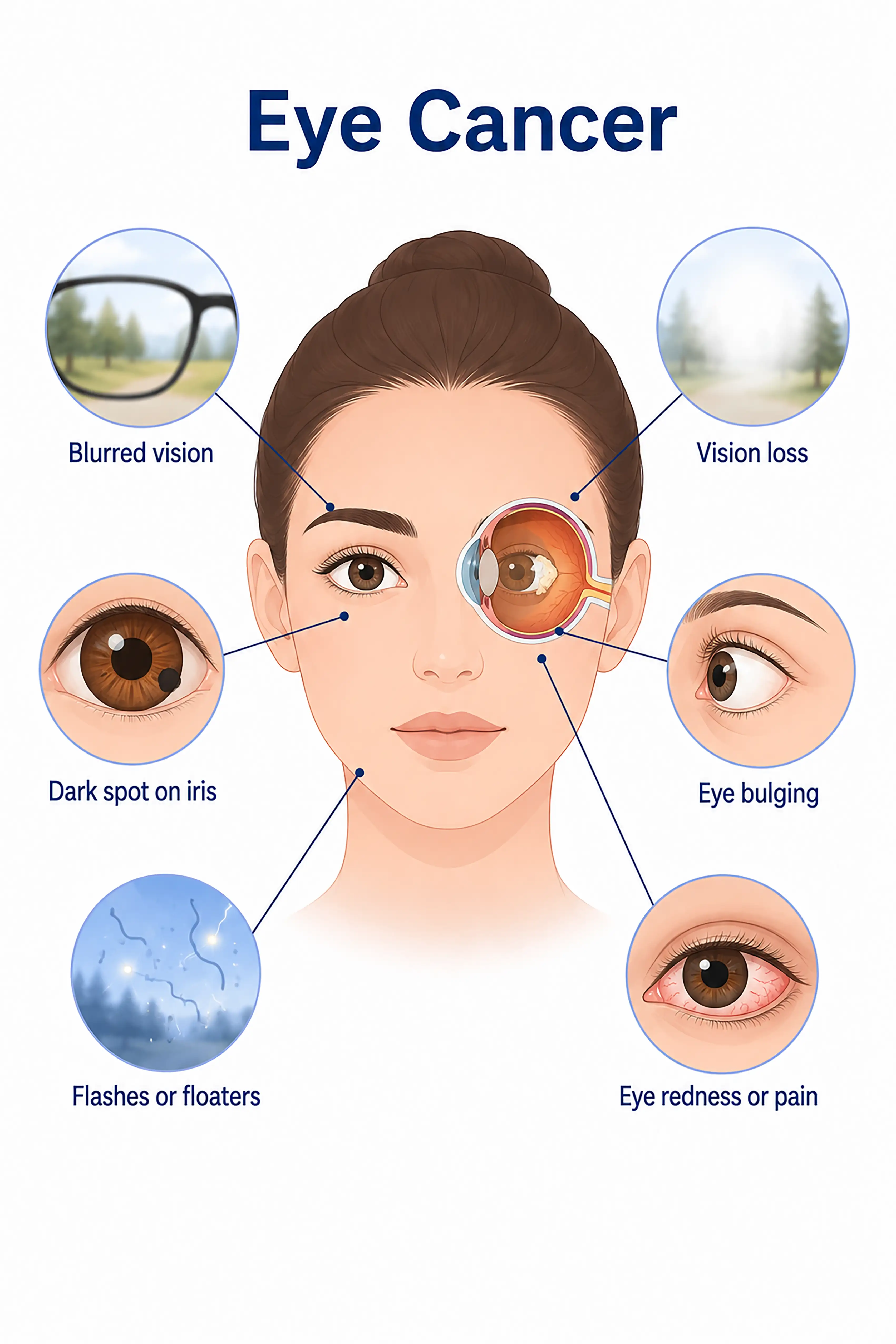
Global incidence of eye cancer
Retinoblastoma is the most common primary intraocular malignancy in infants and young children, with a global annual incidence of approximately 1 case per 15,000 to 20,000 live births.About two-thirds of cases are unilateral, and one-third are bilateral.The disease is associated with *RB1* gene deletions or mutations.Patients in developing countries are often diagnosed at an advanced stage.
Symptoms associated with eye cancer stages
1.Early symptoms of eye cancer
The tumor is confined to the retina. Affected children often show no obvious external signs; while varying degrees of visual impairment and visual field defects may be present, the condition is difficult to detect early because the children are too young to articulate their symptoms.
2.Symptoms of intermediate-stage eye cancer
When parents observe a white pupil (leukocoria), strabismus, or eyeball protrusion, the tumor has typically reached an advanced stage, and visual impairment is significant.
3.Symptoms of advanced eye cancer
Extraocular extension of the tumor into the orbit causes marked exophthalmos; it may metastasize intracranially along the optic nerve, leading to severe, life-threatening symptoms such as headache and nausea.
When to Seek Medical Attention
Early signs of eye cancer include a whitish appearance in the pupil area of infants and young children, strabismus (squinting), eyeball protrusion, and eye redness or pain.Please consult a doctor via the "Chat with a Doctor" feature to facilitate early detection.During the online consultation, the doctor will ask about the eye abnormalities you have observed and guide you through a fundus examination.
Staging of eye cancer
Stage 0 eye cancer
Cancer cells are confined to the retina; this is an early stage, often asymptomatic, and requires dilated fundus examination for detection.
Stage I eye cancer
The tumor is confined to the eyeball and is small in size; leukocoria (white pupil) or strabismus may appear, and vision is already impaired.
Stage II eye cancer
The tumor occupies the majority of the eyeball, accompanied by retinal detachment and vitreous seeding, resulting in severe vision loss or blindness.
Stage III eye cancer
The tumor extends beyond the eyeball, invading orbital tissues and causing exophthalmos (protruding eyes) and eyelid swelling.
Stage IV eye cancer
The tumor invades the intracranial space along the optic nerve or metastasizes distantly, leading to central nervous system symptoms and systemic debilitation.
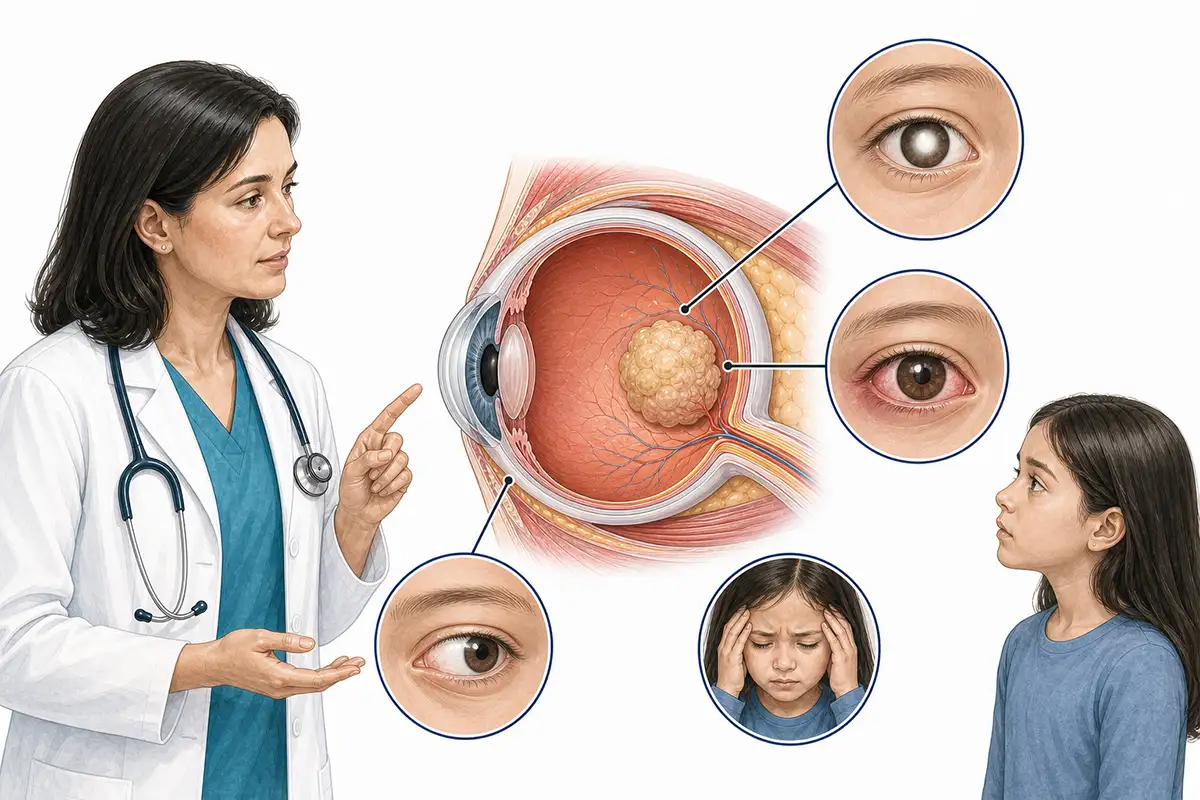
Detailed Symptoms of Eye Cancer
1.Appearance of leukocoria (white pupil)
A yellowish-white reflection in the pupil area (leukocoria)—commonly known as a "cat's-eye reflex"—is the most typical manifestation of retinoblastoma; it is particularly noticeable in dim light or in photographs taken with a flash.
2.Strabismus (squint)
Tumor invasion of the macular region leads to vision loss; the affected child develops esotropia or exotropia, which is a common reason for parents to seek medical attention.
3.Exophthalmos (bulging eyes)
Extraocular extension of the tumor into the orbit causes exophthalmos or an orbital mass, indicating the disease has reached an advanced stage.
4.Decreased visual acuity
When the tumor is located at the posterior pole or macular region, it can directly impair central vision; affected children may exhibit poor fixation, difficulty tracking objects, or significant vision loss.
5.Red and painful eye
Advanced-stage tumors can cause secondary glaucoma, leading to elevated intraocular pressure and symptoms such as ocular congestion, pain, photophobia, and lacrimation.
6.Heterochromia present
Tumor seeding in the anterior chamber or iris neovascularization can lead to changes in iris color or abnormal pupil shape; hyphema is occasionally observed.
7.Eyelid swelling
Tumor extension into the orbit causes eyelid swelling, congestion, and tenderness, as well as restricted eye movement.
8.Onset of headache and vomiting
The tumor spreads intracranially along the optic nerve, causing increased intracranial pressure and resulting in headache, vomiting, and restlessness.
9.Systemic metastasis
In the advanced stage, hematogenous metastasis to the bones, bone marrow, and liver may occur, leading to organ dysfunction and systemic wasting symptoms.
Conclusion
Retinoblastoma is the most common intraocular malignancy in infants and young children; parents should seek immediate medical attention if they notice a white pupil or strabismus.Early detection and treatment are crucial for preserving the eye and vision.


