


Global disease prevalence: Ependymoma is a relatively rare primary brain tumor worldwide; while it occurs in adults, it is relatively more common in children, and prognoses vary significantly.
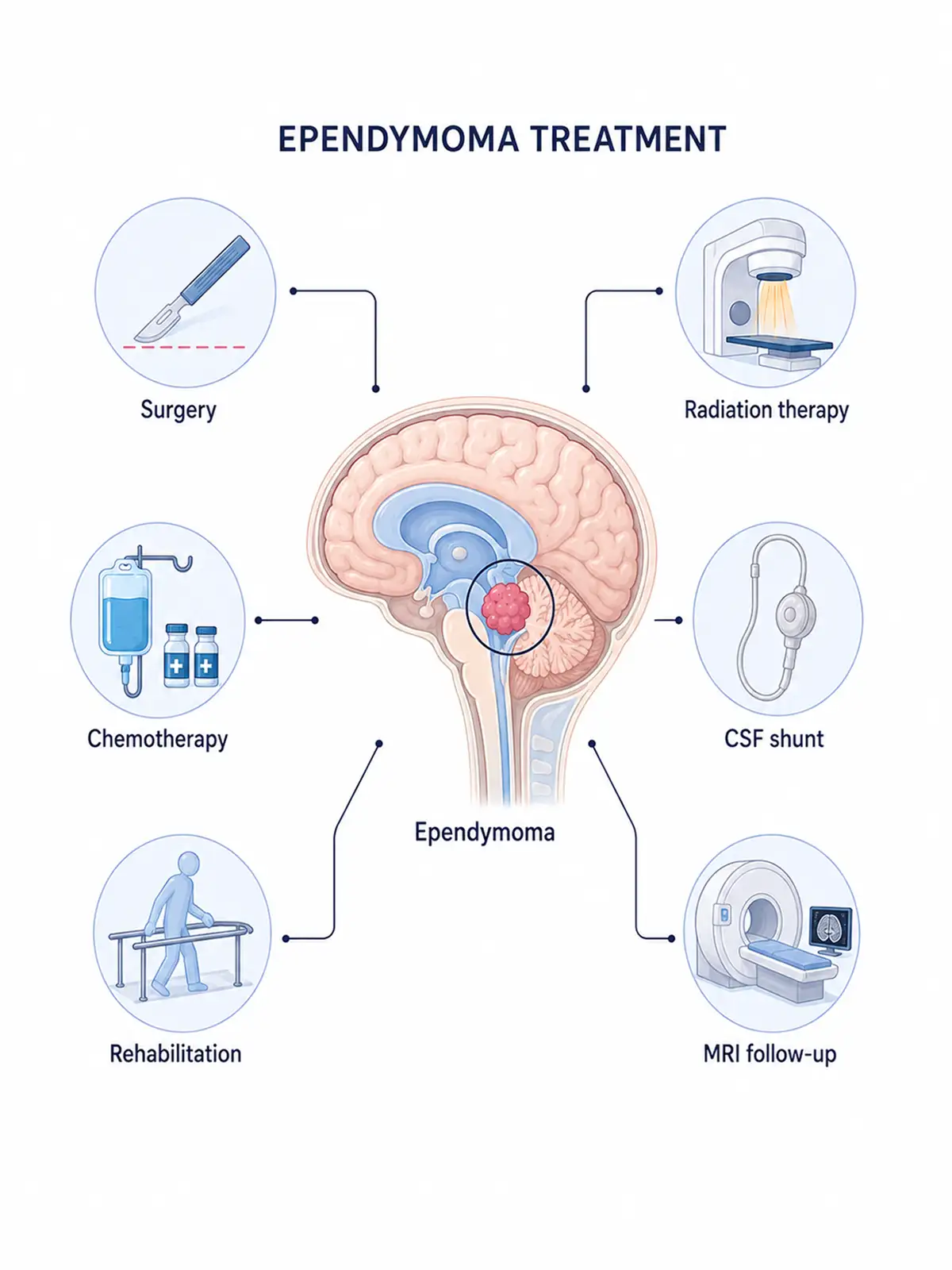
Staging-based treatment for ependymoma
Early treatment (involving a localized, small tumor with a favorable response)
specifically surgical resection combined with adjuvant therapy—can effectively control tumor progression, and the patient's prognosis is relatively good.
Treatment for the intermediate stage (involving local spread; aiming to inhibit growth and delay progression)
employs a comprehensive approach—such as surgery combined with radiotherapy and chemotherapy—to control further tumor spread and slow the rate of disease deterioration.
Treatment for advanced-stage disease (involving distant metastasis, symptom relief, and survival prolongation)
primarily relies on systemic therapies such as radiotherapy and chemotherapy to alleviate clinical symptoms and extend patient survival as much as possible.
Consequences of failing to receive timely treatment in the early stages: If standardized treatment is not administered promptly during the early stages, the tumor will continue to grow and spread to surrounding brain tissue; missing the optimal window for intervention leads to a worsening of the condition.
Why choose Fosun Health for ependymoma treatment
Leveraging the neurosurgery, M6 CyberKnife, VitalBeam, imaging, and molecular pathology platforms of its affiliated hospitals, Fosun Health facilitates multidisciplinary consultations involving experts in neurosurgery, radiotherapy, medical imaging, pathology, and rehabilitation.Based on factors such as whether the tumor is intracranial or spinal, the extent of surgical resection, pathological type, and the risk of cerebrospinal fluid dissemination, the team selects the optimal approach—either maximal safe resection or postoperative precision radiotherapy.
Microsurgery emphasizes the preservation of the brainstem, spinal cord, and critical neurological functions; precision radiotherapy can target the surgical cavity and residual tumor while minimizing radiation exposure to surrounding normal neural tissue, thereby reducing the risk of certain treatment-related adverse effects.Fosun Health provides continuous medical support, ranging from diagnosis and treatment to the management of hydrocephalus, swallowing, gait, and bowel and bladder functions.
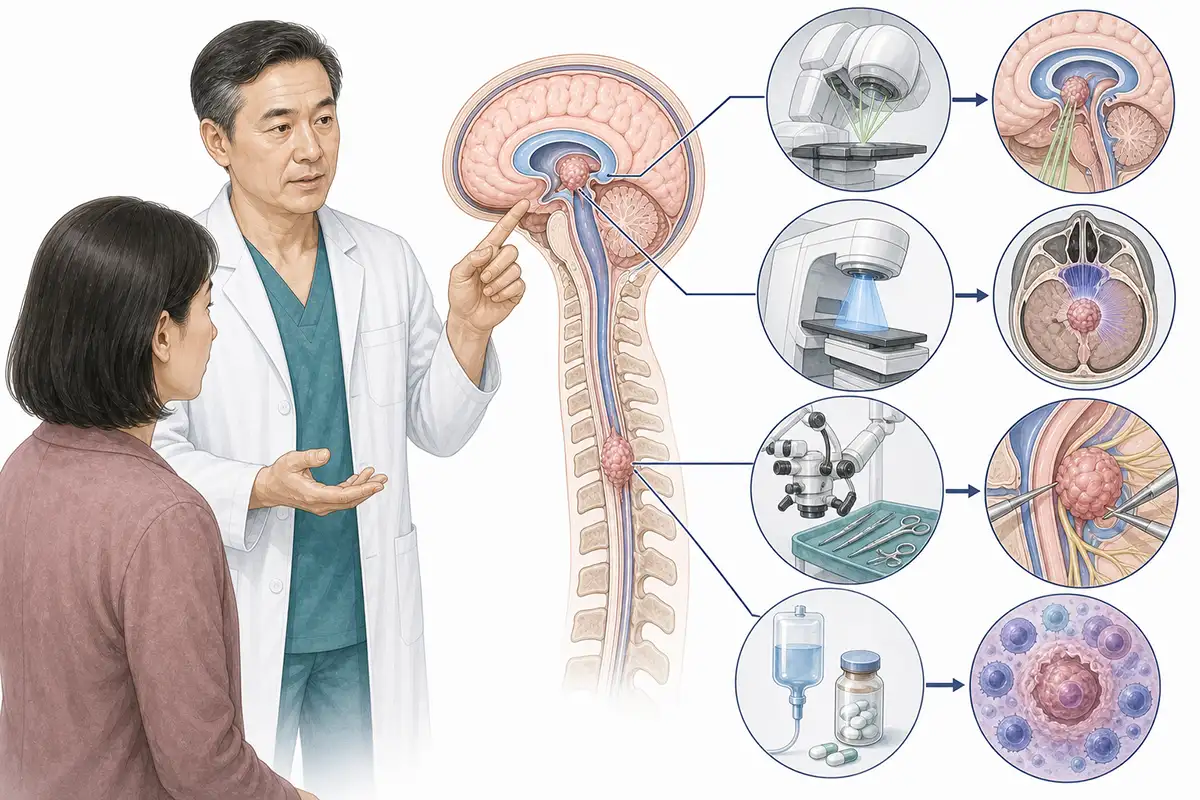
Ependymoma Treatment Methods
1.M6 CyberKnife treatment
Indicated for small-volume focal residual or recurrent ependymomas confirmed by MDT, where the distance between the lesion and critical structures (such as the brainstem or spinal cord) meets dose constraint requirements.
Treatment advantages:
① Targeting focal lesions: Suitable for select small residual volumes or recurrent nodules.
② Protect neurological structures: Reduce radiation dose to the brainstem, spinal cord, and surrounding brain tissue.
③ Hypofractionated treatment: Minimizes the impact of re-treatment on patient recovery.
④ Strict limitation of indications: Not suitable for cases with extensive cerebrospinal fluid dissemination.
2.VitalBeam precision radiotherapy
Involves irradiating the surgical cavity and residual tumor, with coverage of the craniospinal axis and disseminated nodules when necessary; indicated for patients with residual disease post-surgery, high-risk features, or recurrence.
Treatment advantages:
① Covers surgical cavities and residual lesions: Suitable for irregular postoperative target areas.
② Craniospinal axis irradiation: An option for patients at risk of dissemination.
③ Protection of the brainstem and spinal cord: Control the radiation dose received by critical neural structures.
④ Treatment planning based on age and subtype: Accounts for differences between pediatric and adult patients.
3.Microsurgical maximal safe resection
Indicated for resectable intracranial or spinal ependymomas; the goal is maximal safe resection while preserving brainstem, spinal cord, and neurological function.
4.Chemotherapy
Systemic elimination of potential cancer cells using anti-cancer drugs to effectively control the rate of tumor progression; commonly used for patients with recurrent or metastatic disease.
5.Proton beam therapy
Uses proton beams to precisely target tumor tissue while maximizing protection of surrounding normal tissue; suitable for pediatric patients with ependymoma.
6.Targeted therapy
Precision targeting of specific molecular markers offers favorable efficacy and relatively mild side effects, making it suitable for select patients with recurrent ependymoma.
Post-treatment care
Maintain a regular daily routine and a balanced diet; avoid strenuous exercise; attend scheduled follow-up appointments and actively cooperate with subsequent treatment as advised.
Post-treatment examinations
Periodic cranial or spinal cord MRI and neurological function assessments are required after treatment to timely detect changes in the disease status.
Conclusion
The risks posed by ependymomas cannot be ignored; the key to treatment lies in early detection, diagnosis, and intervention. Selecting an appropriate treatment plan and adhering to follow-up care helps improve quality of life.


