


Ependymoma is a tumor resulting from the malignant transformation of ependymal cells; it can occur in the ventricular system or the spinal cord's central canal. Symptoms depend on the tumor's location, with common manifestations including headache, nausea, vomiting, and difficulty walking.
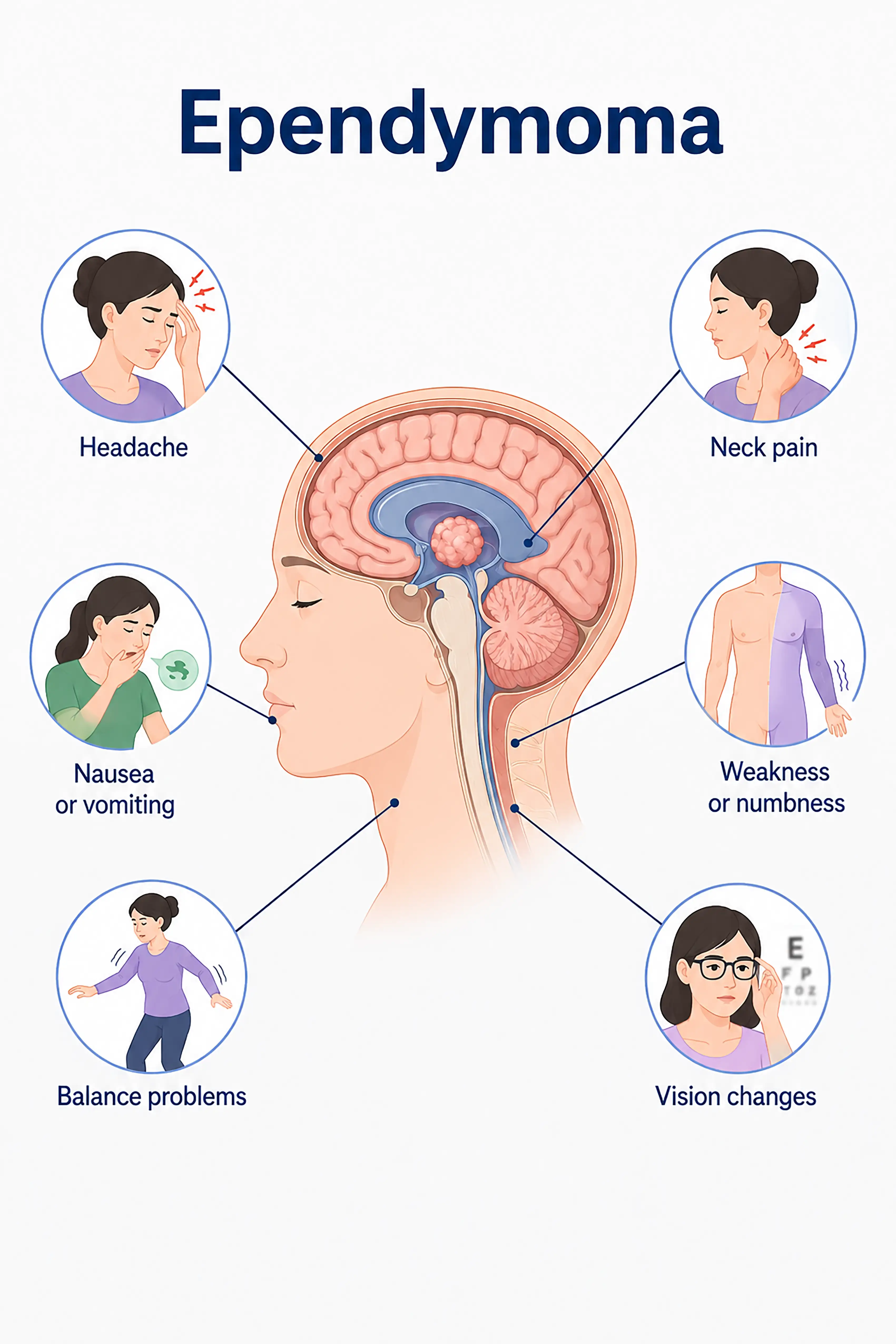
Global prevalence of ependymoma
Ependymomas are relatively rare, accounting for approximately 2%–5% of all central nervous system tumors.They can occur at any age but are most common in children, representing one of the more frequent types of pediatric intracranial tumors.Intracranial ependymomas are typically located in the fourth ventricle, whereas spinal cord ependymomas are more common in adults.
Symptoms associated with ependymoma staging
1.Early symptoms of ependymoma
The tumor is small, slow-growing, and often asymptomatic; mild headache, neck or back pain, or slight balance impairment may occur, making it prone to being overlooked.
2.Symptoms of intermediate-stage ependymoma
Worsening headache accompanied by nausea and vomiting, blurred vision, confusion, and irritability; onset of walking difficulties, neck and back pain, and limb weakness.
3.Symptoms of advanced ependymoma
Severe hydrocephalus causes a rapid rise in intracranial pressure, leading to coma, brain herniation, and vital sign instability; spinal cord involvement can result in paraplegia and bowel/bladder incontinence.
When to Seek Medical Attention
Early signs of ependymoma include persistent headaches, nausea and vomiting, difficulty walking, and neck or back pain.Please consult a doctor via the "Chat with a Doctor" feature for early detection.During the online consultation, the doctor will ask about your symptoms and disease progression, and guide you through the process of obtaining a cranial or spinal MRI scan.
Staging of ependymoma
Ependymoma Stage 0
This staging system is not applicable to ependymomas.Ependymomas are graded using the WHO grading system (Grades I–III) based on histological characteristics and molecular markers.
Ependymoma Stage I
WHO Grade I; a benign, slow-growing tumor with well-defined margins and mild symptoms; prognosis is favorable following complete surgical resection.
Ependymoma Stage II
WHO Grade II; low-grade malignancy; may present with hydrocephalus and focal neurological deficits; carries a risk of recurrence.
Ependymoma Stage III
WHO Grade III (anaplastic); characterized by active cell proliferation and rapidly progressive symptoms, including severe intracranial hypertension and neurological deficits.
Ependymoma Stage IV
Ependymoma is not classified as Grade IV.High-grade tumors can disseminate via cerebrospinal fluid, leading to spinal cord seeding metastases and extensive neurological impairment.
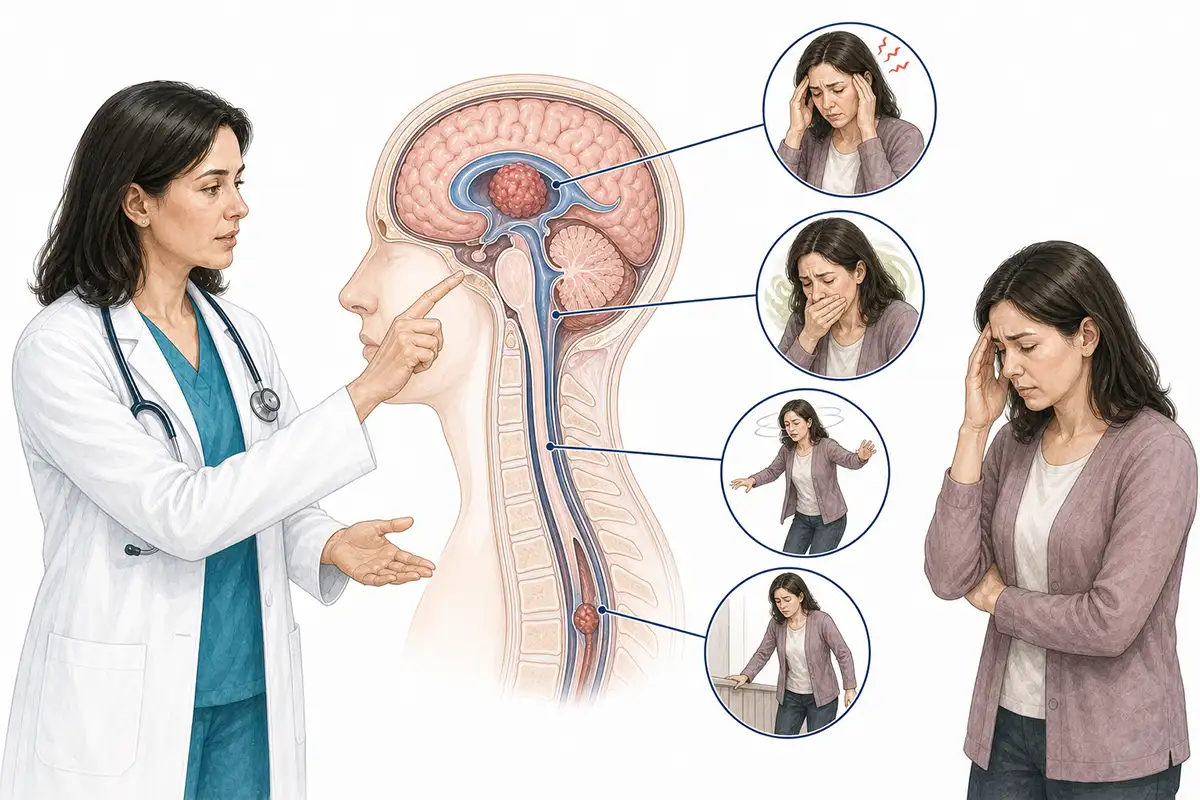
Detailed Overview of Ependymoma Symptoms
1.Frequent headache and vomiting
Intraventricular tumors obstruct cerebrospinal fluid circulation, leading to hydrocephalus and causing persistent headaches and projectile vomiting—symptoms that are notably worse in the morning and represent the most common clinical presentation of intracranial ependymomas.
2.Blurred vision
Increased intracranial pressure causes papilledema, leading to blurred vision and reduced visual acuity; severe cases can result in blindness in both eyes.
3.Difficulty walking
Compression of the spinal cord by an ependymoma causes lower limb weakness, difficulty walking, and instability, potentially accompanied by neck or back pain radiating to the limbs.
4.Neck and back pain
Spinal cord ependymomas cause neck or back pain that gradually worsens and radiates to the arms or legs, accompanied by numbness and tingling sensations.
5.Limb weakness and numbness
Tumor compression of the spinal cord or brain parenchyma causes weakness, numbness, or loss of sensation in the corresponding limbs; severe cases may result in paraplegia.
6.Balance disorder
Posterior fossa ependymomas affect cerebellar function, leading to balance disorders, ataxia, and unsteady gait, making patients prone to falls.
7.Confusion
Worsening increased intracranial pressure or hydrocephalus leads to confusion, impaired concentration, and irritability; these symptoms are particularly evident in pediatric patients.
8.Bowel and bladder incontinence
Compression of the conus medullaris or cauda equina by a spinal cord ependymoma causes changes in bowel and bladder habits; severe cases may result in incontinence.
9.Seizures
When the brain parenchyma is involved, the tumor irritates brain tissue, triggering seizures that may manifest as focal or generalized seizures.
Conclusion
Surgery is the primary treatment for ependymoma, and adjuvant radiotherapy can improve the prognosis.Early detection and treatment are crucial for preserving neurological function;regular follow-up is necessary to monitor for recurrence.


