


1. Genetic factors
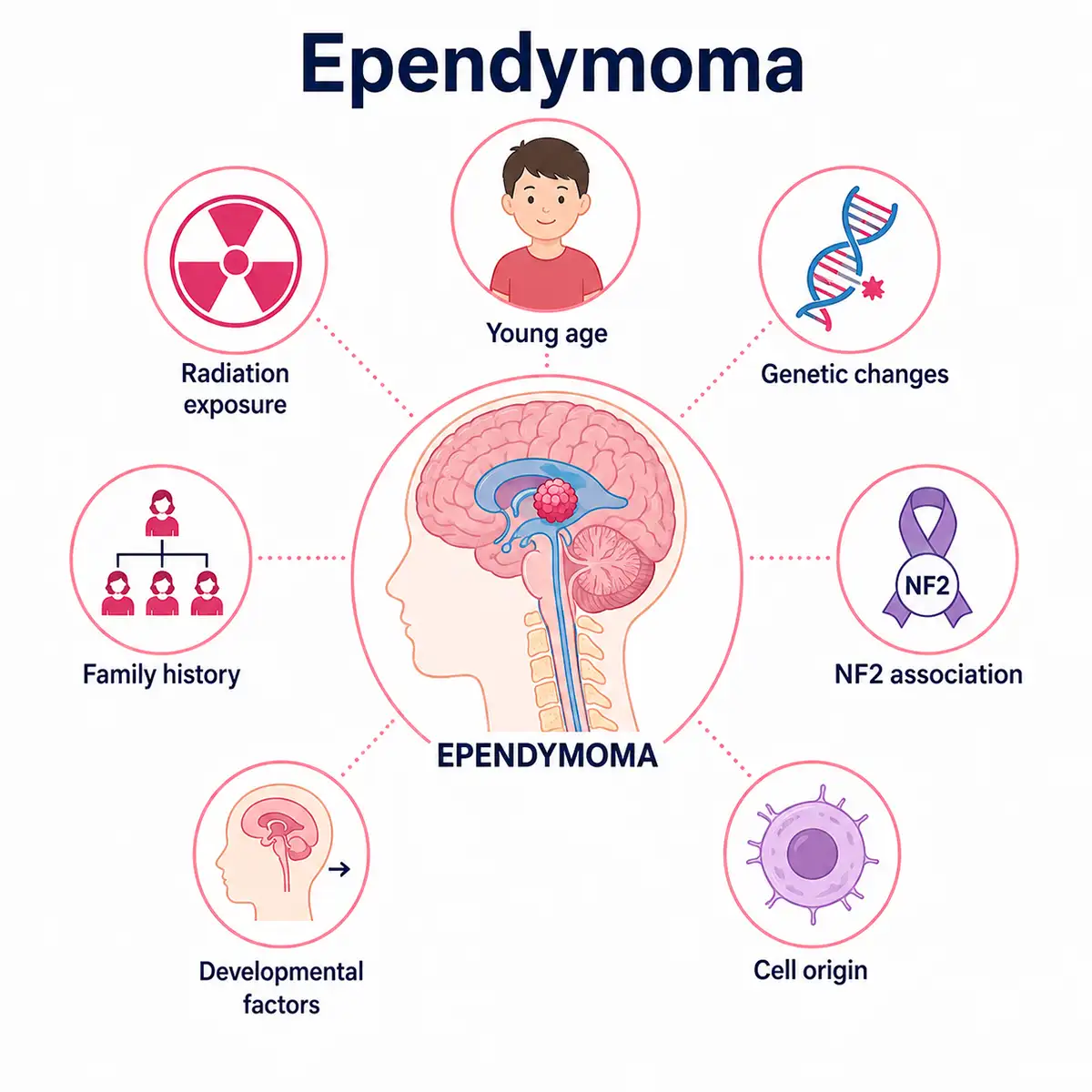
Approximately 5%–10% of cases are associated with mutations in genes such as *NF2* and *STAG2*; familial cases often involve *NF2* gene mutations and follow an autosomal dominant inheritance pattern.
2. Embryonic remnants
Abnormal differentiation of ependymal cells during early pregnancy leaves behind precursor cells with proliferative potential; uncontrolled growth and development of these cells can lead to the formation of an ependymoma.
3. Ionizing radiation
A history of head and neck radiotherapy increases the risk of developing ependymoma; the risk is especially high for individuals who underwent radiotherapy during childhood for conditions such as leukemia.
4. Age factor
Ependymomas are most common in children but can occur at any age;intracranial locations are more common in pediatric patients, whereas spinal locations are more common in adults.
5. Viral infection
Cytomegalovirus infection may increase the risk of ependymoma in children; the virus can promote tumorigenesis by interfering with the cell cycle.
6. Genetic syndromes
Hereditary disorders such as neurofibromatosis type 2 and Li-Fraumeni syndrome are closely associated with the development of ependymoma.
7. Gender differences
Ependymomas in children are slightly more common in males than females, whereas spinal cord ependymomas in adults show a slightly higher incidence in females; the mechanisms underlying these gender differences remain unclear.
Conclusion
Ependymomas result from a combination of factors, including embryonic developmental abnormalities and genetic influences; they are most common in children, pose serious risks, and can affect development.For individuals with a family history, genetic counseling is essential to ensure early detection and timely intervention.


