


Prevalence worldwide
Endometrial cancer has a relatively high incidence among female malignancies worldwide, particularly in developed countries and regions, seriously threatening women's health and quality of life.
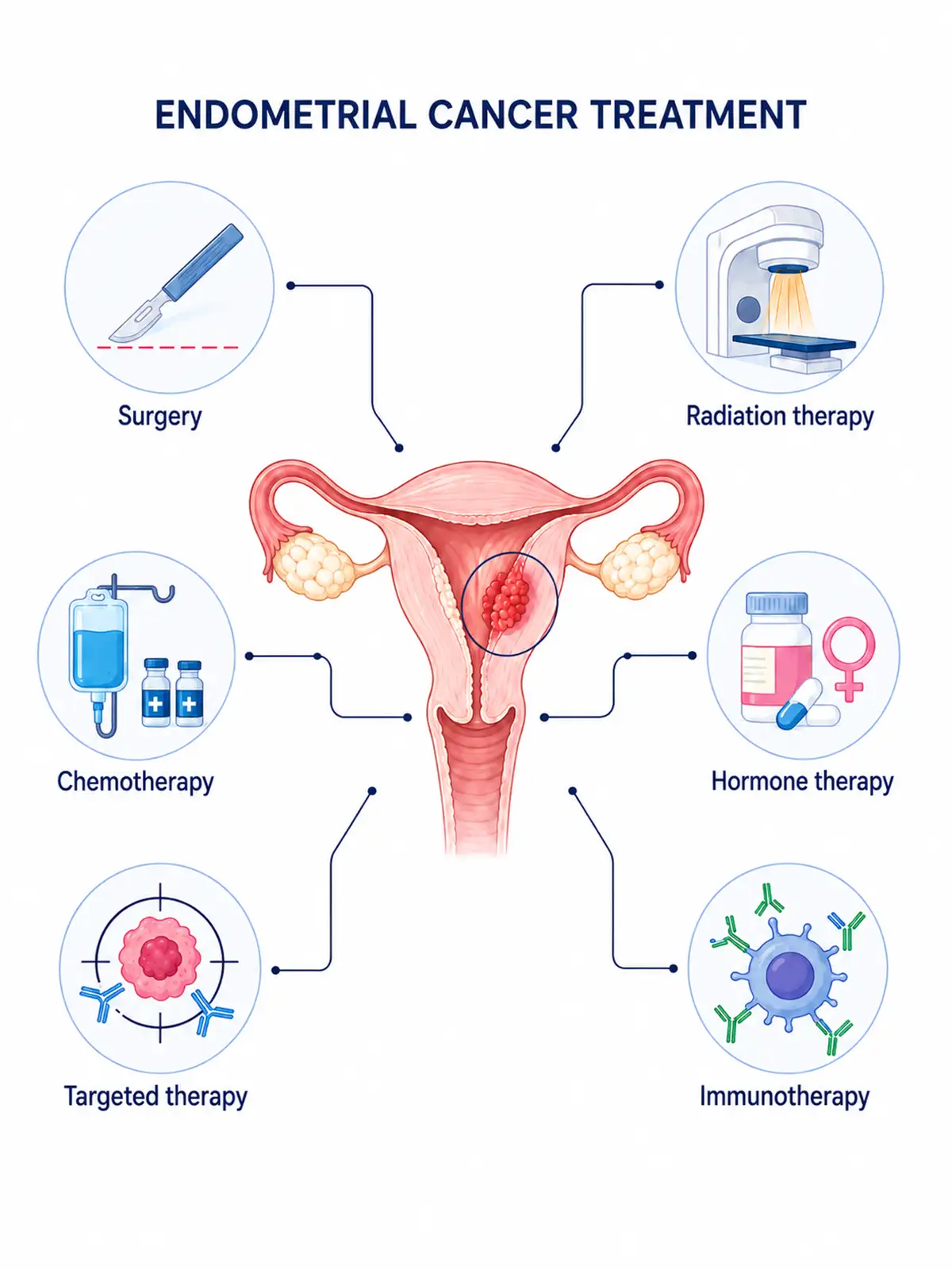
Endometrial cancer treatment by stage
Early treatment (localized tumor, reduced volume, favorable outcome)
Surgical removal combined with adjuvant treatment can effectively control tumor progression, with a relatively favorable prognosis.
Intermediate-stage treatment (addressing local spread, inhibiting growth, and delaying progression)
Combined surgery and chemoradiotherapy control further spread and slow disease deterioration.
Treatment for advanced disease (distant metastasis; aimed at symptom relief and survival prolongation)
Chemoradiotherapy and systemic treatments such as hormonal therapy are the main approaches, relieving symptoms and prolonging survival as much as possible.
Consequences of failing to receive timely treatment in the early stage: If standardized treatment is not administered promptly in the early stage, the tumor will continue to grow and spread/metastasize to surrounding tissues and distant organs, resulting in a missed opportunity for optimal intervention and a worsening of the condition.
Why choose Fosun Health for endometrial cancer treatment
Fosun Health draws on minimally invasive gynecological surgery, VitalBeam precision radiotherapy, brachytherapy, and pathology and molecular testing platforms at its hospitals. Gynecologic oncology, radiotherapy, imaging, pathology, and medical oncology specialists conduct multidisciplinary consultations. Plans are individualized according to stage, pathology, and markers including MMR/MSI, POLE, p53, HER2, and hormone receptors.
Minimally invasive surgery reduces trauma and supports recovery. Precision radiotherapy covers the uterine bed, vaginal cuff, and high-risk pelvic regions while minimizing bladder, rectal, small bowel, kidney, and bone marrow exposure to reduce some treatment-related adverse-event risks. Fosun Health also provides pelvic floor rehabilitation, nutritional support, endocrine management, and recurrence surveillance.
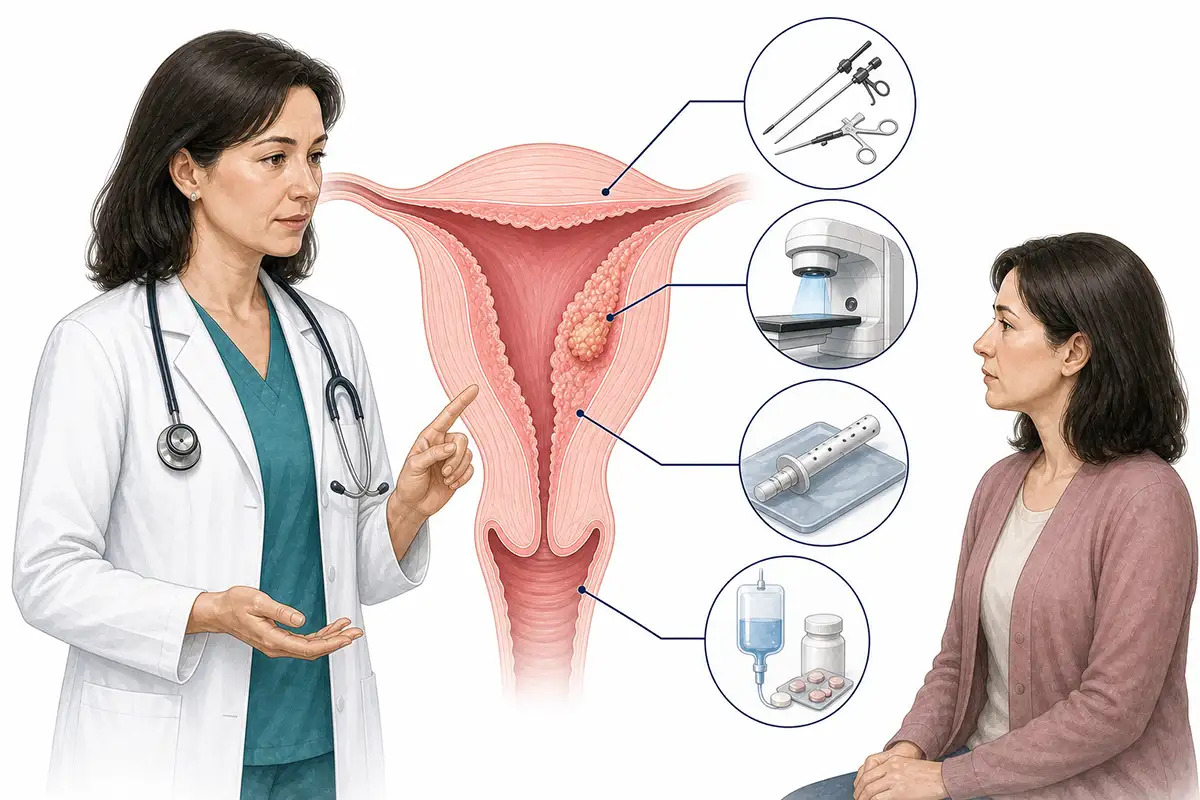
Endometrial cancer treatment methods
1.VitalBeam precision radiotherapy
Image guidance and intensity-modulated radiotherapy treat the uterine bed, vaginal cuff, and high-risk pelvic regions. Suitable for intermediate- or high-risk postoperative patients, inoperable disease, locally advanced disease, or pelvic recurrence.
Treatment advantages:
① High-risk coverage: Includes the surgical bed, pelvic lymph nodes, and imaging-visible lesions.
② Pelvic organ protection: Reduces doses to the bladder, rectum, small bowel, kidneys, and bone marrow.
③ Convenient combined treatment: Can be coordinated with brachytherapy, chemotherapy, or immunotherapy.
④ Individualized dosing: Plans reflect recurrence risk, disease extent, and organ tolerance.
2.Image-guided brachytherapy
A radiation source is placed near the vaginal cuff or intrauterine lesion, suitable for postoperative vaginal cuff recurrence risk control and selected inoperable early-stage patients.
Treatment advantages:
① Concentrated local dose: Focuses on the vaginal cuff or intrauterine lesion.
② Reduced normal tissue exposure: Controls bladder, rectal, and small bowel doses.
③ Defined treatment extent: Suitable for small, relatively localized high-risk areas.
④ Compatible with external beam radiation: Used alone or with pelvic radiotherapy according to risk.
3.Minimally invasive endometrial cancer staging surgery
Laparoscopic or robotic surgery removes the uterus and adnexa and performs necessary nodal assessment, mainly for operable patients.
4.Endometrial cancer surgery
Surgical removal of the uterus and affected adnexal tissue is the main treatment for early endometrial cancer and effectively removes disease.
5.Chemotherapy
Endocrine suppression for hormone receptor-positive patients blocks estrogen effects to prevent further tumor growth and spread.
6.Targeted therapy
Anticancer drugs systemically destroy potential cancer cells and effectively control progression, commonly in intermediate and advanced endometrial cancer.
7.Immunotherapy
Preoperative chemotherapy shrinks the tumor, creates more favorable conditions for resection, and improves the likelihood of successful removal.
8.Neoadjuvant therapy
Precise treatment of specific molecular targets offers good efficacy with relatively fewer side effects and is suitable for selected advanced cases.
Follow-up care after treatment
Maintain a regular daily routine and balanced diet, exercise moderately, attend scheduled examinations as advised, and cooperate actively with subsequent treatment.
Post-treatment examinations
Regular pelvic ultrasound, tumor marker testing, and imaging follow-up detect abnormalities promptly.
Conclusion
Endometrial cancer is a serious disease. Early detection, diagnosis, and intervention are central to treatment. An appropriate treatment plan and continued follow-up help improve quality of life and prolong survival.


