


Endometrial cancer arises from malignant transformation of endometrial glandular epithelial cells. Abnormal uterine bleeding predominates early; pain and systemic symptoms may develop later. Approximately 90% of patients present with vaginal bleeding.
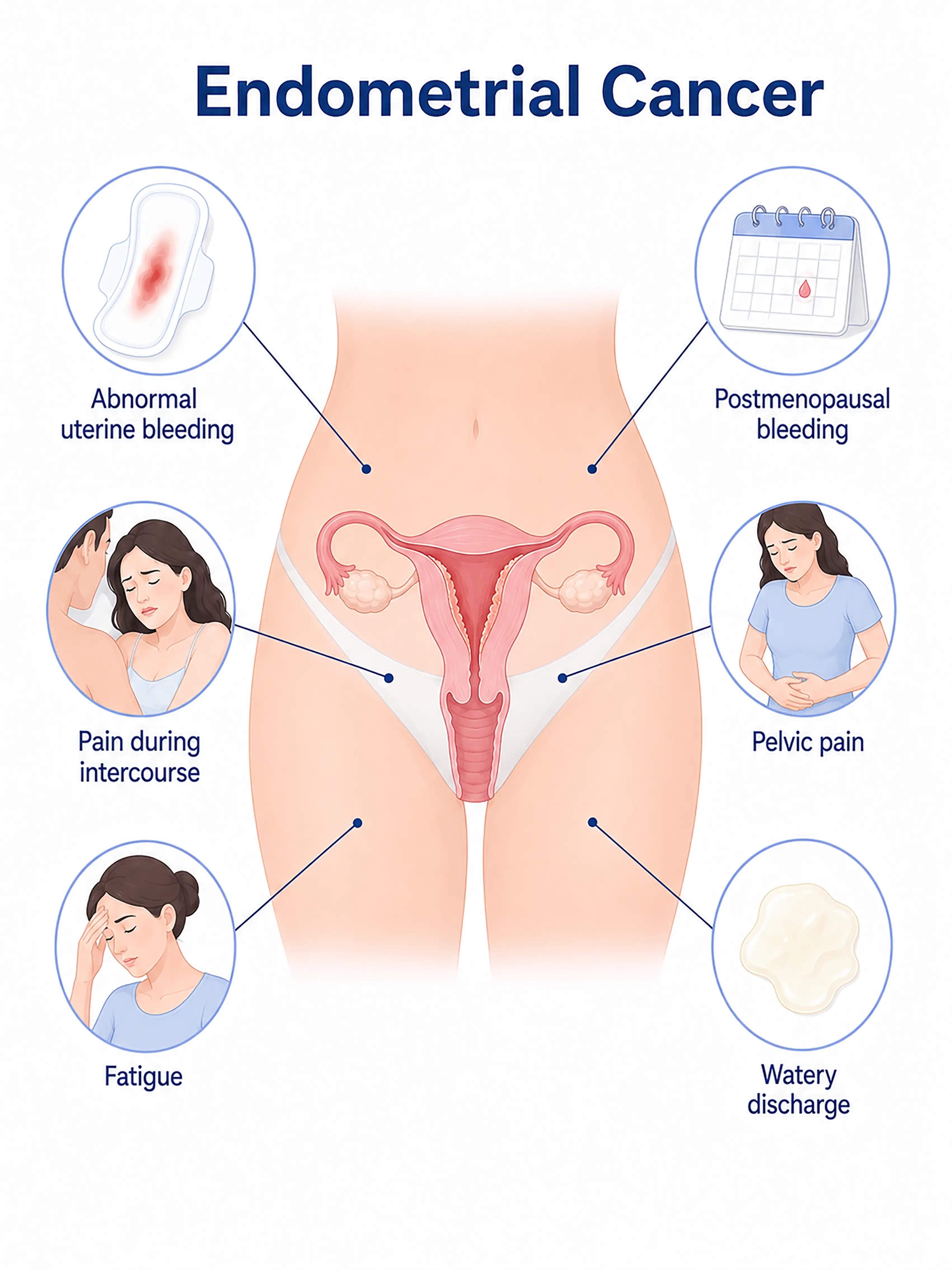
Endometrial cancer prevalence worldwide
Endometrial cancer incidence is rising among female malignancies worldwide and is relatively high in economically developed regions. Seventy to seventy-five percent of patients are postmenopausal, with an average age around 55. It is closely associated with metabolic syndrome, including obesity, diabetes, and hypertension.
Endometrial cancer symptoms by stage
1.Early-stage endometrial cancer symptoms
The tumor remains within the endometrium, mainly causing heavier or prolonged periods or slight postmenopausal vaginal bleeding, easily mistaken for menstrual irregularity or menopausal symptoms.
2.Intermediate-stage endometrial cancer symptoms
Myometrial invasion increases irregular bleeding, dull lower abdominal pain or dragging, and serous or bloody discharge, sometimes with mild anemia.
3.Advanced-stage endometrial cancer symptoms
Invasion of the cervix, vagina, and surrounding tissues causes copious foul-smelling vaginal discharge, persistent lower abdominal and lumbosacral pain, leg swelling, and symptoms of distant metastases.
When to Seek Medical Attention
Early warning signs include postmenopausal vaginal bleeding, markedly heavier or prolonged periods, and abnormal vaginal discharge. Please consult a doctor through "Chat with a Doctor" to support early detection. The doctor will ask about menstrual history and symptoms and guide you through ultrasound and endometrial biopsy.
Endometrial cancer stages
Stage 0 endometrial cancer
Cancer cells remain within endometrial glands without stromal invasion. This is carcinoma in situ, usually causing abnormal uterine bleeding and detected through curettage biopsy.
Stage I endometrial cancer
The tumor is confined to the uterine body with varying myometrial invasion, mainly causing irregular menstruation, heavier flow, and postmenopausal bleeding. This is the most common stage.
Stage II endometrial cancer
The tumor invades cervical stroma but remains within the uterus. Vaginal bleeding increases, with lower abdominal pain and lumbosacral aching.
Stage III endometrial cancer
The tumor invades the serosa, adnexa, or vagina, causing pelvic pain, leg swelling, and copious foul-smelling vaginal discharge.
Stage IV endometrial cancer
The tumor invades bladder or rectal mucosa or metastasizes to lungs, liver, or bones, causing corresponding organ dysfunction and systemic wasting.
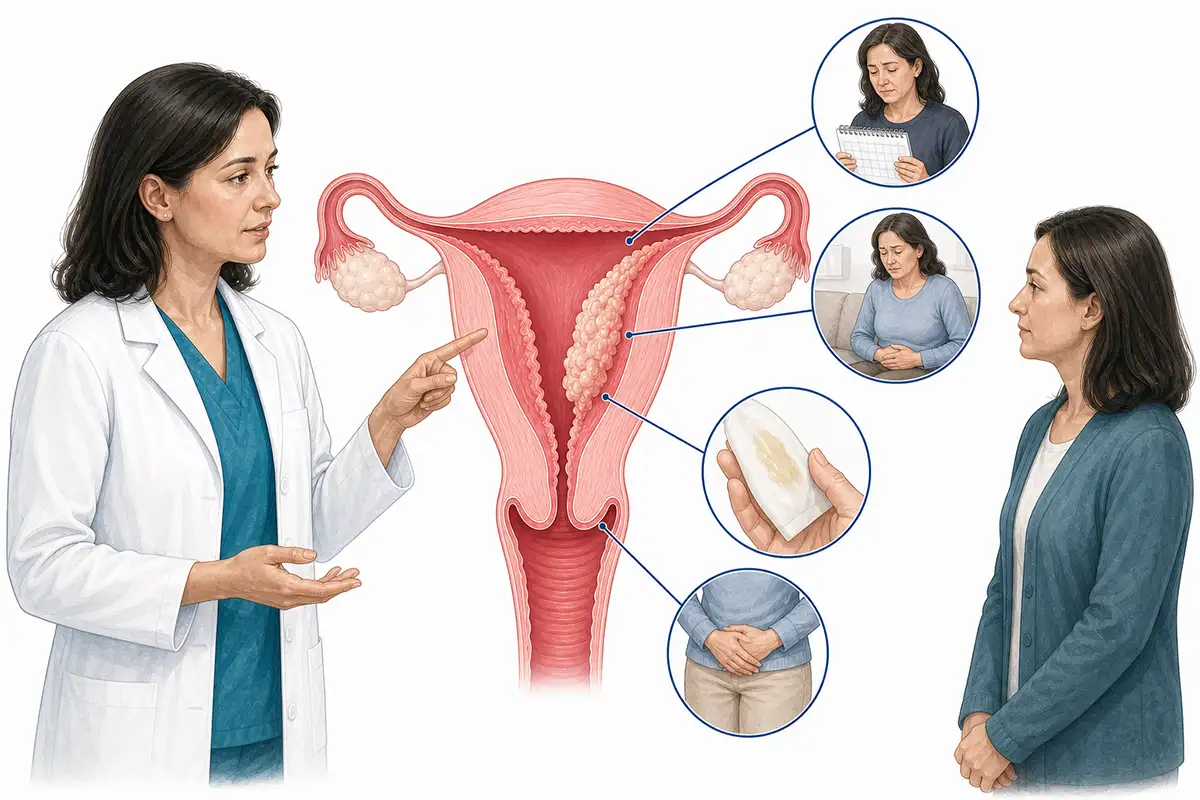
Endometrial cancer symptoms in detail
1.Postmenopausal bleeding
Vaginal bleeding after at least one year of menopause is the most typical warning symptom. Over 90% of postmenopausal patients present with it, and immediate examination is needed when it occurs.
2.Heavier menstrual flow
In reproductive-age women, markedly heavier or longer periods or irregular intermenstrual bleeding are among the most common early manifestations.
3.Increased vaginal discharge
Early discharge may be slight and serous or blood-tinged. Advanced tumor growth, local infection, and necrosis cause copious foul-smelling, blood-stained purulent fluid.
4.Persistent dull lower abdominal pain
Tumor enlargement and intrauterine fluid may cause persistent central lower abdominal aching or dragging. Advanced spread to parametrial tissues and ligaments or nerve compression worsens pain.
5.Abdominal mass
A large tumor or enlarged uterus may produce a palpable lower abdominal mass. Advanced patients develop systemic deterioration, including weight loss, fatigue, and anemia.
6.Lumbosacral aching
Compression or invasion of sacral nerves and nearby tissues causes persistent lumbosacral pain that may radiate to the buttocks and legs, affecting daily activity and sleep.
7.Difficulty urinating
Anterior bladder invasion causes urinary frequency, urgency, and difficulty urinating. Severe cases may develop hematuria and urinary infection, while ureteric compression causes hydronephrosis.
8.Altered bowel habits
Posterior rectal invasion causes altered bowel habits, tenesmus, and rectal bleeding. Severe cases may develop a rectovaginal fistula.
9.Lower limb swelling
Pelvic nodal metastases compress lymphatic vessels, causing leg swelling, especially distally, with heaviness and restricted movement.
Conclusion
Abnormal uterine bleeding is the main early manifestation of endometrial cancer. Attention to this symptom and prompt examination are essential for early detection. Standardized early treatment can achieve favorable long-term survival.


