


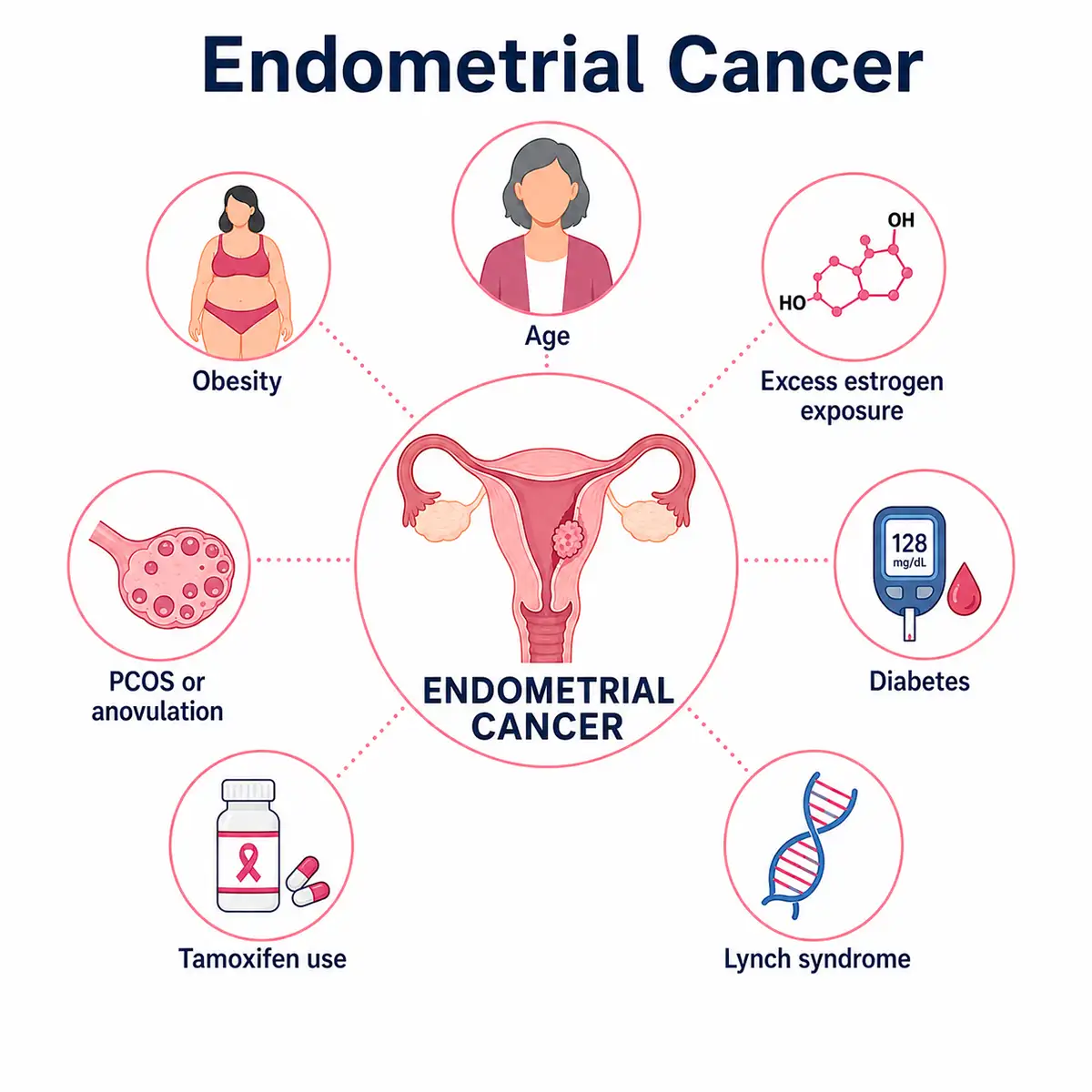
1. Estrogen stimulation
Persistent estrogen stimulation unopposed by progesterone is the main cause, maintaining excessive endometrial proliferation that can progress to cancer.
2. Obesity factors
Obesity raises plasma estrogen because adipose tissue converts androgens into estrogen, continually stimulating the endometrium and increasing malignant transformation risk.
3. Metabolic syndrome
Obesity, diabetes, and hypertension are known as the endometrial cancer triad. Increased estrogen levels in people with diabetes promote endometrial proliferation.
4. Reproductive factors
Never having been pregnant, early menarche, and late menopause increase risk. Anovulatory infertility deprives the endometrium of progesterone protection.
5. Genetic factors
Hereditary disorders such as Lynch syndrome markedly increase endometrial cancer risk. BRCA mutation carriers also have increased risk.
6. Medication factors
Long-term estrogen-only replacement or tamoxifen increases endometrial cancer risk, requiring regular monitoring of endometrial changes.
7. Endocrine disorders
Endocrine disorders such as polycystic ovary syndrome cause absent cyclical ovulation, leaving the endometrium under prolonged unopposed estrogen stimulation and prone to malignant transformation.
Conclusion
Endometrial cancer results from multiple factors, including excessive estrogen stimulation and metabolic abnormalities, and causes serious harm. Postmenopausal bleeding requires particular vigilance; early detection and timely intervention are essential.


