


Global prevalence: Duodenal cancer is a relatively rare malignancy worldwide, accounting for a small proportion of small bowel tumors, and can occur at any age.
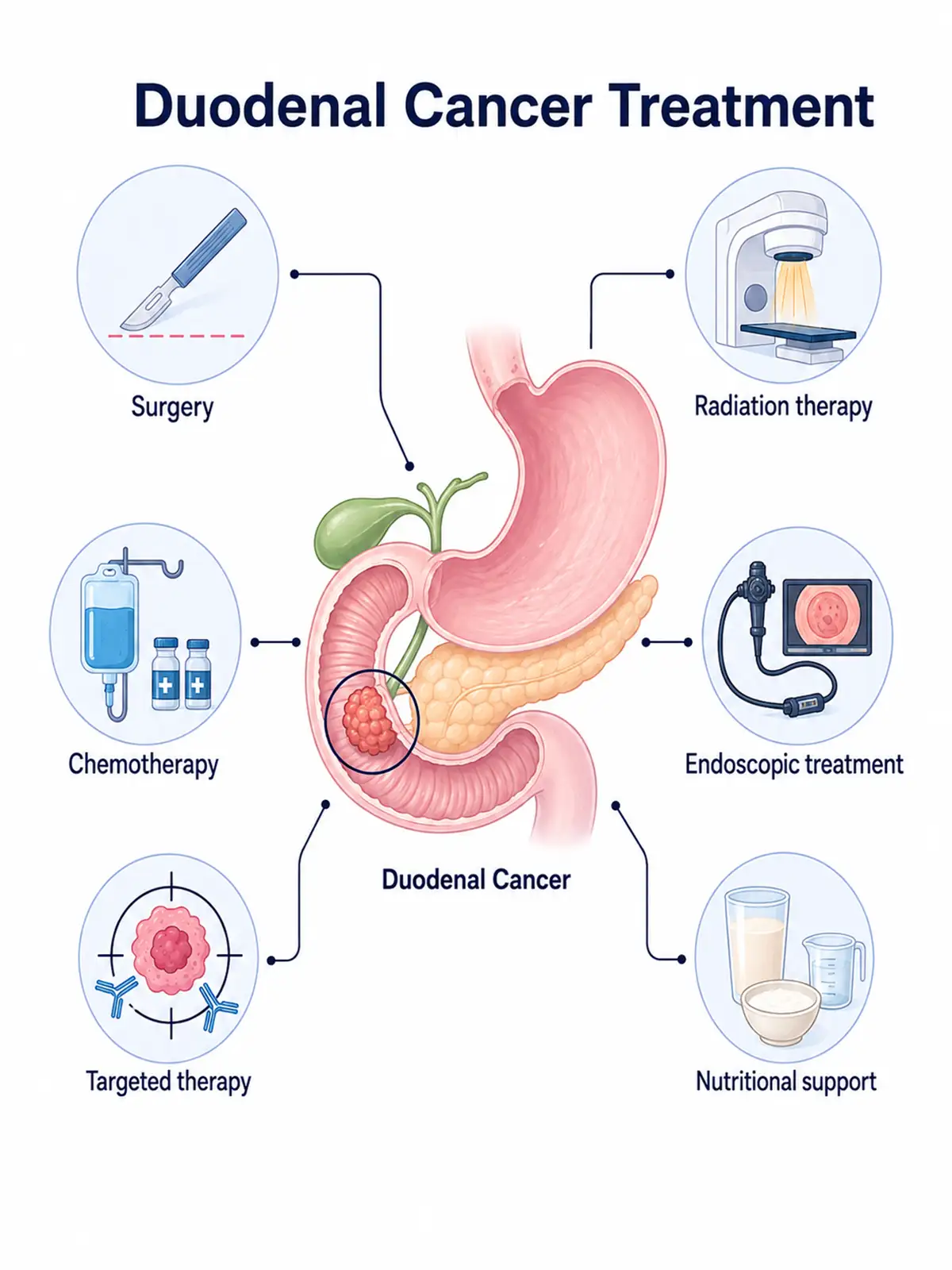
Stage-based treatment for duodenal cancer
Early treatment (involving a localized, small tumor with a favorable response)
specifically surgical resection combined with adjuvant therapy—can effectively control tumor progression, and the patient's prognosis is relatively good.
Treatment for the intermediate stage (involving local spread; aiming to inhibit growth and delay progression)
employs a comprehensive approach—such as surgery combined with radiotherapy and chemotherapy—to control further tumor spread and slow the rate of disease deterioration.
Treatment for advanced disease (distant metastasis; aimed at symptom relief and survival prolongation)
primarily employs systemic therapies such as chemoradiotherapy, targeted therapy, and others to alleviate clinical symptoms and extend patient survival as much as possible.
Why choose Fosun Health for duodenal cancer treatment
Leveraging its affiliated hospitals' capabilities in gastrointestinal and hepatopancreatobiliary surgery, laparoscopic or robotic surgery, VitalBeam technology, and platforms for digestive endoscopy and interventional procedures, Fosun Health facilitates multidisciplinary consultations involving experts in surgery, digestive endoscopy, radiotherapy, medical imaging, pathology, nutrition, and medical oncology.The team formulates resection and comprehensive treatment plans based on tumor location and the extent of involvement in the pancreatic head, ampulla, and biliary tract.
Minimally invasive surgery facilitates the precise handling of pancreaticobiliary ducts and mesenteric vessels while minimizing abdominal wall trauma; precision radiotherapy minimizes radiation exposure to the stomach, small intestine, liver, and kidneys, thereby reducing the risk of certain treatment-related adverse effects.In cases of jaundice, obstruction, hemorrhage, or malnutrition, endoscopic or interventional procedures can be used to alleviate symptoms prior to subsequent surgery or systemic therapy.
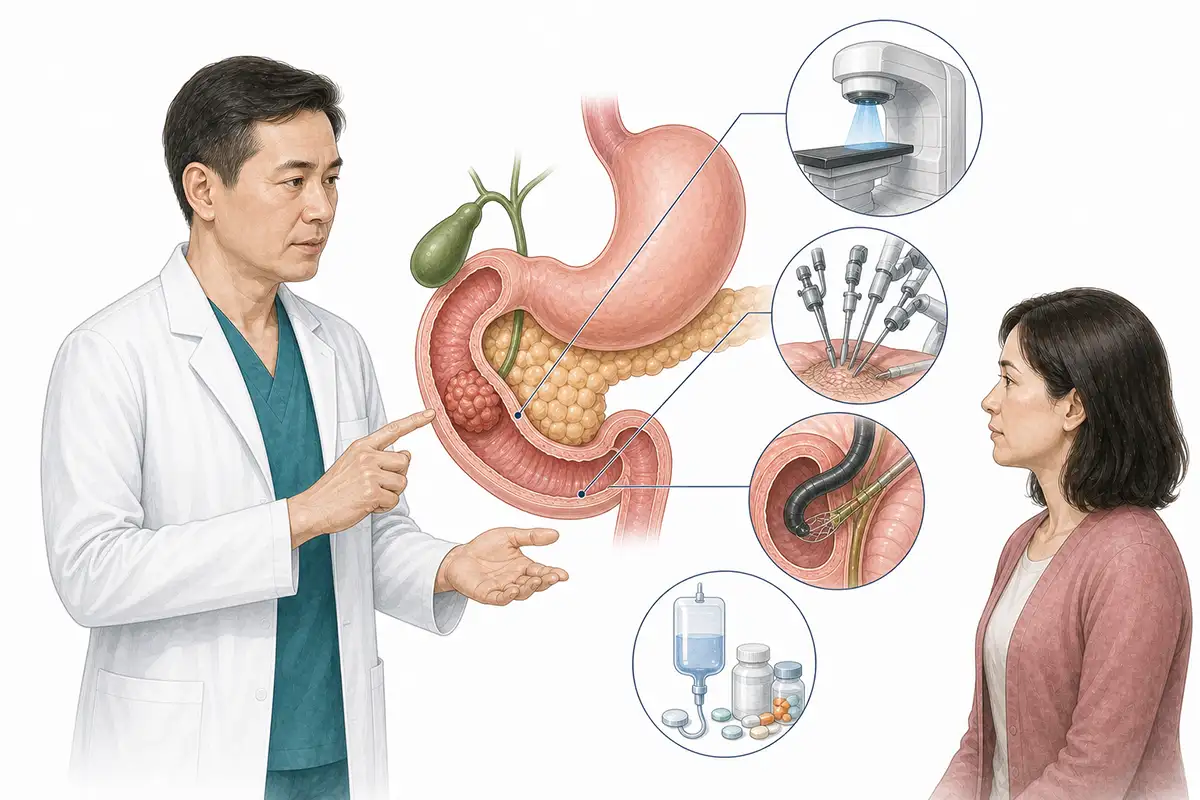
Duodenal Cancer Treatment Methods
1.VitalBeam precision radiotherapy
Suitable for patients with unresectable locally advanced disease, high-risk post-operative margins, local recurrence, or symptoms such as pain or bleeding.
Treatment advantages:
① Covers complex target areas: Suitable for lesions adjacent to the pancreatic head, hepatic hilum, and major blood vessels.
② Protect abdominal organs: Reduce radiation dose to the stomach, small intestine, liver, and kidneys.
③ Controlling local symptoms: Can be used to alleviate pain, bleeding, or local compression.
④ Facilitates combination therapy: Can be integrated with systemic therapy and endoscopic interventional support.
2.Laparoscopic or robotic pancreaticoduodenectomy
Indicated for duodenal cancer assessed as resectable by MDT; the surgical procedure is determined based on the intestinal segment involved and the extent of involvement of the pancreatic head and ampulla.
Treatment advantages:
① Precise handling of complex structures: Identification of the pancreatic head, bile ducts, and superior mesenteric vessels.
② Select appropriate resection extent: Balance surgical margins, pancreaticobiliary drainage, and intestinal continuity.
③ Obtain complete pathology: Determine depth of invasion, resection margins, and lymph node status.
④ Enhanced perioperative management: Focuses on preventing pancreatic fistula, biliary fistula, and delayed gastric emptying.
3.Endoscopic or interventional relief of jaundice, hemostasis, and obstruction
Indicated for patients whose tumors cause jaundice, duodenal obstruction, hemorrhage, or inability to eat, and who require symptom relief as a priority.
4.Chemotherapy
Systemic elimination of potential cancer cells using anti-cancer drugs to effectively control the rate of tumor progression; commonly used for patients with intermediate-to-advanced duodenal cancer.
5.Targeted therapy
Delivers precision strikes against specific molecular targets on cancer cells; offers good efficacy with relatively mild side effects; suitable for select patients with advanced-stage disease.6. Immunotherapy
Activates the body's immune system to recognize and attack cancer cells, offering a new treatment option for patients with advanced duodenal cancer.
7. Interventional therapy:
Indicated for patients presenting with duodenal obstruction, biliary obstruction, or tumor-related hemorrhage; symptom relief may be achieved through methods such as stent placement, drainage, or vascular embolization.
Post-treatment care
Maintain a regular daily routine and eat smaller, more frequent meals; avoid greasy foods; attend scheduled follow-up appointments and actively cooperate with subsequent treatment as advised.
Post-treatment examinations
Regular abdominal CT scans, tumor marker tests, and follow-up imaging are required after treatment to detect changes in the condition in a timely manner.
Conclusion
Duodenal cancer poses a serious health threat; successful treatment relies on early detection, diagnosis, and intervention, as well as the selection of appropriate treatment plans and consistent follow-up to improve quality of life.


