


1. Treatment of biliary disease
Actively treat gallstones and chronic cholecystitis; gallbladder disease is closely associated with the development of duodenal papillary carcinoma and requires timely management.
2. Controlling Crohn's disease
Patients with Crohn's disease require standardized treatment to control intestinal inflammation; those with duodenal involvement need regular endoscopic monitoring to prevent malignant transformation resulting from chronic mucosal inflammation.
3. Smoking cessation and alcohol restriction
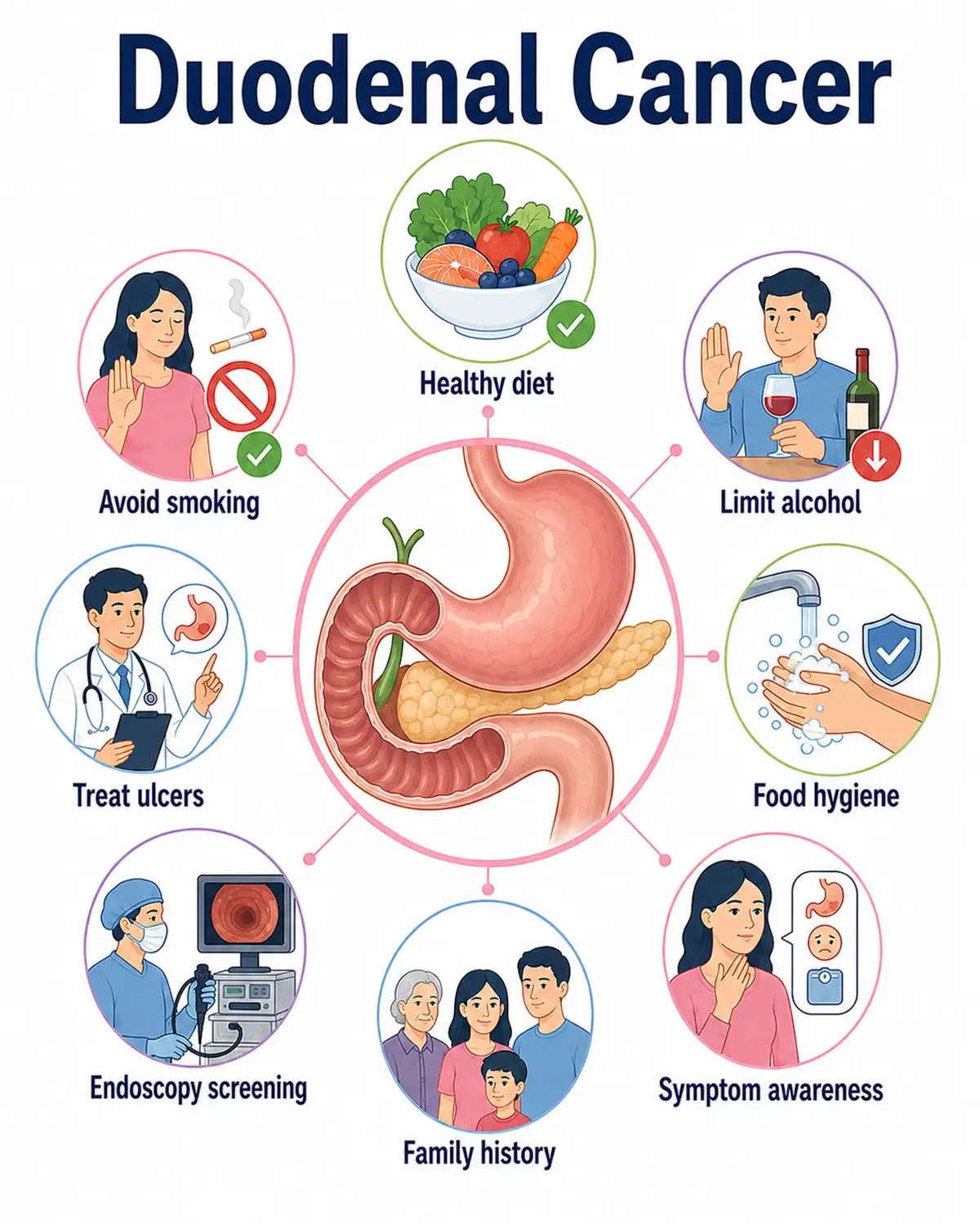
Smoking and alcohol consumption increase the risk of digestive tract tumors; carcinogens found in tobacco and alcohol can reach the duodenal mucosa via the bloodstream and promote carcinogenesis.
4. Healthy diet
Reduce the intake of high-fat and high-protein foods; increase the consumption of vegetables, fruits, and dietary fiber; and avoid prolonged irritation of the duodenal mucosa and stimulation of pancreatic juice secretion.
5. Genetic monitoring
Patients with familial adenomatous polyposis (FAP) should undergo regular gastroscopy and colonoscopy; since nearly all FAP patients develop duodenal adenomas, early monitoring is required.
6. Avoiding irritants
Limit the consumption of foods that are excessively hot, hard, or irritating, and avoid the long-term use of non-steroidal anti-inflammatory drugs (NSAIDs) that can damage the duodenal mucosal barrier.
7. Regular gastroscopy
Individuals with gastrointestinal symptoms or a family history should undergo regular gastroscopy; this procedure allows for the visualization of the duodenal papilla and mucosa to detect suspicious lesions at an early stage.
Conclusion
Although rare, duodenal cancer is serious and can cause obstruction and jaundice.Proactive treatment of gallbladder disease, management of Crohn's disease, and regular gastroscopy to ensure early detection and timely intervention are crucial.


