


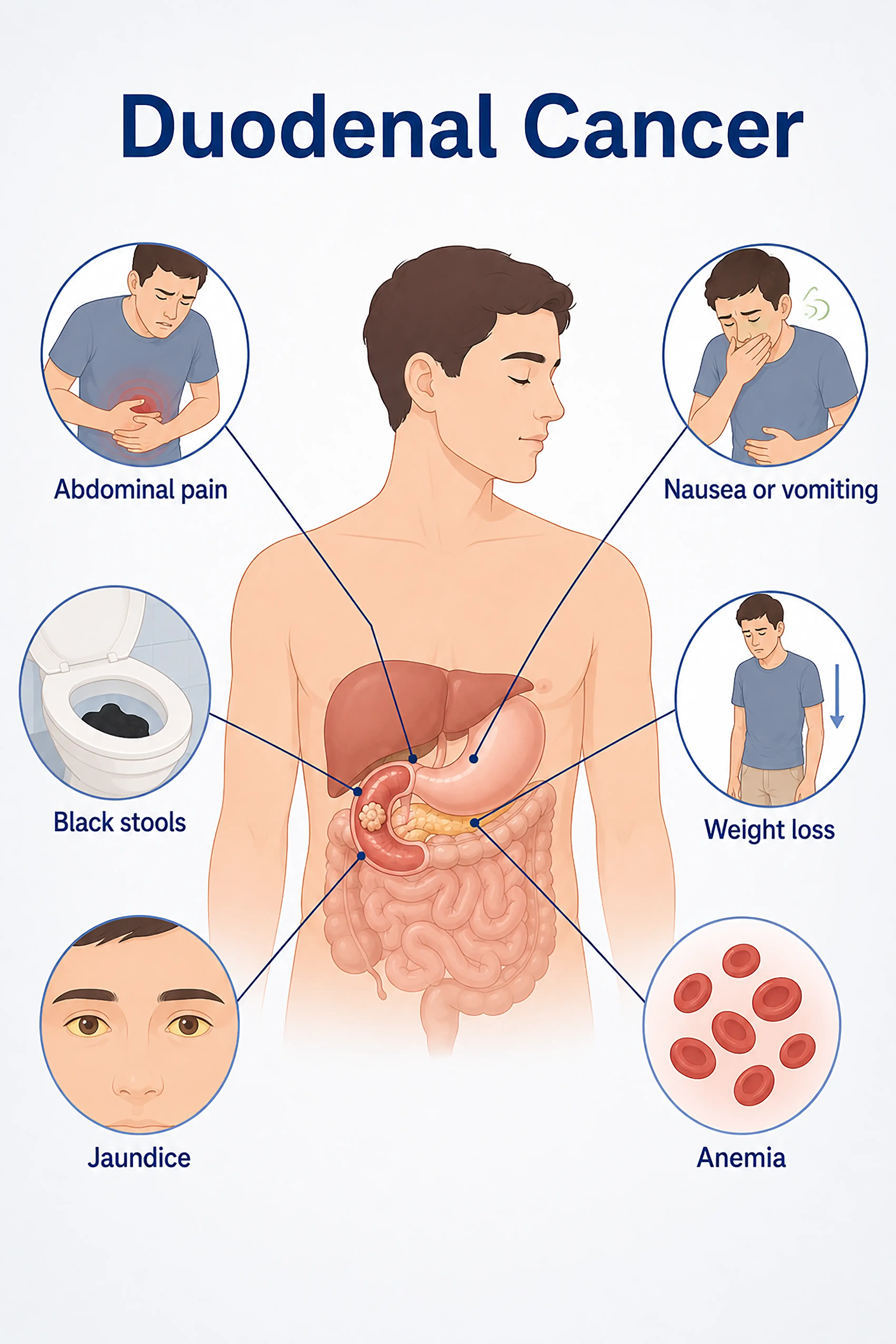
Duodenal cancer is a tumor caused by the malignant transformation of duodenal mucosal epithelial cells and is the most common type of small intestine malignancy. Early symptoms lack specificity; common manifestations include upper abdominal pain, gastrointestinal bleeding, and jaundice.
Global incidence of duodenal cancer
Duodenal cancer is the most common malignant small bowel tumor, accounting for approximately 40%–50% of small bowel cancers.It has a low global incidence and is considered a rare tumor.It typically affects individuals over the age of 50, with a slightly higher prevalence in men than in women.It is associated with factors such as Crohn's disease, celiac disease, and familial adenomatous polyposis.
Symptoms associated with duodenal cancer stages
1.Early symptoms of duodenal cancer
The tumor is confined to the duodenal mucosa; there are usually no obvious symptoms, though mild upper abdominal dull pain, a sense of fullness, or mild indigestion may occur. It is easily mistaken for gastritis or a gastric ulcer.
2.Intermediate-stage symptoms of duodenal cancer
Worsening upper abdominal pain accompanied by melena (black, tarry stools) or a positive fecal occult blood test; if the tumor is located at the ampulla of Vater, it may obstruct the common bile duct, causing jaundice, pruritus, and darkening of the urine.
3.Symptoms of advanced duodenal cancer
Tumor causing duodenal obstruction, presenting with frequent vomiting, severe weight loss, and cachexia, accompanied by distant metastasis and impaired liver function.
When to Seek Medical Attention
Early signs of duodenal cancer include persistent upper abdominal pain, melena, jaundice, and unexplained weight loss.Please consult a doctor via the "Chat with a Doctor" feature for early detection.During the online consultation, the doctor will ask about your symptoms and medical history and guide you through procedures such as gastroscopy and abdominal CT scans.
Staging of duodenal cancer
Stage 0 duodenal cancer
Cancer cells are confined to the duodenal mucosal epithelium; this is classified as carcinoma in situ. It is often asymptomatic and is usually detected incidentally during gastroscopy.
Stage I duodenal cancer
The tumor is confined to the intestinal wall without lymph node metastasis; non-specific symptoms such as dull upper abdominal pain and indigestion may occur.
Stage II duodenal cancer
Tumor penetrates the bowel wall without lymph node metastasis; abdominal pain worsens, accompanied by symptoms such as melena and jaundice.
Stage III duodenal cancer
The tumor is associated with regional lymph node metastasis, presenting with persistent pain, marked jaundice, and emaciation.
Stage IV duodenal cancer
Distant metastasis to the liver, lungs, and bones occurs, leading to persistent severe pain, cachexia, and multiple organ failure.

Detailed symptoms of duodenal cancer
1.Persistent dull upper abdominal pain
The most common early symptom is persistent dull or aching pain in the upper abdomen that worsens after eating; while symptoms resemble those of gastric ulcers or gastritis, the response to treatment is poor.
2Presentation of anemia with melena
Erosion and bleeding on the tumor surface result in melena or a positive fecal occult blood test;chronic blood loss causes iron-deficiency anemia, manifesting as facial pallor and fatigue.
3.Jaundice and pruritus
When the tumor is located at the duodenal papilla, it obstructs the common bile duct, causing obstructive jaundice characterized by yellowing of the skin and sclera, darkened urine, and pruritus.
4.Frequent nausea and vomiting
Frequent vomiting occurs when the tumor causes duodenal obstruction or stenosis; the vomitus contains bile or undigested food, accompanied by significant abdominal distension.
5.Rapid weight loss
Significant short-term weight loss due to difficulty eating and tumor-induced metabolic consumption, accompanied by fatigue and malnutrition; progresses to a cachectic state in the advanced stage.
6.Indigestion
Postprandial epigastric fullness, belching, and loss of appetite, accompanied by mild nausea; easily misdiagnosed as functional dyspepsia.
7.Abdominal mass
A hard mass with an irregular surface and associated tenderness is palpable in the upper abdomen when the tumor enlarges or metastasizes to the liver.
8.Fever/low-grade fever
Necrosis and absorption of tumor tissue cause low-grade fever accompanied by fatigue; high fever and chills may occur if secondary biliary infection develops.
9.Radiating back pain present
Tumor invasion of the retroperitoneal nerve plexus causing persistent back pain radiating to the lower back, which is refractory to standard analgesics.
Conclusion
Duodenal cancer is relatively rare, and early symptoms lack specificity, making them easy to overlook.Medical attention should be sought promptly if upper abdominal pain occurs alongside jaundice or melena (black, tarry stools).Gastroscopy is an important diagnostic tool.


