


Duodenal cancer is a tumor resulting from the malignant proliferation of duodenal mucosal epithelial cells.The duodenum is the initial segment of the small intestine, connecting the stomach to the jejunum and curving in a C-shape around the head of the pancreas.
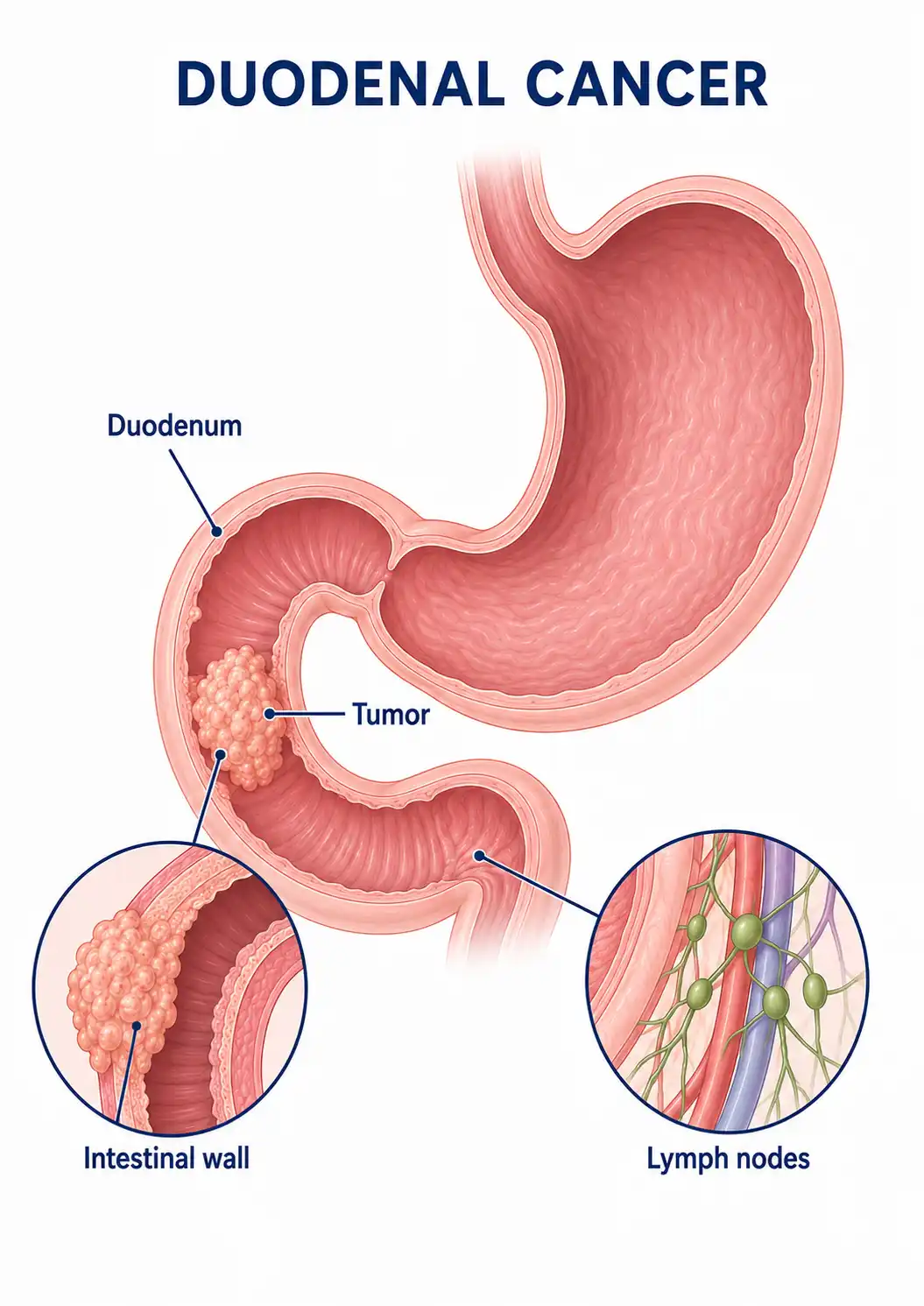
Global overview of duodenal cancer
Duodenal cancer is relatively rare among malignant tumors of the digestive tract, accounting for a small proportion of gastrointestinal malignancies; it most commonly affects individuals aged 50–70, with a higher incidence in men than in women.
Consult a doctor regarding cancer-related issues
Individuals experiencing symptoms such as upper abdominal pain, nausea and vomiting, jaundice, gastrointestinal bleeding, or unexplained weight loss should promptly consult a gastroenterologist or a general surgeon.
Main types of duodenal cancer
1. Types of adenocarcinoma
It is the most common pathological type of duodenal cancer, accounting for the majority of cases; subtypes include tubular adenocarcinoma and papillary adenocarcinoma.
2. Periampullary carcinoma
Occurs at the major duodenal papilla and surrounding areas; this category includes ampullary carcinoma, distal bile duct carcinoma, and carcinoma of the head of the pancreas, collectively known as periampullary carcinoma.
3. Types of stromal tumors
Originating from interstitial cells in the duodenal wall, this tumor exhibits unique biological behavior and is sensitive to treatment with the targeted drug imatinib.
4. Neuroendocrine tumor
Originating from duodenal endocrine cells, this tumor grows slowly and has relatively low malignancy; it may secrete hormones that cause associated symptoms.
5. Types of lymphoma
Primary lymphoma can occur in the duodenum—most commonly diffuse large B-cell lymphoma—and requires differentiation from adenocarcinoma.
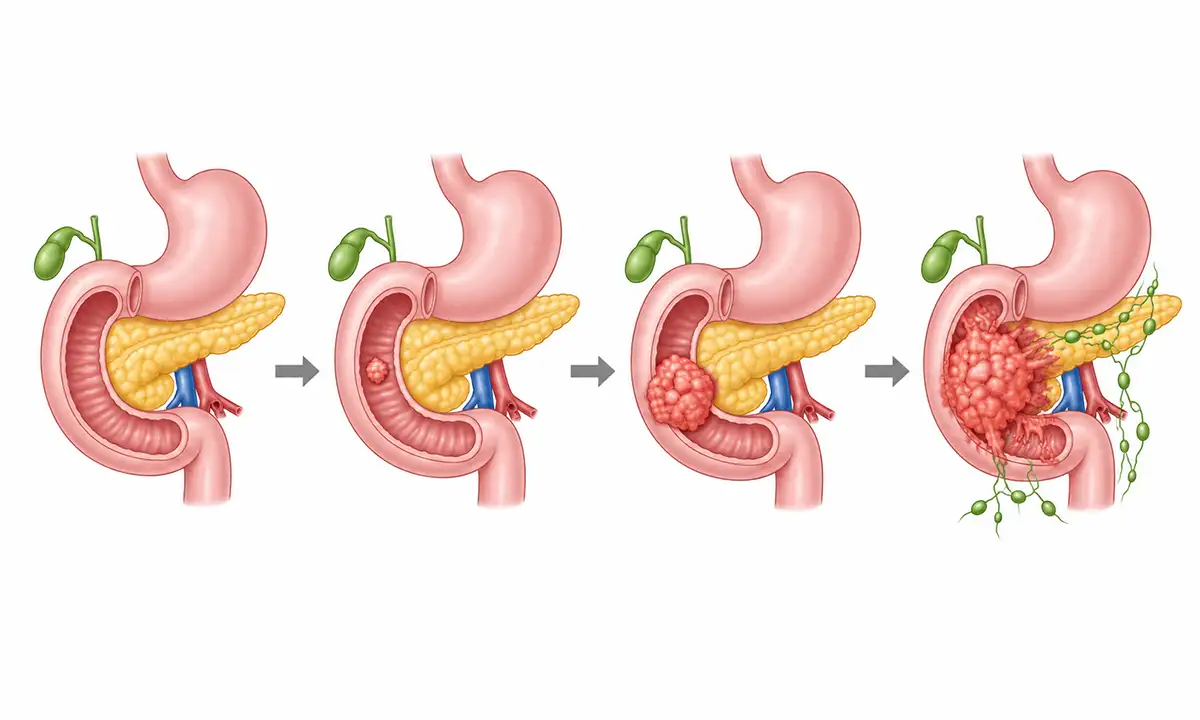
Typical symptoms and signs of duodenal cancer
1. Epigastric pain
Persistent dull or distending pain in the upper abdomen occurs; it resembles peptic ulcer pain, worsens after eating, and responds poorly to antacid therapy.
2. Nausea and vomiting
Tumor growth causes narrowing or obstruction of the duodenal lumen, leading to nausea and vomiting; the vomitus may consist of gastric contents or even food ingested the previous day.
3. Jaundice
Periampullary carcinoma compresses the distal common bile duct, causing obstructive jaundice; clinical manifestations include yellowing of the skin and sclera, dark urine, and clay-colored stools.
4. Gastrointestinal bleeding
Ulceration and bleeding on the tumor surface result in melena or hematemesis;chronic blood loss can lead to anemia, manifesting as facial pallor and fatigue.
5. Weight loss
Systemic symptoms such as unexplained weight loss, fatigue, and loss of appetite occur due to reduced food intake and the metabolic demands of the tumor.
6. Abdominal mass
A hard mass with an irregular surface is palpable in the right upper quadrant when the tumor enlarges or is associated with enlargement of the pancreatic head.
Diagnostic methods for duodenal cancer
1. Gastroscopy
Gastroscopy allows for the visualization of the mucosa in the duodenal bulb and descending duodenum; it is a crucial diagnostic tool for identifying lesions and obtaining tissue samples for pathological confirmation.
2. Duodenoscopy
A side-viewing duodenoscope allows for clearer visualization of the duodenal papilla region, which is particularly crucial for diagnosing periampullary carcinoma.
3. Contrast-enhanced CT scan
Contrast-enhanced abdominal CT allows for the assessment of tumor location, size, relationship with surrounding blood vessels and the pancreas, and the presence of lymph node metastasis.
4. Endoscopic ultrasonography
Endoscopic ultrasonography clearly visualizes the depth of tumor invasion into the intestinal wall and regional lymph node metastasis; it is of significant value for preoperative staging.
5. MRCP examination
Magnetic resonance cholangiopancreatography (MRCP) can visualize the course of the common bile duct and pancreatic duct as well as sites of stenosis, aiding in the differential diagnosis of periampullary carcinoma.
6. Tumor markers
Elevated CEA and CA19-9 levels can aid in diagnosis, but specificity is low; they are primarily used for postoperative monitoring of recurrence.
Duodenal Cancer Treatment Methods
1. Whipple procedure
Pancreaticoduodenectomy is the standard surgical treatment for duodenal cancer; the scope of resection includes the pancreatic head, the duodenum, the distal common bile duct, and a portion of the stomach.
2. Local excision
For small, early-stage duodenal cancer, local segmental resection may be performed to preserve pancreatic function and facilitate faster postoperative recovery.
3. Chemotherapy
Postoperative adjuvant chemotherapy can reduce the risk of recurrence; regimens similar to those for colon cancer may be adopted, with oxaliplatin-based regimens being commonly used.
4. Targeted therapy
Patients with stromal tumors may be treated with targeted therapies such as imatinib, while those with neuroendocrine tumors may receive somatostatin analogs.
5. Palliative care
For patients with advanced, unresectable disease, biliary stent placement can relieve jaundice, and nutritional support can improve quality of life.
6. Nutritional support
Malnutrition is common following duodenal surgery; dietary adjustments are necessary postoperatively, and enteral or parenteral nutritional support should be provided if required.
7. Management of complications
Close postoperative monitoring for complications such as pancreatic fistula, biliary fistula, and hemorrhage is essential; timely management is key to surgical success.
8. Follow-up monitoring
Postoperative follow-up involving regular abdominal CT and tumor marker testing is crucial to monitor for recurrence and metastasis.
Conclusion
Duodenal cancer is a relatively rare malignancy of the digestive tract; early symptoms are often atypical, making misdiagnosis common.Raising awareness, seeking timely medical attention, and undergoing standardized surgical treatment can help improve patient prognosis.


