


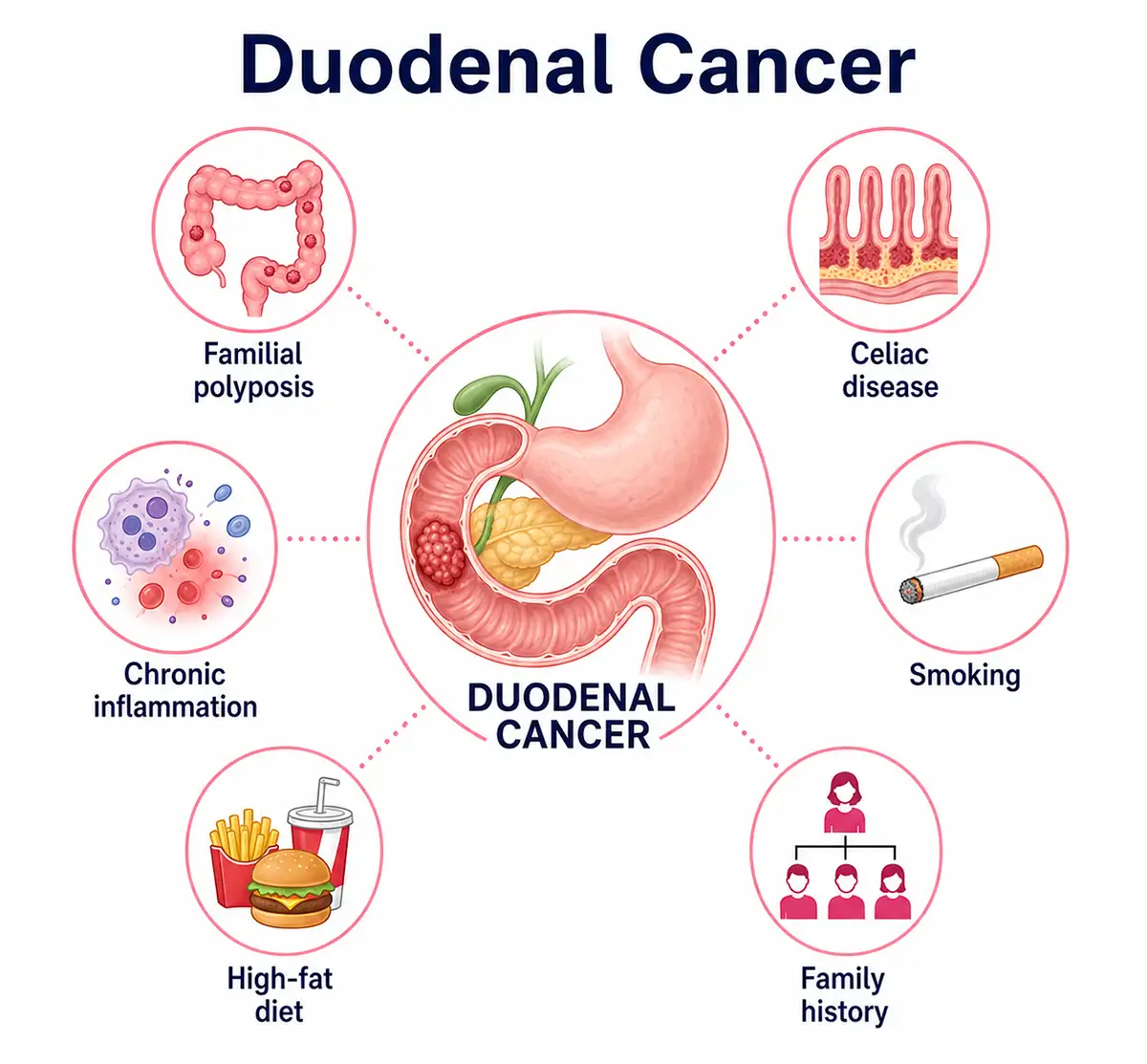
1. Familial polyposis
Familial adenomatous polyposis is a major risk factor for duodenal cancer; nearly 100% of patients develop duodenal adenomas, which may undergo malignant transformation.
2. Gallbladder disease
Gallstones and chronic cholecystitis are associated with the development of duodenal papilla cancer; chronic inflammation of the biliary system can increase the risk of malignant transformation in the local mucosa.
3. Celiac disease
Long-term gluten sensitivity in patients with celiac disease causes small intestinal mucosal damage and chronic inflammation, significantly increasing the risk of developing duodenal adenocarcinoma.
4. Smoking factor
Long-term smoking increases the risk of duodenal cancer; carcinogens in tobacco can reach the duodenal mucosa via the bloodstream and cause damage.
5. Alcohol consumption
Long-term, heavy alcohol consumption—particularly of spirits—irritates the duodenal mucosa; alcohol metabolites can damage cellular DNA and increase the risk of malignant transformation.
6. Crohn's disease
When Crohn's disease involves the duodenum, long-term chronic inflammation and recurrent mucosal ulceration can increase the risk of developing adenocarcinoma.
7. Age and gender
Duodenal cancer is most frequently seen in older adults over the age of sixty; the incidence rate is slightly higher in men than in women, and overall, it ranks second among malignant tumors of the small intestine.
Conclusion
Duodenal cancer is caused by a combination of factors, including genetic predisposition and gallbladder disease.Although relatively rare, it is serious and can lead to obstruction and jaundice.Enhanced screening for individuals with a family history is crucial for early detection and timely intervention.


