


Craniopharyngioma is a benign tumor formed by the proliferation of residual epithelial cells of the craniopharyngeal duct. It is mostly located in the suprasellar region and commonly affects children aged 5–14;typical clinical manifestations include vision loss, growth retardation, and diabetes insipidus.
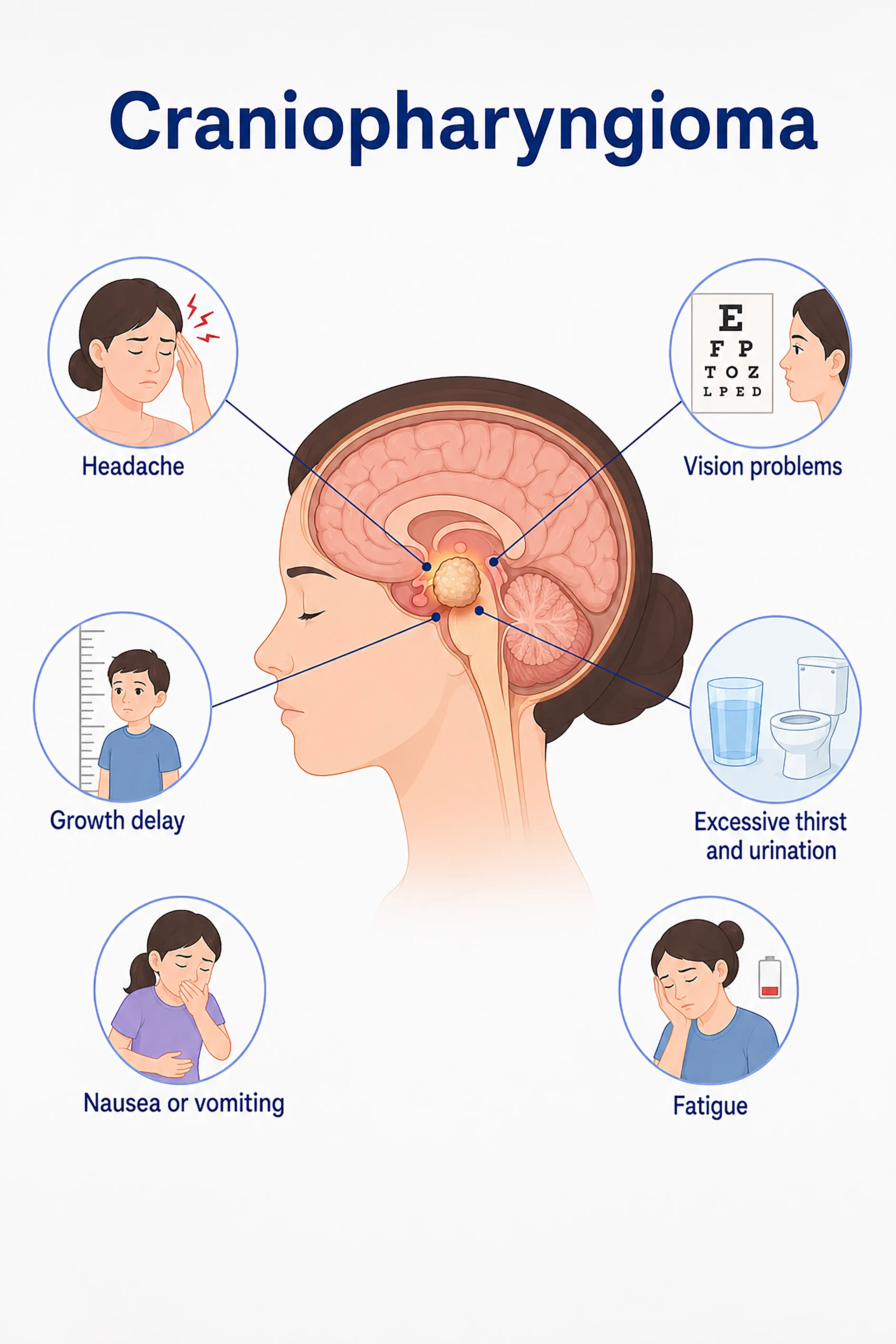
Global prevalence of craniopharyngioma
Craniopharyngiomas account for approximately 2%–5% of all intracranial tumors and are the most common suprasellar tumors in children.There are two peak incidence age groups: 5–14 years and 50–74 years.Although slow-growing, the tumors can invade critical surrounding structures, making treatment difficult and recurrence rates high.
Symptoms associated with craniopharyngioma stages
1.Early symptoms of craniopharyngioma
The tumor is small and often asymptomatic; mild vision loss, headache, or slow growth and development may occur. Pediatric patients may present solely with stunted height growth.
2.Intermediate-stage symptoms of craniopharyngioma
Symptoms include worsening visual acuity accompanied by visual field defects, signs of diabetes insipidus (polydipsia and polyuria), and intensifying headaches; children may exhibit significant growth retardation, while adults may experience sexual dysfunction.
3.Symptoms of advanced craniopharyngioma
Severe visual impairment or even blindness; severe endocrine disorders leading to hypopituitarism; hydrocephalus causing elevated intracranial pressure and impaired consciousness.
When to Seek Medical Attention
Early signs of craniopharyngioma include vision loss, excessive thirst and urination, stunted growth and development, and headaches.Please consult a doctor via "Chat with a Doctor" to facilitate early detection.During the online consultation, the doctor will ask about your child's growth and symptoms, and guide you through the process of endocrine testing and MRI scans.
Staging of craniopharyngioma
Craniopharyngioma: Stage 0
This staging system is not applicable to craniopharyngiomas.Craniopharyngiomas are benign tumors; imaging is typically used to assess tumor size, location, and relationship with surrounding structures.
Craniopharyngioma: Stage I
The tumor is confined to the intrasellar or suprasellar region, compressing only the optic chiasm, resulting in mild visual changes and headache.
Craniopharyngioma: Stage II
Suprasellar extension of the tumor compresses the third ventricle, resulting in significant visual acuity loss, diabetes insipidus, and endocrine dysfunction.
Craniopharyngioma: Stage III
Tumor extensively involves the sellar region and third ventricle, causing severe visual impairment, hydrocephalus, and pituitary insufficiency.
Craniopharyngioma: Stage IV
Extension of the tumor into the frontal lobe, temporal lobe, or posterior cranial fossa causes severe neurological impairment and increased intracranial pressure.
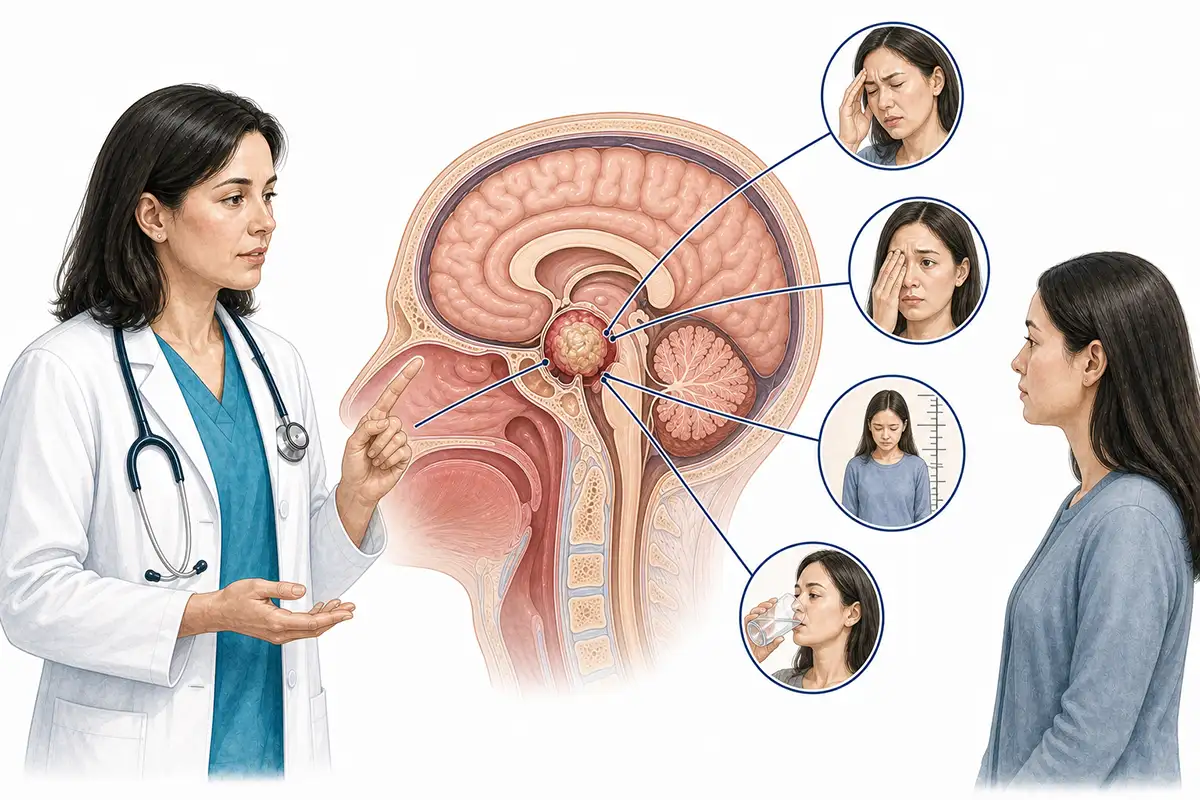
Detailed Symptoms of Craniopharyngioma
1.Significant vision loss
Tumor compression of the optic chiasm causing progressive vision loss and bitemporal visual field defects is the most common initial symptom in pediatric patients; severe cases can lead to blindness.
2.Onset of diabetes insipidus
Tumor compression or invasion of the hypothalamus and pituitary stalk leads to insufficient antidiuretic hormone secretion, resulting in polydipsia and polyuria, with daily urine output potentially reaching several liters.
3.Delayed growth and development
Insufficient growth hormone secretion in children leads to stunted height growth, short stature, and delayed development of secondary sexual characteristics.
4.Persistent headache
Tumor compression of surrounding structures or resulting hydrocephalus causes persistent headache, typically located in the frontal region or around the orbits.
5.Decreased sexual function
Reduced gonadotropin secretion leads to delayed sexual development, amenorrhea, decreased libido, and infertility.
6.Obesity and weight gain
Hypothalamic involvement leads to hyperphagia (excessive appetite) and metabolic disturbances, resulting in weight gain and centripetal (truncal) obesity.
7.Pale, dry skin
Hypopituitarism leads to insufficient secretion of adrenocorticotropic hormone (ACTH) and thyroid-stimulating hormone (TSH), resulting in pale, dry skin and cold intolerance.
8.Presence of nausea and vomiting
When the tumor causes hydrocephalus leading to increased intracranial pressure, headache accompanied by nausea and vomiting occurs; symptoms are worse in the morning.
9.Cognitive decline
Chronic hydrocephalus and endocrine dysfunction affect intellectual development in children, leading to impaired learning ability and a lack of concentration.
Conclusion
Although craniopharyngiomas are benign, their unique location makes treatment challenging.Complete surgical resection is the preferred approach, though a balance must be struck between tumor control and the preservation of endocrine function.Long-term endocrine replacement therapy and follow-up are crucial for improving quality of life.


