


1. Prenatal care
Pregnant women should avoid exposure to radiation and chemical carcinogens; the degeneration of the craniopharyngeal duct during the embryonic stage is a critical period for tumor development and requires special protection.
2. Child development
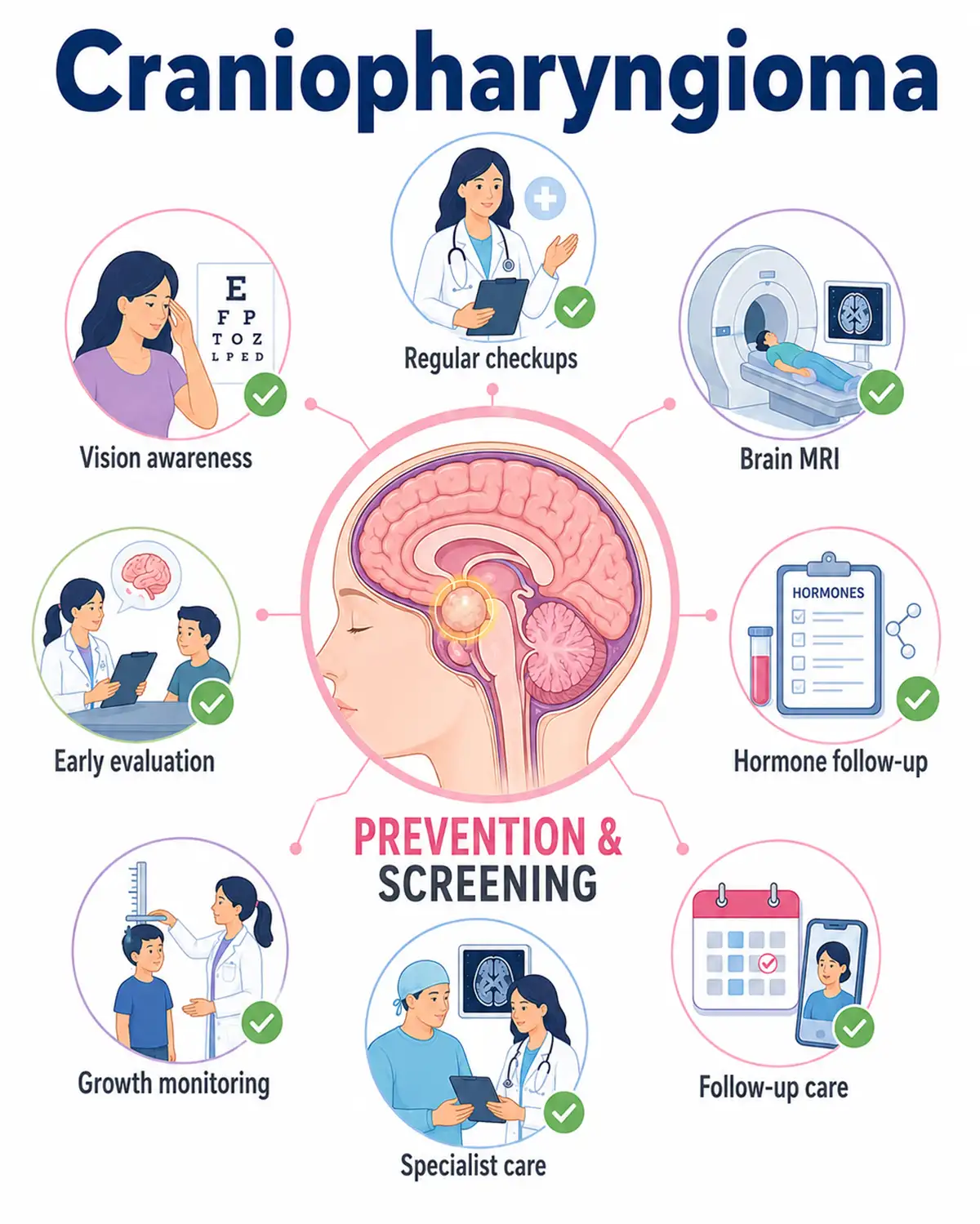
Monitor the child's growth and development; seek medical attention promptly if symptoms such as growth retardation, delayed sexual development, or polydipsia and polyuria occur, in order to rule out a tumor in the sellar region.
3. Visual acuity examination
Children should undergo regular vision examinations; craniopharyngiomas can compress the optic chiasm, leading to vision loss and visual field defects, necessitating early detection.
4. Endocrine monitoring
If symptoms such as excessive thirst and urination (polydipsia and polyuria), fatigue, or loss of appetite occur, test pituitary hormone levels; damage to the hypothalamic-pituitary axis is a common manifestation of craniopharyngioma.
5. Avoid radiation
Children should avoid unnecessary radiological examinations of the head and neck; although the link between craniopharyngioma and radiation is less clear than with other tumors, caution is still advised.
6. Balanced nutrition
Ensuring adequate nutritional intake for children—particularly vitamins and trace elements—supports normal nervous system development and reduces the risk of tumors.
7. Regular imaging
Children with endocrine abnormalities or vision problems should promptly undergo MRI of the sellar region; early detection of tumors allows for timely surgery to preserve vision and normal development.
Conclusion
Craniopharyngiomas result from embryonic developmental abnormalities; although benign, they can compress the optic nerve and pituitary gland, thereby impairing a child's growth and development.Monitoring child development and conducting regular vision checks are crucial for early detection and timely intervention.


