


Chordoma is a rare malignant tumor arising from the malignant transformation of notochordal remnants. It grows slowly but is locally aggressive, commonly occurring at the clivus and in the sacrococcygeal region; symptoms vary based on tumor location.
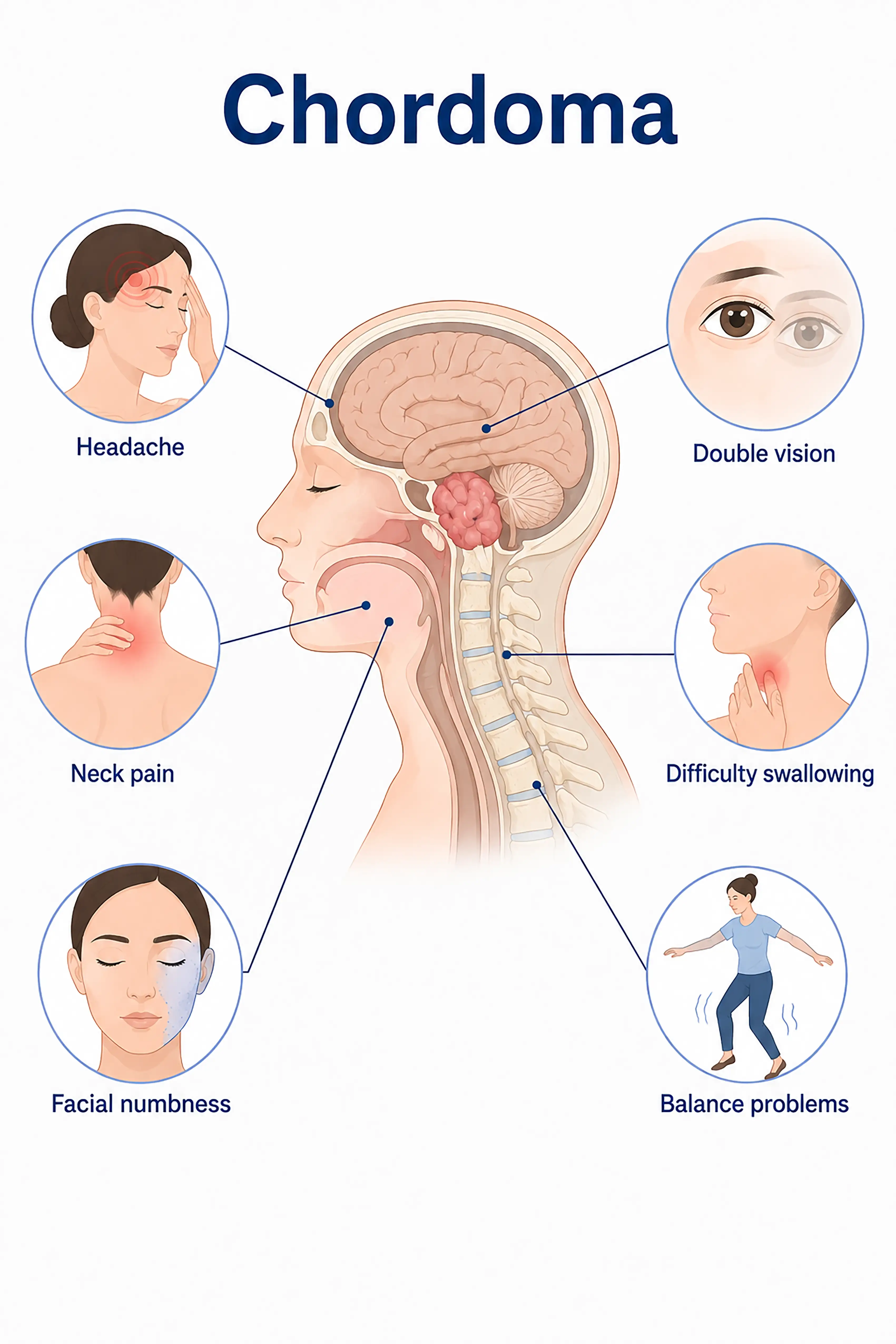
Global incidence of chordoma
Chordoma is a very rare malignant tumor, accounting for approximately 0.15%–0.2% of all bone tumors.It most commonly affects individuals aged 40–70, with a slightly higher incidence in men than in women.The tumors are distributed roughly equally across three regions: the skull base, the mobile spine, and the sacrum.Chordomas grow slowly but have a high rate of local recurrence; distant metastasis occurs in approximately 30%–40% of cases.
Symptoms associated with chordoma stages
1.Early symptoms of chordoma
The tumor grows slowly, and symptoms are often inconspicuous; the skull base type may present with mild headache or facial numbness, while the sacrococcygeal type may present with lumbosacral pain or changes in bowel habits, with symptoms persisting unnoticed for years.
2.Symptoms of mid-stage chordoma
Worsening headache accompanied by diplopia, facial numbness/weakness or facial paralysis, hearing loss, and hoarseness.Spinal type presents with limb numbness and weakness; sacral type presents with pelvic pain and bowel/bladder dysfunction.
3.Symptoms of advanced chordoma
Extensive tumor invasion causing severe neurological impairment; skull base type presents with multiple cranial nerve deficits and hydrocephalus; spinal type presents with paraplegia; sacral type presents with a massive pelvic mass.
When to Seek Medical Attention
Early signs of chordoma include persistent headache, facial numbness, double vision, and lumbosacral pain.Please consult a doctor via the "Chat with a Doctor" feature for early detection.During the online consultation, the doctor will ask about your symptoms and their duration, and guide you through the necessary imaging tests and biopsies.
Staging of chordoma
Chordoma: Stage 0
This staging system is not applicable to chordoma.Chordomas are assessed using the Enneking or TNM staging systems, based on tumor size, extent, and metastasis.
Chordoma: Stage I
The tumor is confined to its site of origin with no metastasis; symptoms are mild, and the tumor has relatively clear boundaries with surrounding tissues.
Chordoma: Stage II
Tumor invasion of surrounding tissues without breaching anatomical fascial planes; symptoms progressively worsen, accompanied by focal neurological deficits.
Chordoma: Stage III
Tumor breaches anatomical planes and extensively invades surrounding structures; symptoms include severe neurological impairment.
Chordoma: Stage IV
Distant metastasis to the lungs, liver, bones, or other soft tissues occurs, manifesting as symptoms related to the metastatic lesions.
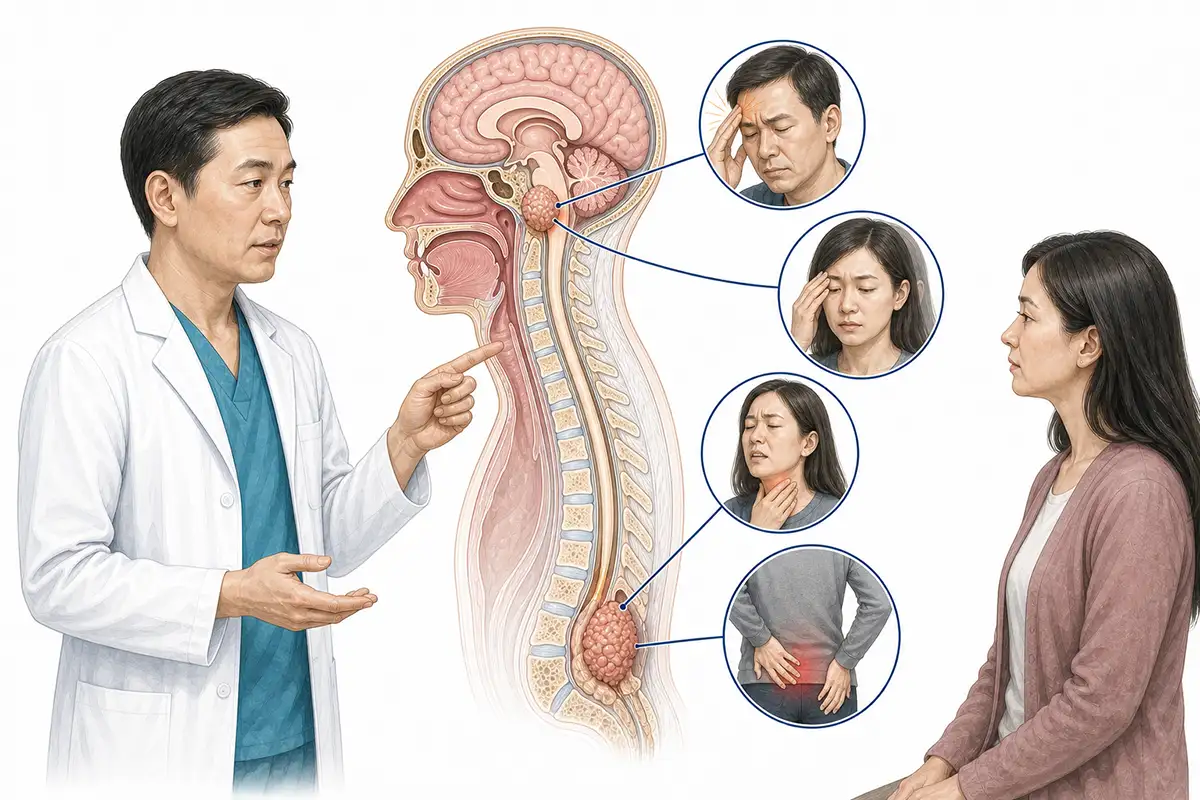
Detailed Symptoms of Chordoma
1.Persistent, severe headache
The most common symptom of skull base chordoma is persistent headache, usually located in the occipital or vertex region; the pain gradually worsens and responds poorly to standard painkillers.
2.Diplopia and vision loss
Tumor compression of the abducens or oculomotor nerve causes diplopia; compression of the optic nerve causes decreased vision, potentially leading to blindness in severe cases.
3.Facial numbness and paralysis
Tumor compression of the trigeminal nerve causes facial numbness, tingling, or sensory loss; compression of the facial nerve causes facial muscle weakness and drooping of the corner of the mouth.
4.Onset of hearing loss
Skull base tumors compressing the auditory nerve cause unilateral or bilateral hearing loss and tinnitus.
5.Hoarseness/throat symptoms
Tumor compression of the lower cranial nerves causes hoarseness, dysphagia, and choking when drinking.
6.Lumbosacral pain
The most common symptom of sacrococcygeal chordoma is pain in the lumbosacral, gluteal, or coccygeal regions; this pain intensifies upon sitting and may radiate to the inner thighs.
7.Limb weakness and numbness
Spinal chordomas compress the spinal cord or nerve roots, leading to limb weakness, numbness, or loss of sensation in the affected areas.
8.Bowel and bladder dysfunction
Invasion of sacral nerve roots by sacral tumors leads to difficulties with defecation and urination, as well as urinary or fecal incontinence.
9.Pelvic mass present
Anterior growth of a sacrococcygeal tumor can form a large pelvic mass, compressing the rectum and bladder and causing associated symptoms.
Conclusion
Chordoma is a rare and challenging-to-treat malignant tumor.Surgical resection is the primary treatment, while adjuvant radiotherapy can help reduce recurrence rates.Due to the tumor's slow growth, long-term follow-up monitoring for recurrence is crucial.


