


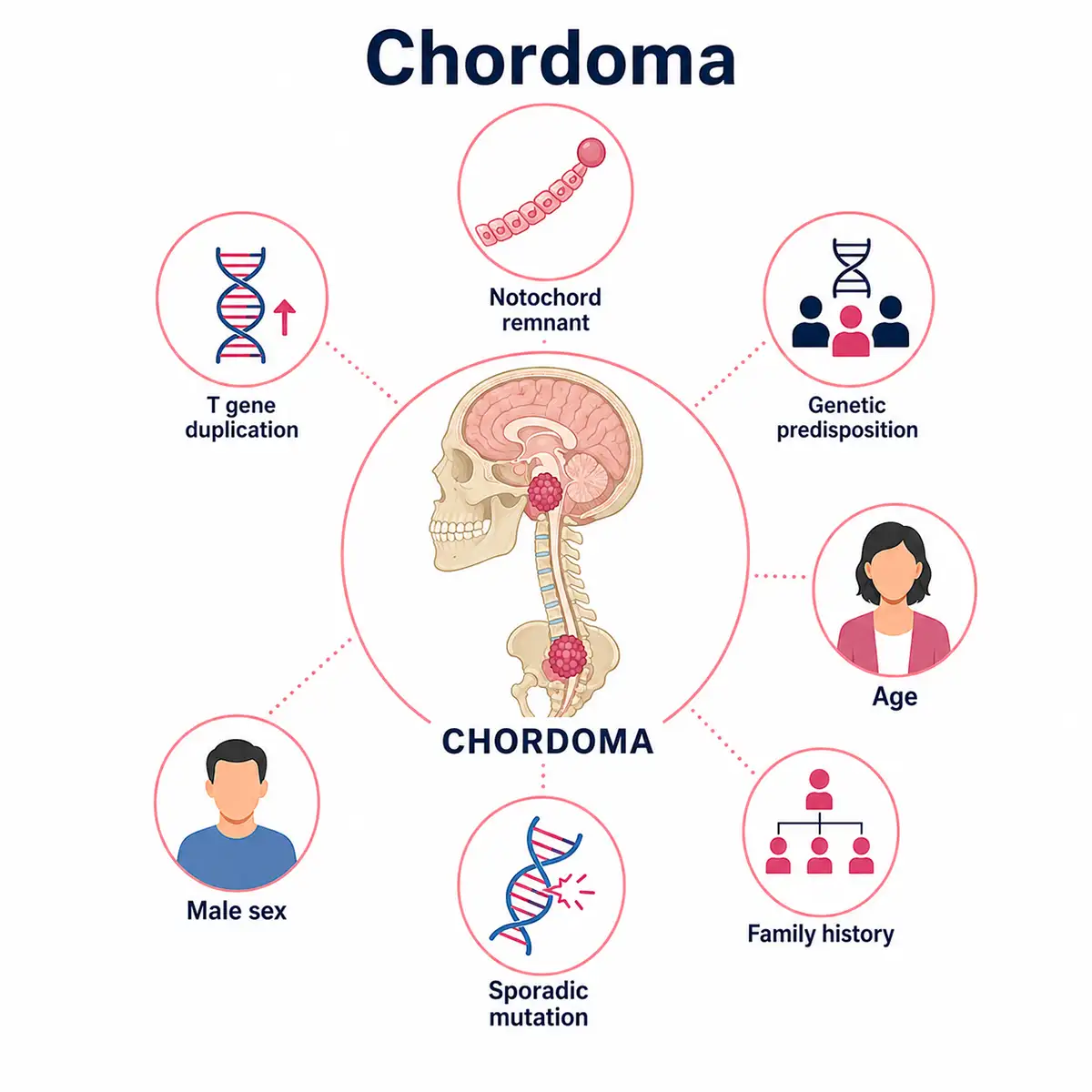
1. Notochordal remnants
Chordomas originate from remnants of embryonic notochordal tissue. Normally, this tissue develops into the nucleus pulposus of the intervertebral discs;however, residual tissue can proliferate abnormally to form a tumor.
2. Brachyury gene
Amplification of the *brachyury* transcription factor gene is a specific molecular marker for chordoma; this gene plays a crucial role in notochord development.
3. PI3K pathway
Aberrant activation of the PI3K-AKT-mTOR signaling pathway is common in chordomas, promoting tumor cell proliferation and survival.
4. Chromosomal abnormality
Common chromosomal copy number variations in chordoma—such as deletions at 1p and 3p and gains at 7q—lead to the inactivation of tumor suppressor genes and the activation of oncogenes.
5. Tuberous sclerosis
Mutations in the TSC1 or TSC2 genes in patients with tuberous sclerosis complex may increase the risk of developing chordoma.
6. Age distribution
Chordoma can occur at any age but is most common between 40 and 70 years old; pediatric cases are relatively rare.
7. Gender differences
Chordomas occur slightly more frequently in men than in women;the male-to-female ratio for sacrococcygeal chordomas is approximately 2:1, whereas the gender difference is less pronounced for skull base chordomas.
Conclusion
Chordoma is caused by a combination of factors, including notochordal tissue remnants and genetic abnormalities. Although it grows slowly, it is highly locally invasive and poses serious health risks.Prompt medical attention is crucial if sacrococcygeal pain or cranial nerve symptoms appear, as early detection and timely intervention are vital.


