


Prevalence worldwide
Breast cancer is the most common malignancy in women worldwide, particularly in developed countries and regions such as Europe and North America, seriously threatening women's health and quality of life.
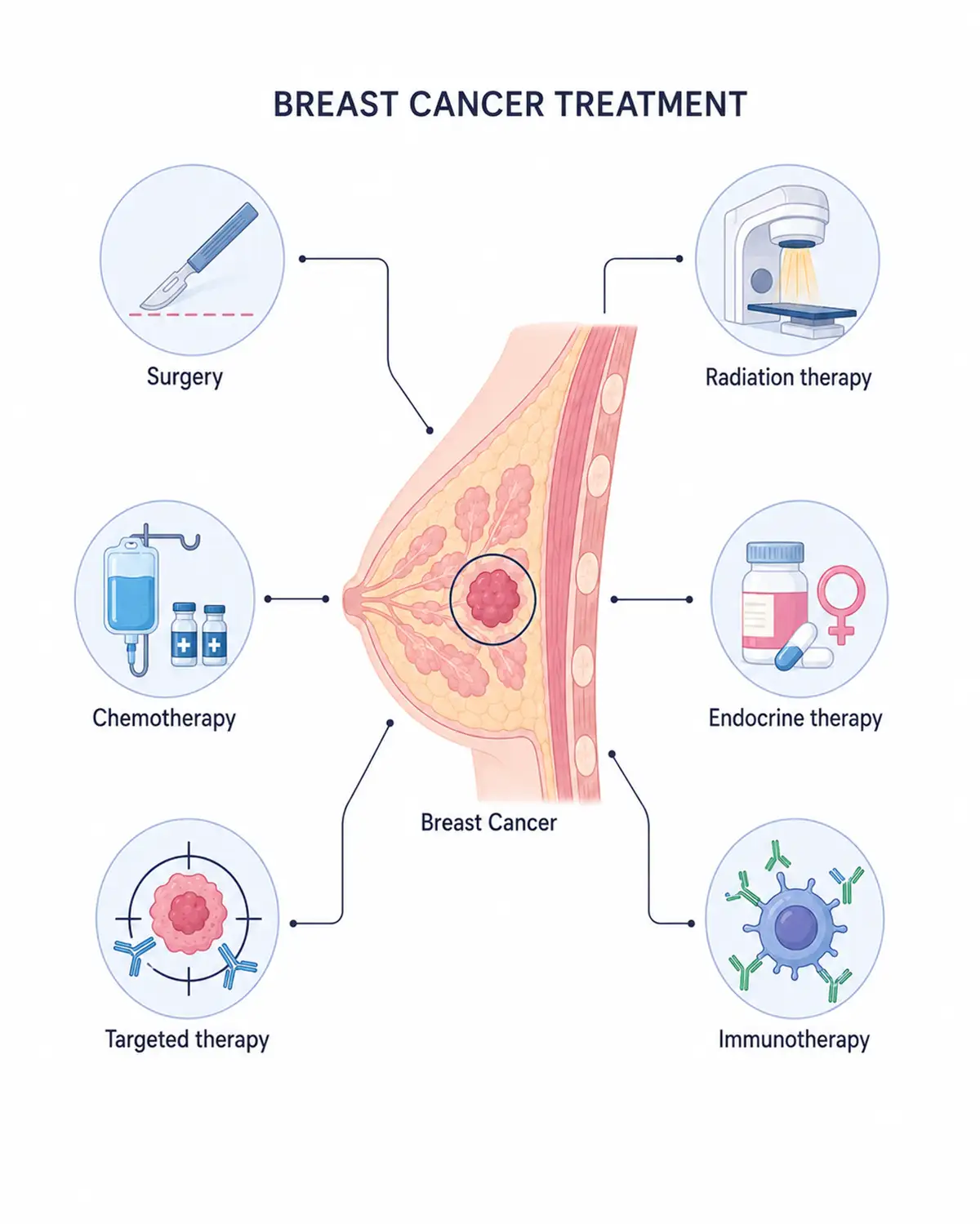
Breast cancer treatment by stage
Early treatment (localized tumor, reduced volume, favorable outcome)
Surgical removal combined with adjuvant chemotherapy and radiotherapy can effectively control disease progression, with a relatively favorable prognosis.
Intermediate-stage treatment (addressing local spread, inhibiting growth, and delaying progression)
Combined approaches involving surgery, chemotherapy, radiotherapy, and targeted therapy control tumor spread and slow disease deterioration.
Treatment for advanced disease (distant metastasis; aimed at symptom relief and survival prolongation)
Systemic treatments such as chemotherapy, targeted therapy, and immunotherapy are the main approaches, relieving symptoms and extending survival as much as possible.
Consequences of delayed early treatment: Without timely, standardized treatment, the tumor continues to grow and spreads to surrounding tissues and distant organs. Missing the optimal intervention window can cause serious disease deterioration.
Why choose Fosun Health for breast cancer treatment
Fosun Health draws on breast surgery services, da Vinci robots, M6 CyberKnife, VitalBeam, and pathology and molecular testing platforms at its hospitals, together with breast cancer drug resources within Fosun Pharma. Henlius-developed Hanquyou (trastuzumab) and Hanbeiyou (pertuzumab) can be used for HER2-positive breast cancer within their approved indications. Futuoning (fovinaciclib), for which Fosun Pharma holds independent intellectual property rights, offers an option for eligible patients with HR-positive, HER2-negative advanced or metastatic disease.
The team conducts multidisciplinary consultations based on stage and ER, PR, HER2, BRCA, and other markers to coordinate surgery, radiotherapy, and drug treatment. Robotic surgery helps reduce trauma while considering breast appearance. Precision radiotherapy minimizes exposure of the heart, lungs, and normal breast tissue and reduces some treatment-related adverse-event risks. Breast reconstruction, arm rehabilitation, and follow-up support are also provided.
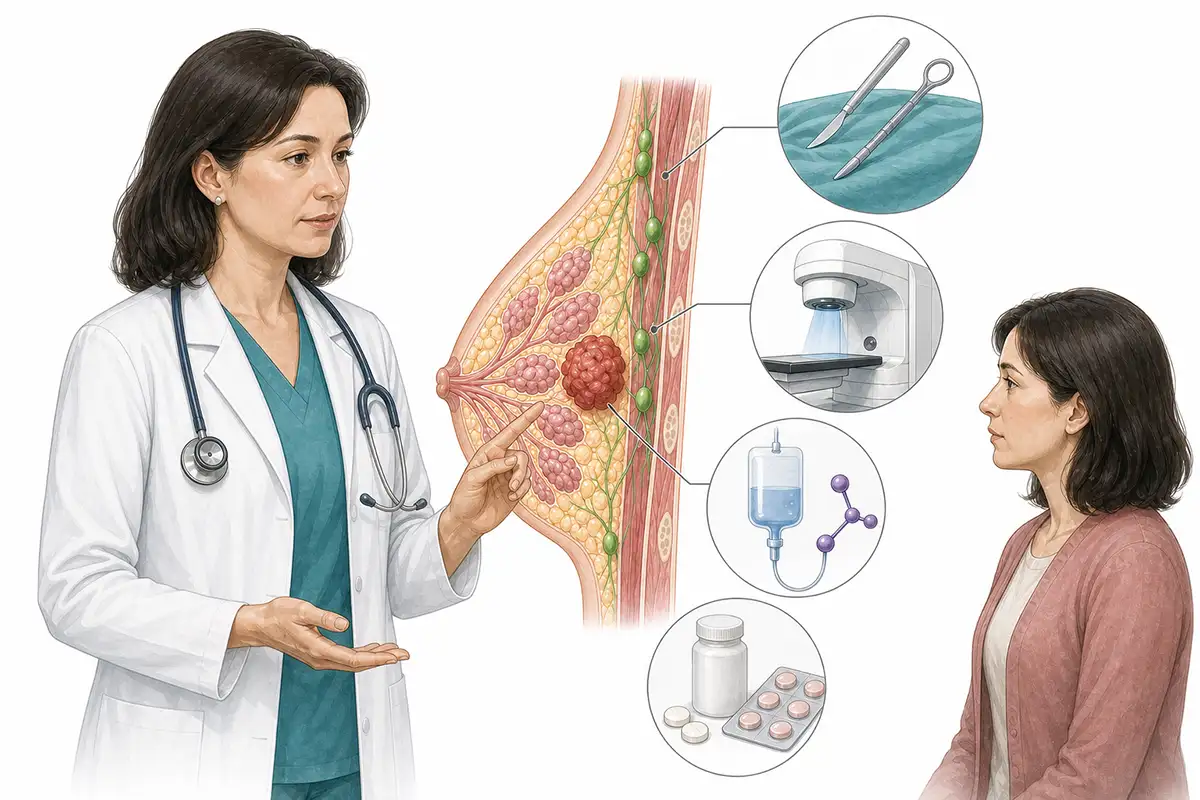
Breast cancer treatment methods
1.M6 CyberKnife treatment
Real-time image verification and robotic radiation delivery from multiple angles target small local recurrent, residual, or oligometastatic breast cancer lesions following multidisciplinary assessment.
Treatment advantages:
① Focused treatment of localized lesions: Suitable for recurrent or metastatic lesions with relatively clear boundaries.
② Protection of the heart and lungs: Reduces unnecessary exposure of the heart, lungs, and chest wall.
③ Treatment in fewer fractions: Reduces disruption of systemic treatment schedules by local therapy.
④ Clearly defined indications: Does not replace surgery and standard adjuvant treatment for early breast cancer.
2.VitalBeam precision radiotherapy
Image guidance and intensity-modulated radiotherapy treat the breast, chest wall, and regional lymph nodes. Suitable for patients after breast-conserving surgery, high-risk patients after mastectomy, and those with locally advanced breast cancer.
Treatment advantages:
① Comprehensive target coverage: Includes the breast, chest wall, and high-risk lymphatic drainage regions.
② Heart and lung protection: Reduces cardiac and pulmonary doses during left-sided breast cancer treatment.
③ Protection of normal breast tissue: Reduces the effects of unnecessary irradiation on appearance and function.
④ Facilitates combined treatment: Can be coordinated with surgery, chemotherapy, targeted therapy, and endocrine therapy.
3.Da Vinci robot-assisted breast cancer surgery
High-definition three-dimensional visualization and flexible robotic arms assist tumor removal. Suitable for selected patients assessed as eligible for robotic breast-conserving surgery, gland removal, or breast reconstruction.
Treatment advantages:
① Less visible incisions: Surgical access can be established through sites such as the armpit.
② Clearer anatomical visualization: Facilitates work in the retromammary space and axillary structures.
③ Balances tumor removal and appearance: Preserves or reconstructs the breast while ensuring adequate margins.
④ Supports postoperative recovery: Reduces the burden of chest wall incisions and facilitates subsequent adjuvant treatment.
4.Endocrine therapy
For hormone receptor-positive breast cancer, inhibiting estrogen synthesis helps prevent further tumor growth and spread.
5.Targeted therapy
Treatment acts precisely on specific molecular targets in cancer cells, offering good clinical efficacy with relatively fewer side effects.
6.Immunotherapy
Activating the body's own immune system to recognize and attack cancer cells provides a new effective treatment option for advanced breast cancer.
Follow-up care after treatment
Maintain a regular daily routine and balanced diet, exercise moderately, attend scheduled examinations as advised, and cooperate actively with treatment.
Post-treatment examinations
Regular breast ultrasound, tumor marker testing, and imaging follow-up are needed to detect abnormalities promptly.
Conclusion
Breast cancer is a serious disease. Early detection, diagnosis, and intervention are central to treatment. An appropriate treatment plan and continued follow-up help improve quality of life and prolong survival.


