


Breast cancer arises from malignant proliferation of mammary epithelial cells. Early symptoms are often atypical; common manifestations include a painless breast lump, nipple changes, and localized skin abnormalities.
Breast cancer prevalence worldwide
Breast cancer is one of the most common malignancies in women worldwide and accounts for about one quarter of new cancers in women. Incidence varies substantially by region, with higher rates in very high human development settings, while later diagnosis contributes to a heavier mortality burden in resource-limited settings. Screening, timely diagnosis, and comprehensive treatment can improve outcomes.
Breast cancer symptoms by stage
1.Early-stage breast cancer symptoms
Small tumors usually cause no obvious symptoms. Some patients can feel a small, painless, firm breast lump with indistinct borders and poor mobility. A minority experience dull or stabbing pain.
2.Intermediate-stage breast cancer symptoms
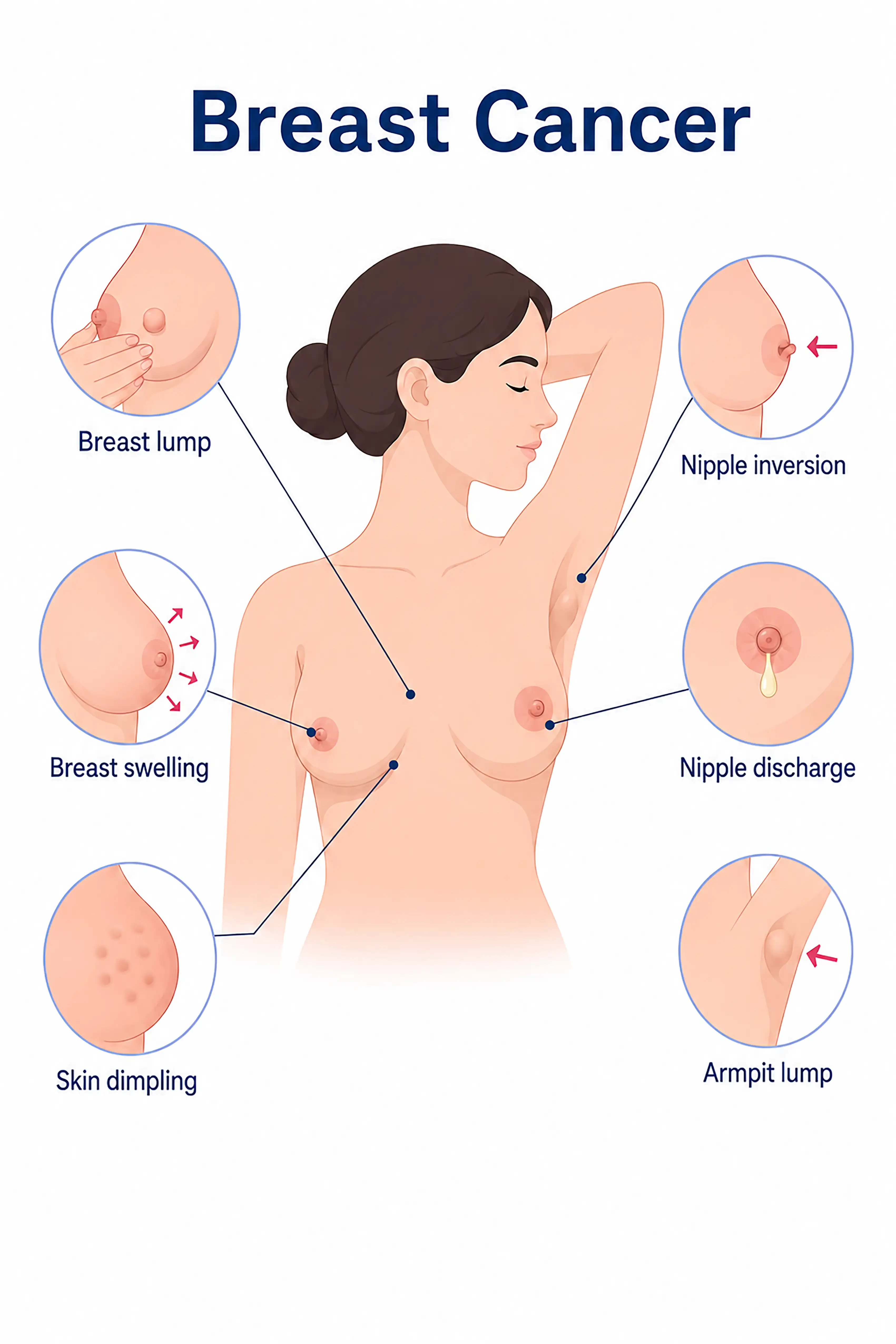
As the lump grows, the nipple may invert or deviate to one side, and breast skin may develop an orange-peel appearance. Some patients have bloody nipple discharge and palpable enlarged nodes in the same-side armpit.
3.Advanced-stage breast cancer symptoms
The mass becomes extensively adherent and fixed to the skin or deeper tissues. Skin ulceration or satellite nodules may appear, accompanied by enlarged axillary nodes and symptoms of distant metastases such as bone pain, cough, and jaundice.
When to Seek Medical Attention
Early warning signs of breast cancer include a painless breast lump, abnormal nipple discharge, skin dimpling, or orange-peel changes. Please consult a doctor through "Chat with a Doctor" to support early detection. During the online consultation, the doctor will ask about possible causes of your lump and guide you through further examinations.
Breast cancer stages
Stage 0 breast cancer
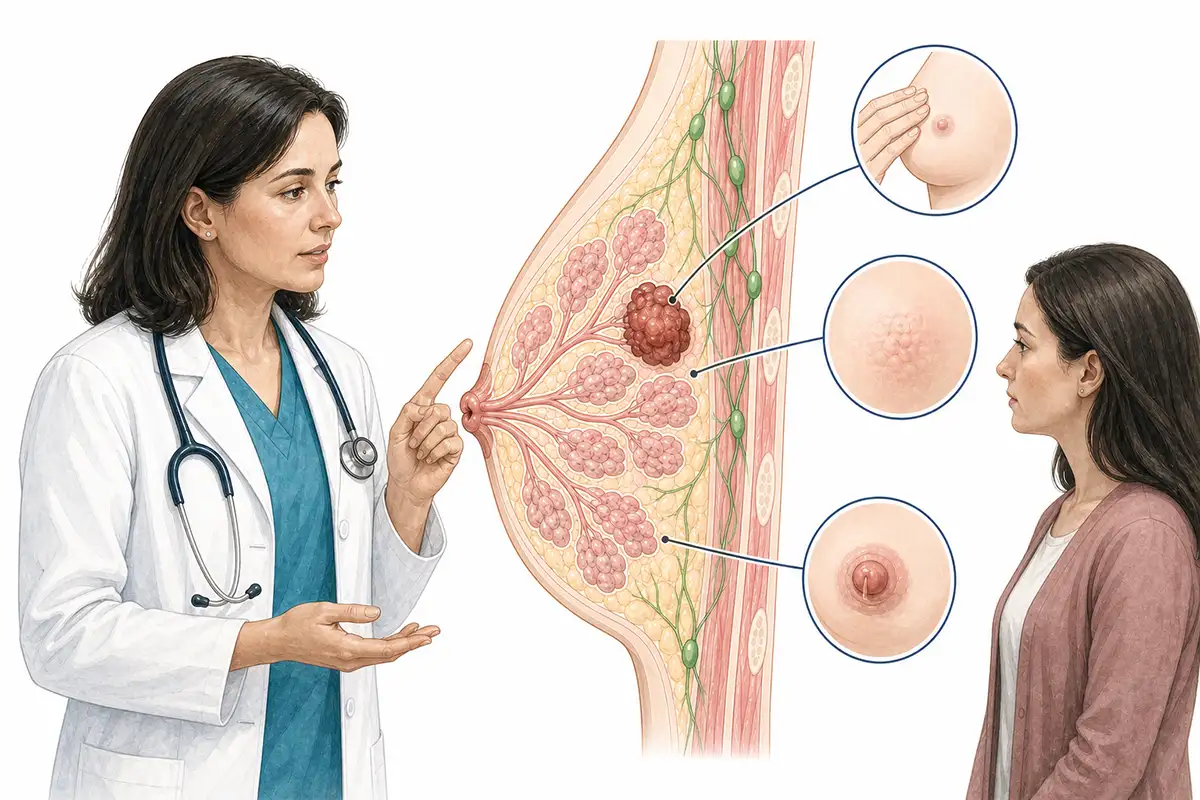
Cancer cells remain within the mammary ducts or lobules without breaching the basement membrane. This is carcinoma in situ, usually without obvious clinical symptoms and commonly detected through screening.
Stage I breast cancer
The tumor is no more than two centimeters across, without chest wall or skin invasion or lymph node metastasis. A small, firm breast nodule with reasonably preserved mobility may be palpable.
Stage II breast cancer
The tumor is two to five centimeters across, or one to three same-side axillary lymph nodes contain metastases. The breast lump is apparent and may be accompanied by nipple changes.
Stage III breast cancer
The tumor is larger than five centimeters or invades the chest wall and skin. Same-side axillary nodes are matted and fixed, and skin ulceration and edema may occur.
Stage IV breast cancer
The tumor has spread to distant sites, commonly the bones, lungs, liver, and brain, causing dysfunction of the affected organs and systemic wasting symptoms.
Breast cancer symptoms in detail
1.Painless breast lump
The most common initial symptom is a solitary, hard, irregular mass with indistinct boundaries from surrounding tissue and no obvious early pain. A breast lump is the presenting complaint in 80% of breast cancer patients.
2.Bloody nipple discharge
Spontaneous nipple discharge outside breastfeeding, especially bloody or blood-tinged serous fluid, suggests a possible intraductal papillary lesion or tumor. Discharge from a single duct on one side requires particular attention.
3.Nipple retraction
The nipple gradually inverts, retracts, or deviates to one side, and induration may be felt in the areola. Eczema-like nipple or areolar changes with oozing and crusting should raise suspicion of Paget disease of the breast.
4.Orange-peel skin changes
Tumor invasion shortens the breast's suspensory ligaments, causing localized skin dimpling. When cancer cells obstruct lymphatic vessels, the skin thickens and develops an orange-peel appearance with prominent pores.
5.Enlarged axillary lymph nodes
Hard, matted nodes in the same-side armpit enlarge progressively without pain, suggesting metastasis. This can be the first sign of occult breast cancer.
6.Changes in breast shape
The breast contour becomes asymmetric, with localized bulging or indentation. Inflammatory breast cancer may cause red, swollen, thickened, hardened skin with a bruise-like purplish-red color.
7.Breast skin ulceration
Advanced tumors invade the skin and cause irregular ulcers with necrotic tissue at the base, sometimes accompanied by foul odor and bleeding. Cancer cells may form scattered cutaneous satellite nodules around the primary lesion.
8.Persistent breast pain
Some patients experience persistent dull or stabbing breast pain unrelated to menstruation. It progressively worsens and is difficult to relieve with ordinary medication.
9.Upper limb swelling
Extensive axillary nodal metastasis or impaired postoperative lymphatic drainage causes swelling of the affected arm, restricted movement, and tight, shiny skin, seriously affecting daily life.
Conclusion
Breast cancer seriously threatens women's health, and distant metastases in advanced disease can be life-threatening. Monitoring breast changes, promptly seeking medical examination, and receiving standardized treatment help control progression and improve quality of life.


