


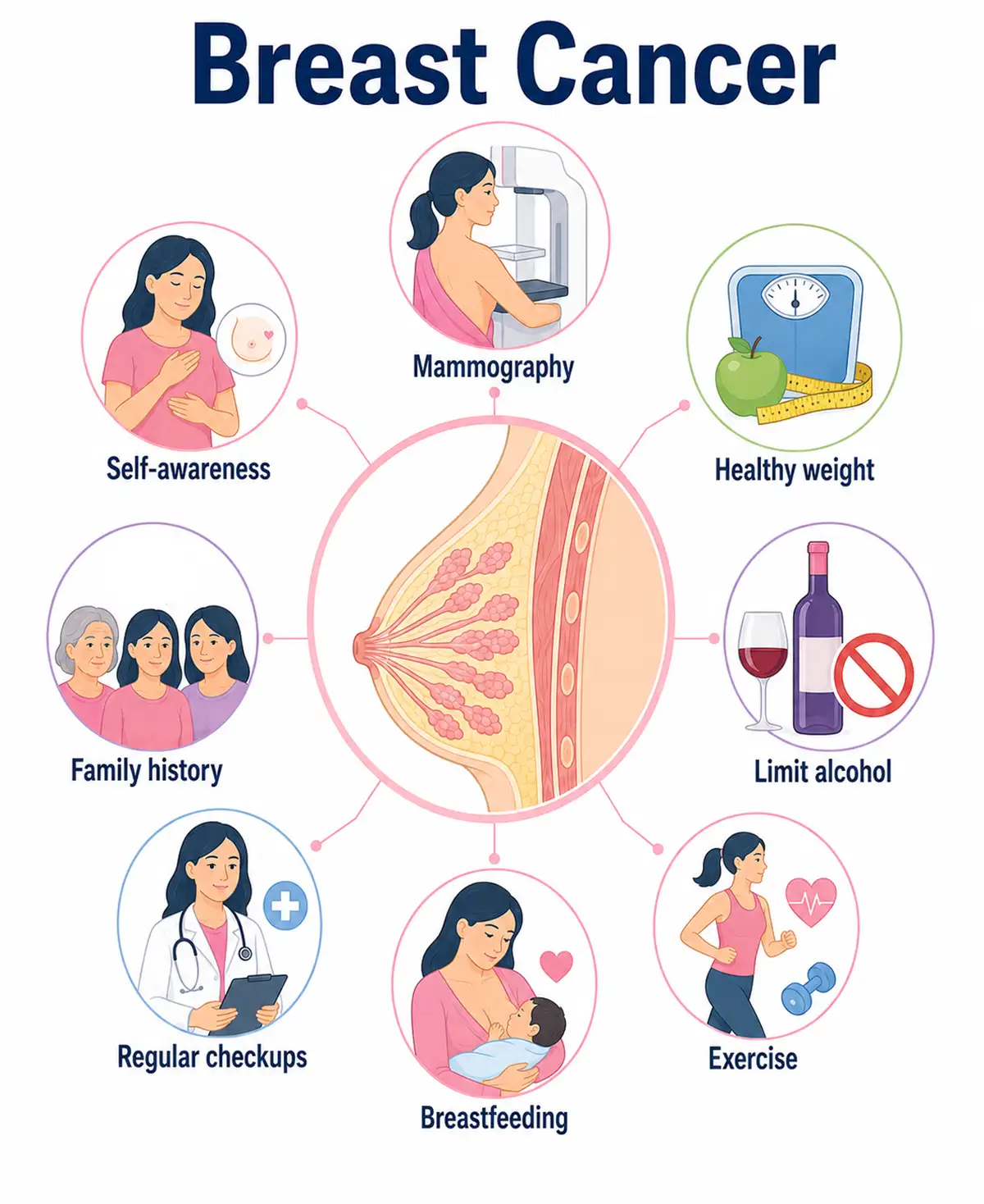
1. Balanced diet
Eat more fresh vegetables, fruit, whole grains, and high-quality protein, and reduce red meat, processed meat, and high-fat foods. Maintaining a healthy weight can reduce risk.
2. Regular exercise
Perform at least 150 minutes of moderate-intensity aerobic exercise weekly. Exercise regulates hormone levels and strengthens immunity, effectively reducing risk.
3. Limit alcohol
Limit alcohol to no more than one drink daily. Alcohol increases estrogen levels, and long-term excessive drinking significantly increases breast cancer risk.
4. Avoid smoking
Smoking increases the risk of multiple cancers. Tobacco carcinogens can reach breast tissue through the bloodstream, and quitting helps reduce risk.
5. Regular screening
Women over forty should have annual breast ultrasound or mammography. High-risk individuals should begin earlier, as early detection improves treatment outcomes.
6. Breastfeeding
Breastfeeding for more than twelve months can reduce breast cancer risk. It helps regulate estrogen levels and promotes breast cell differentiation.
7. Genetic counseling
Those with a family history of breast cancer or BRCA mutations should receive genetic counseling and testing and, when necessary, preventive measures to reduce risk.
Conclusion
Breast cancer seriously threatens women's health. Evidence-based prevention and health care can effectively reduce risk. Attention to high-risk factors, regular screening, early detection, and timely intervention are essential to improving prognosis.


