


1. Genetic factors
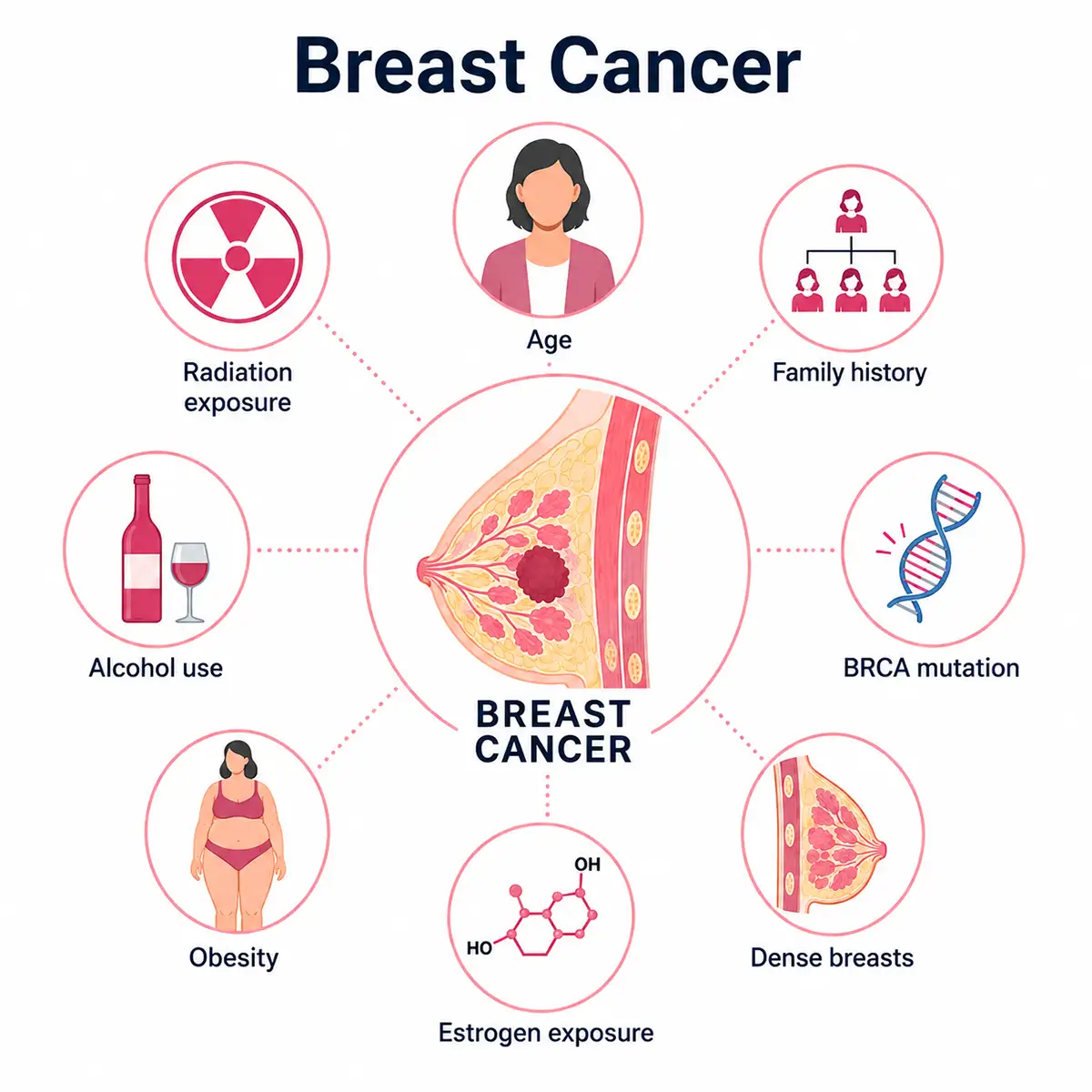
Approximately five to ten percent of breast cancers are closely associated with inherited mutations. BRCA1 and BRCA2 mutations significantly increase risk.
2. Hormonal factors
Prolonged exposure to high estrogen levels is an important risk factor. Early menarche, late menopause, and hormone replacement therapy all increase risk.
3. Age
Breast cancer incidence increases with age, with markedly higher risk in women over fifty. Age is a nonmodifiable factor.
4. Reproductive factors
Having no children or a first birth after thirty increases risk, while breastfeeding reduces it. Reproductive history is closely associated with disease development.
5. Obesity
Postmenopausal obesity increases breast cancer risk. Fat tissue produces estrogen, promoting tumor cell growth and proliferation.
6. Alcohol-related factors
Long-term excessive drinking increases breast cancer risk. Alcohol metabolites can damage cellular DNA and disrupt hormone metabolism.
7. Radiation
Ionizing radiation to the chest during childhood or adolescence significantly increases the risk of breast cancer in adulthood.
Conclusion
Breast cancer results from multiple interacting factors and causes serious harm. Identifying high-risk factors, having regular examinations, and ensuring early detection and timely intervention are essential to improving prognosis.


