


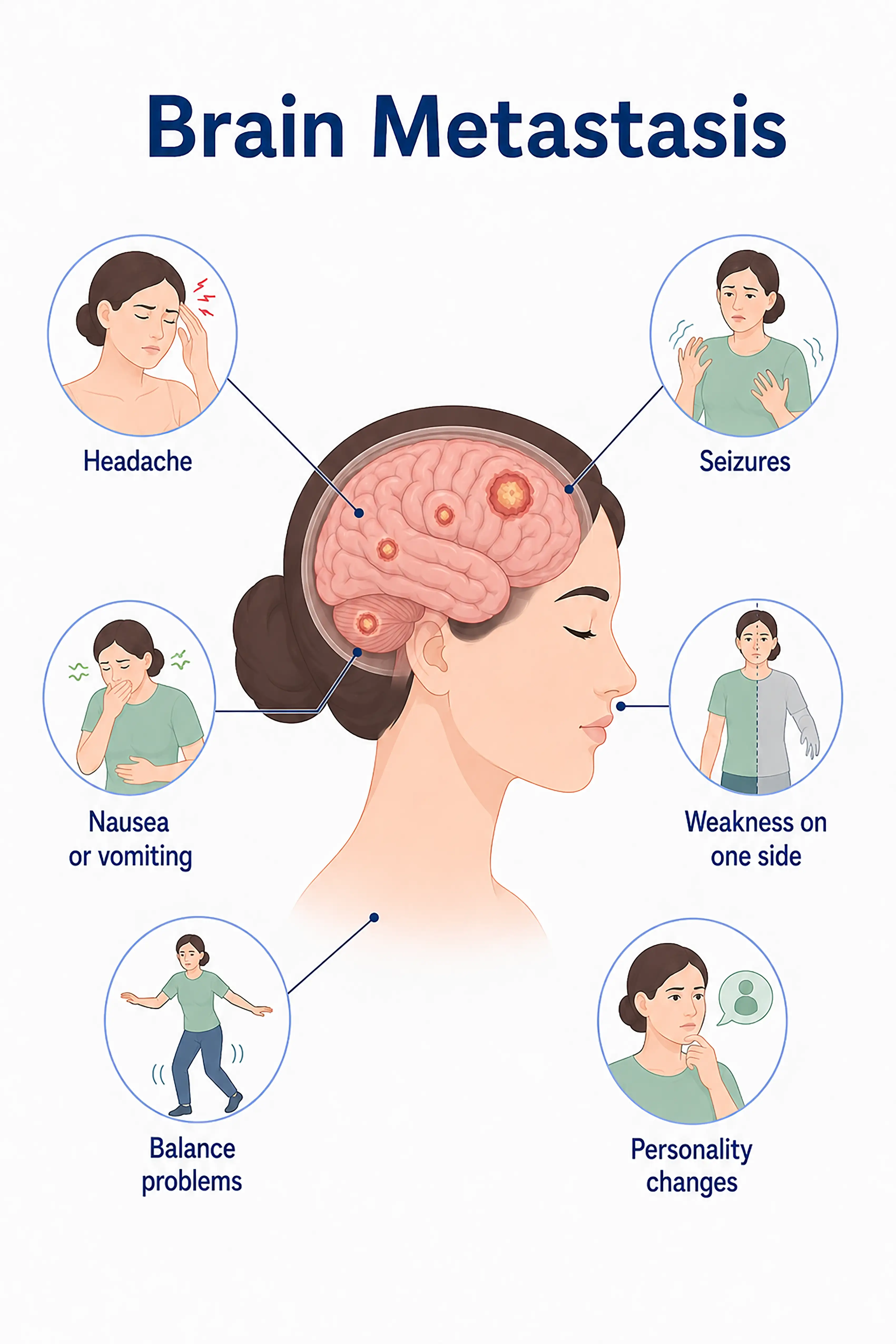
Brain metastases are tumors formed when malignancies from other parts of the body spread to the brain; symptoms vary depending on the number and location of the metastatic lesions, with common manifestations including headache, seizures, and limb weakness.
Global prevalence of brain metastases
Brain metastases have a high incidence among intracranial tumors; approximately 20%–40% of patients with malignant tumors eventually develop brain metastases.Lung cancer, breast cancer, melanoma, and renal cancer are the most common primary sources.As the survival time of cancer patients increases, the incidence of brain metastases has risen.Although the prognosis is generally poor, novel treatment modalities are improving survival outcomes.
Symptoms associated with stages of brain metastases
1.Early symptoms of brain metastases
A single small metastatic lesion may present without obvious symptoms, or with only mild headache, inattention, and slight cognitive decline, making it easy to overlook.
2.Symptoms of intermediate-stage brain metastasis
Symptoms of increased intracranial pressure worsen, presenting as persistent headache and projectile vomiting, along with focal neurological deficits (such as limb weakness and speech impairment) and epileptic seizures.
3.Symptoms of advanced brain metastasis
Multiple metastases cause severe intracranial pressure elevation and extensive neurological impairment, leading to life-threatening coma, brain herniation, and multiple organ failure.
When to Seek Medical Attention
Early signs of brain metastases include headaches, seizures, limb weakness, and speech disorders.Please consult a doctor via the "Chat with a Doctor" feature to facilitate early detection.During the online consultation, the doctor will ask about your history of malignancy and any neurological symptoms, and guide you through the process of obtaining a cranial MRI.
Staging of brain metastases
Stage 0 brain metastases
This staging system is not applicable to brain metastases.Brain metastases are typically assessed using the TNM staging system of the primary tumor, combined with the number and location of intracranial metastatic lesions.
Stage I brain metastases
Solitary brain metastasis with a diameter of less than 3 cm; no symptoms of increased intracranial pressure, presenting only with mild headache or focal neurological deficits.
Stage II brain metastases
1–3 brain metastases, 3–4 cm in diameter;presentation includes significant headache, nausea, and focal neurological deficits such as limb weakness.
Stage III brain metastases
Multiple brain metastases (more than three) or significant symptoms of elevated intracranial pressure lead to severe headache, vomiting, and impaired consciousness.
Stage IV brain metastases
Multiple metastases complicated by meningeal metastasis or severe intracranial pressure elevation result in coma and brain herniation; the prognosis is extremely poor.

Detailed description of symptoms of brain metastases
1.Severe headache in the morning
Increased intracranial pressure causes persistent headache that is pronounced in the morning and worsens with coughing or exertion; accompanied by nausea and vomiting, this is the most common symptom of brain metastases.
2.Epileptic seizures
Metastatic lesions can irritate the surrounding cerebral cortex, triggering epileptic seizures—which may be the presenting symptom; the incidence of seizures is higher than in primary brain tumors, and they may manifest as focal or generalized seizures.
3.Limb weakness and numbness
Compression of the motor cortex or corticospinal tract by metastatic lesions leads to contralateral limb weakness, sensory deficits, or hemiplegia, impairing the ability to perform daily activities.
4.Speech and cognitive impairment
Metastatic lesions in the frontal or temporal lobes, or multiple metastases, affect language and cognitive functions, manifesting as aphasia, memory decline, and personality changes.
5.Visual changes
Posterior fossa metastases or increased intracranial pressure can cause papilledema, leading to blurred vision, visual field defects, and double vision (diplopia).
6.Severe ataxia
Cerebellar metastasis causing balance disorders, a staggering gait, intention tremor, and dysarthria, affecting walking and daily life.
7.Frequent nausea and vomiting
Elevated intracranial pressure stimulates the vomiting center in the medulla oblongata, causing frequent vomiting; this is often accompanied by headache, which may temporarily subside after vomiting.
8.Presence of consciousness disturbance
Multiple metastases cause a rapid rise in intracranial pressure, leading to drowsiness, stupor, or even coma, indicating the development of brain herniation.
9.Meningeal irritation signs
Meningeal metastasis causes nuchal rigidity, positive Kernig's sign, and positive Brudzinski's sign, accompanied by severe headache and fever.
Conclusion
Treatment for brain metastases aims to prolong survival, control symptoms, and maintain quality of life; a multidisciplinary approach is required to formulate an individualized, comprehensive treatment plan.


