


Brain metastases have a high incidence among intracranial tumors; approximately 20%–40% of patients with malignant tumors eventually develop brain metastases.Lung cancer, breast cancer, melanoma, and renal cancer are the most common primary sources.The incidence of brain metastases has increased as the survival time of cancer patients has extended.
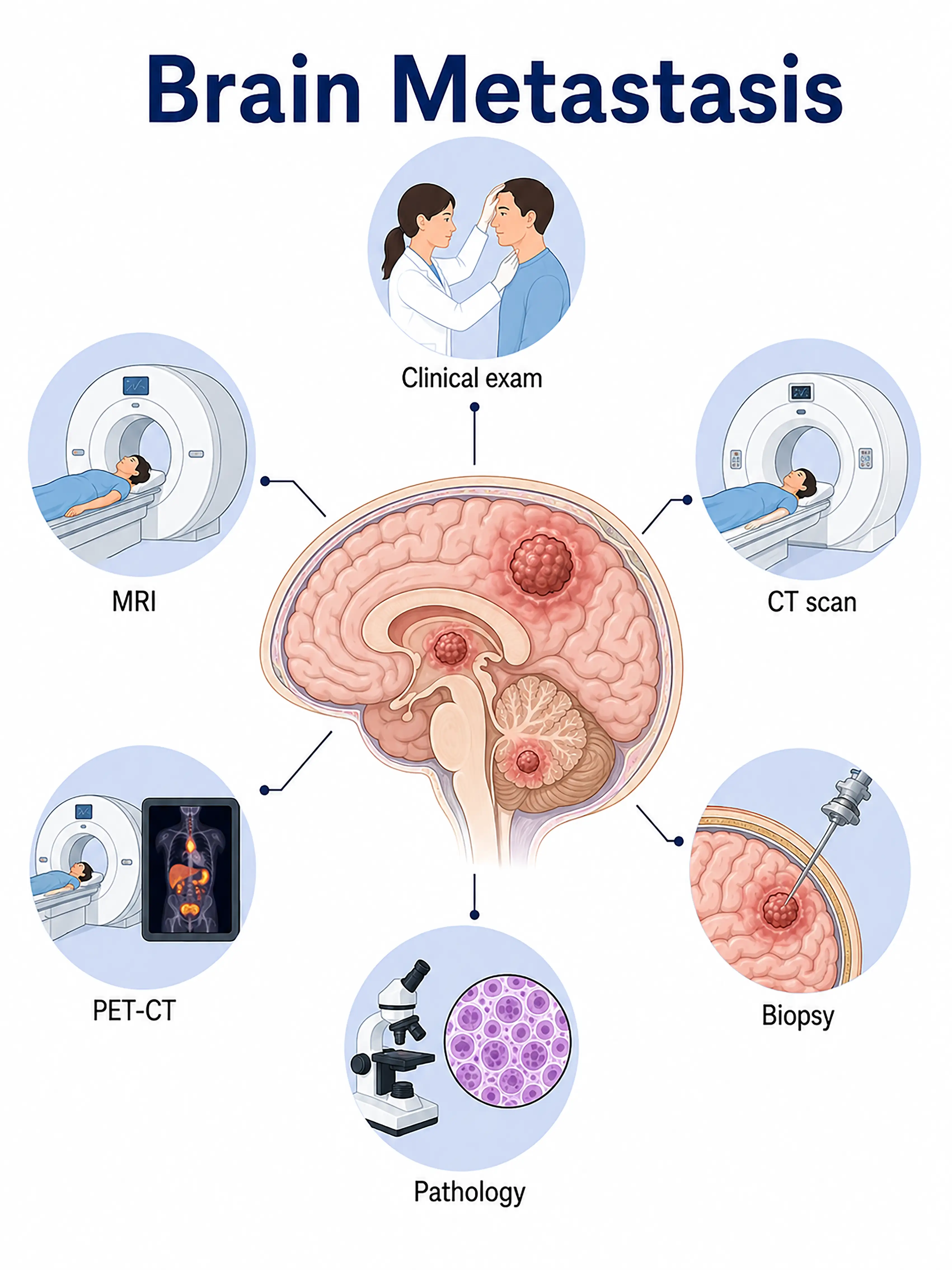
Diagnosis based on stages of brain metastases
1.Early diagnosis of brain metastases
A single small metastatic lesion may present without obvious symptoms.Contrast-enhanced MRI reveals a small nodule in the cortical or subcortical region with marked ring enhancement and extensive surrounding edema; diagnosis requires correlation with the history of the primary tumor.
2.Diagnosis of intermediate-stage brain metastasis
Symptoms of increased intracranial pressure worsen, presenting as persistent headache and projectile vomiting.Contrast-enhanced MRI reveals multiple nodules with ring enhancement and partial coalescence; pathological correlation with a primary tumor is required.
3.Diagnosis of advanced brain metastasis
Multiple metastases cause severe intracranial pressure elevation and extensive neurological impairment.MRI reveals multiple space-occupying lesions with midline shift and brain herniation, requiring dehydration therapy to lower intracranial pressure and comprehensive treatment.
If brain metastases are not diagnosed promptly, multiple metastatic lesions can lead to fatal increases in intracranial pressure and brain herniation, severely affecting the patient's quality of life and survival.
When to Seek Medical Attention
Early signs of brain metastases include headaches, seizures, limb weakness, and speech disorders.Please consult a doctor via the "Chat with a Doctor" feature to facilitate early detection.During the online consultation, the doctor will ask about your history of malignancy and any neurological symptoms, and guide you through the process of obtaining a cranial MRI.
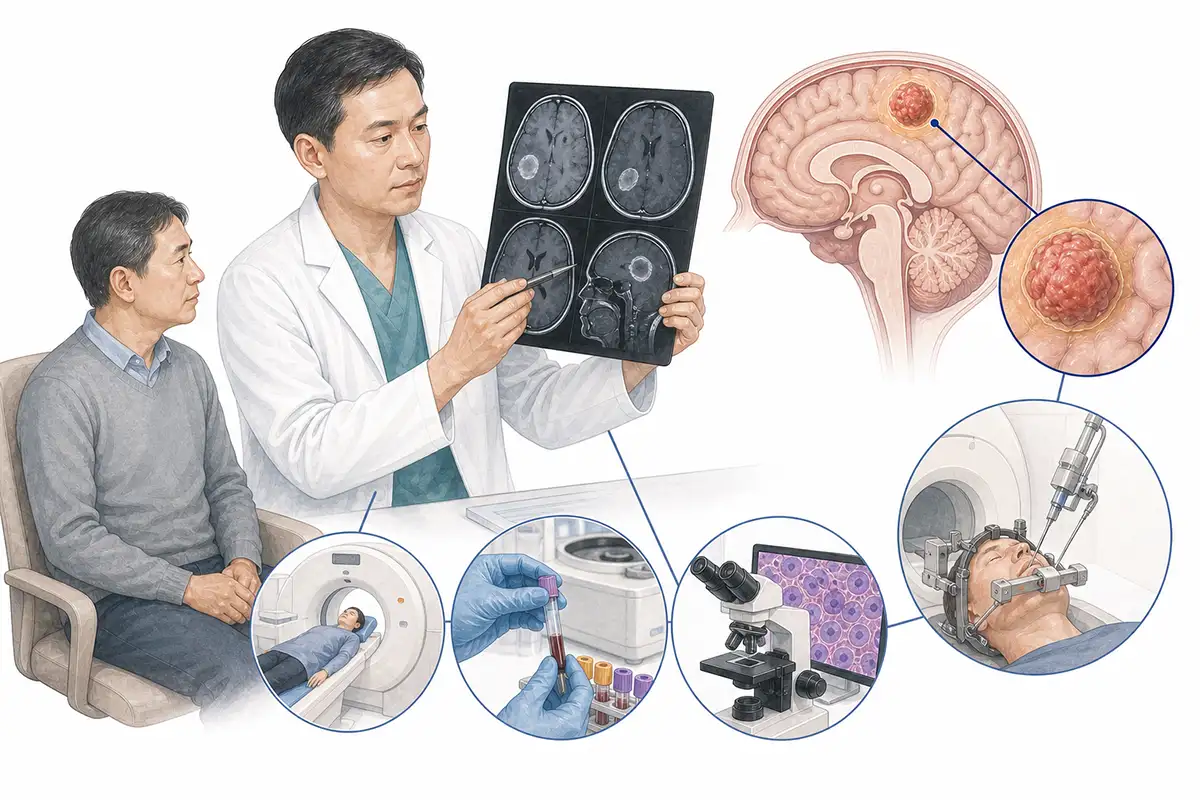
Diagnostic criteria for brain metastases
1.Contrast-enhanced cranial MRI
Contrast-enhanced MRI is the preferred method for diagnosing brain metastases.Typical findings include multiple small nodules in the cortical or subcortical regions showing marked ring-like or nodular enhancement, surrounded by extensive vasogenic edema.
2.Primary tumor pathology comparison
Comparing the pathological type and immunohistochemical characteristics of brain metastases with those of the primary tumor to confirm the origin of metastasis is particularly important in cases where the primary site is unknown.
3.Whole-body CT and PET-CT
Comprehensively assess the control of the primary tumor and the presence of metastases elsewhere in the body to determine the tumor stage and guide the formulation of a comprehensive treatment plan.
4.Stereotactic biopsy
For brain metastases of unknown primary origin or suspected primary central nervous system tumors, stereotactic biopsy is used to obtain tissue for pathological diagnosis.
5.Tumor marker test
Measurement of serum tumor markers such as CEA, CA19-9, CA15-3, and NSE to assist in identifying the primary tumor origin and monitoring systemic tumor burden.
6.Molecular genetic testing
Test for driver gene mutations such as EGFR, ALK, HER2, and BRAF to guide the selection of targeted therapies; this is particularly important for brain metastases from lung and breast cancers.
7.Cerebrospinal fluid cytology
For patients with suspected meningeal metastasis, perform a lumbar puncture to obtain cerebrospinal fluid and examine for tumor cells to confirm leptomeningeal metastasis.
8.Perfusion and spectroscopic imaging
MR perfusion imaging and MR spectroscopy (MRS) help differentiate brain metastases from high-grade gliomas or radiation necrosis, aiding in differential diagnosis.
9.Glucocorticoid test
Observing symptom improvement and the resolution of edema on imaging studies following dexamethasone administration indirectly supports the diagnosis of metastatic tumors while simultaneously alleviating symptoms.
Daily Self-Check
Patients with a history of malignant tumors who experience headaches, seizures, or neurological deficits should seek immediate medical attention.Regular follow-up with cranial MRI helps in the early detection of brain metastases.
Conclusion
Diagnosis of brain metastases relies on contrast-enhanced MRI and correlation with the pathology of the primary tumor.A multidisciplinary approach to formulating an individualized, comprehensive treatment plan is crucial for prolonging survival.


