


Brain metastases are secondary tumors formed when malignant cells from other parts of the body travel through the bloodstream to the brain.The brain is a common site for malignant tumor metastasis.
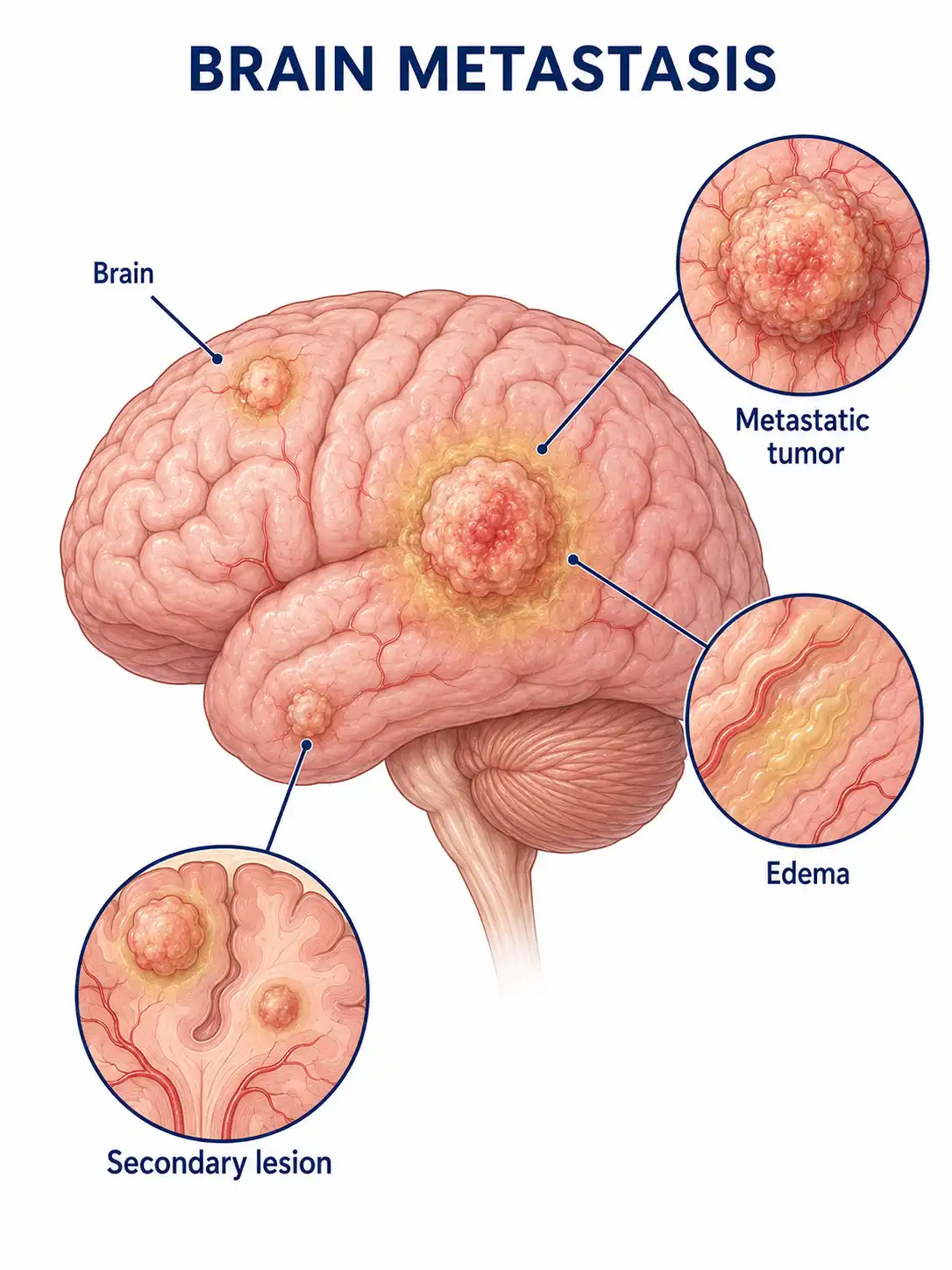
Global status of brain metastases
The incidence of brain metastases is far higher than that of primary brain tumors, accounting for more than half of all intracranial tumors.As the survival time of cancer patients increases, the incidence of brain metastases is showing an upward trend.
Consult a doctor regarding cancer-related issues
Patients with a known malignancy who develop new neurological symptoms—such as headache, seizures, limb weakness, or cognitive impairment—should promptly consult a neuro-oncologist or radiation oncologist.
Main types of brain metastases
1. Brain metastasis from lung cancer
Lung cancer is the malignancy most prone to brain metastasis, accounting for approximately 40%–50% of all brain metastases; small-cell lung cancer is particularly prone to this.
2. Brain metastasis from breast cancer
HER2-positive and triple-negative breast cancers are prone to brain metastasis, which can occur at any stage of the disease.
3. Melanoma metastasis
Although the incidence of melanoma is relatively low, it has a high rate of brain metastasis, often presenting with multiple metastatic lesions.
4. Gastrointestinal metastasis
Gastrointestinal tumors, such as colorectal cancer and gastric cancer, can also metastasize to the brain, although the incidence is relatively low.
5. Brain metastasis from renal cancer
Renal cell carcinoma is prone to brain metastasis; metastatic lesions are highly vascular and carry a high risk of hemorrhage.
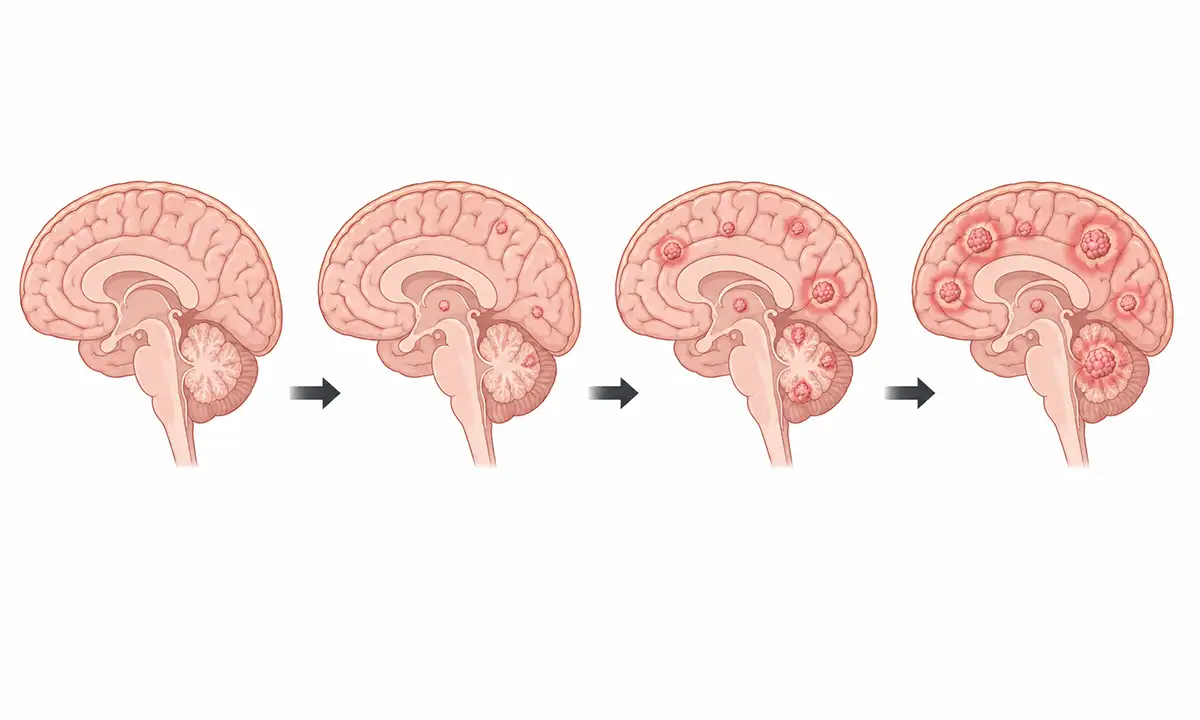
Typical symptoms and signs of brain metastases
1. Headache
Increased intracranial pressure or direct tumor compression causes headaches, which are typically persistent and may be accompanied by nausea and vomiting.
2. Epileptic seizure
Brain metastases can trigger epileptic seizures by irritating the cerebral cortex; this is one of the common initial symptoms.
3. Limb weakness
Compression of the motor functional area or conduction tracts by the tumor results in weakness, numbness, or impaired movement in the limbs on one side.
4. Cognitive impairment
Memory loss, impaired attention, and personality changes occur with multiple brain metastases or when metastases are located in the frontal lobe.
5. Speech difficulties
When the tumor involves the speech center, difficulties in speech expression or comprehension arise, affecting daily communication.
6. Vision changes
Posterior fossa metastases can cause increased intracranial pressure leading to papilledema, or the tumor may directly compress visual pathways, resulting in visual field defects.
What are the diagnostic methods for brain metastases
1. Cranial MRI
Contrast-enhanced MRI is the preferred method for diagnosing brain metastases; typical findings include multiple nodular enhancing lesions at the gray-white matter junction.
2. Cranial CT
CT can demonstrate the location and size of metastatic lesions, as well as the presence of hemorrhage and edema, serving as a crucial tool for emergency assessment.
3. Primary tumor assessment
A comprehensive assessment of the known primary tumor type, stage, and treatment history helps in formulating a comprehensive treatment plan.
4. Tumor marker
Measurement of relevant tumor marker levels to assess systemic tumor burden and response to treatment.
5. Systemic assessment
Whole-body PET-CT and bone scans assess extracranial metastasis and clarify tumor staging.
6. Pathological confirmation
For brain metastases of unknown primary origin, stereotactic biopsy is used to determine the pathological type and guide the search for the primary tumor.
Treatment methods for brain metastases
1. Surgical treatment
For solitary or large metastatic lesions, or those causing severe symptoms, surgical resection can provide rapid symptom relief and establish a pathological diagnosis.
2. Stereotactic radiotherapy
Stereotactic radiotherapy, such as Gamma Knife, is suitable for 1–4 small metastatic lesions; precise irradiation protects normal brain tissue.
3. Whole-brain radiotherapy
Whole-brain radiotherapy is indicated for multiple brain metastases; it can control the progression of intracranial lesions but may affect cognitive function.
4. Targeted therapy
Targeted drugs addressing driver gene mutations such as EGFR and ALK show efficacy against the corresponding types of brain metastases.
5. Immunotherapy
Immune checkpoint inhibitors are effective against certain types of brain metastases, and combination therapies can enhance efficacy.
6. Chemotherapy
Certain chemotherapy drugs can cross the blood-brain barrier and are used to control the progression of brain metastases.
7. Symptomatic and supportive care
Glucocorticoids alleviate cerebral edema and symptoms, antiepileptic drugs control seizures, and nutritional support improves general health status.
8. Comprehensive therapy
An individualized comprehensive treatment plan is formulated based on the primary tumor type, molecular characteristics, and the patient's general condition.
Conclusion
Brain metastases are a common complication of malignant tumors that significantly impact patients' quality of life and prognosis.A comprehensive approach combining surgery, radiotherapy, and systemic therapy can effectively control intracranial lesions and prolong survival.


