


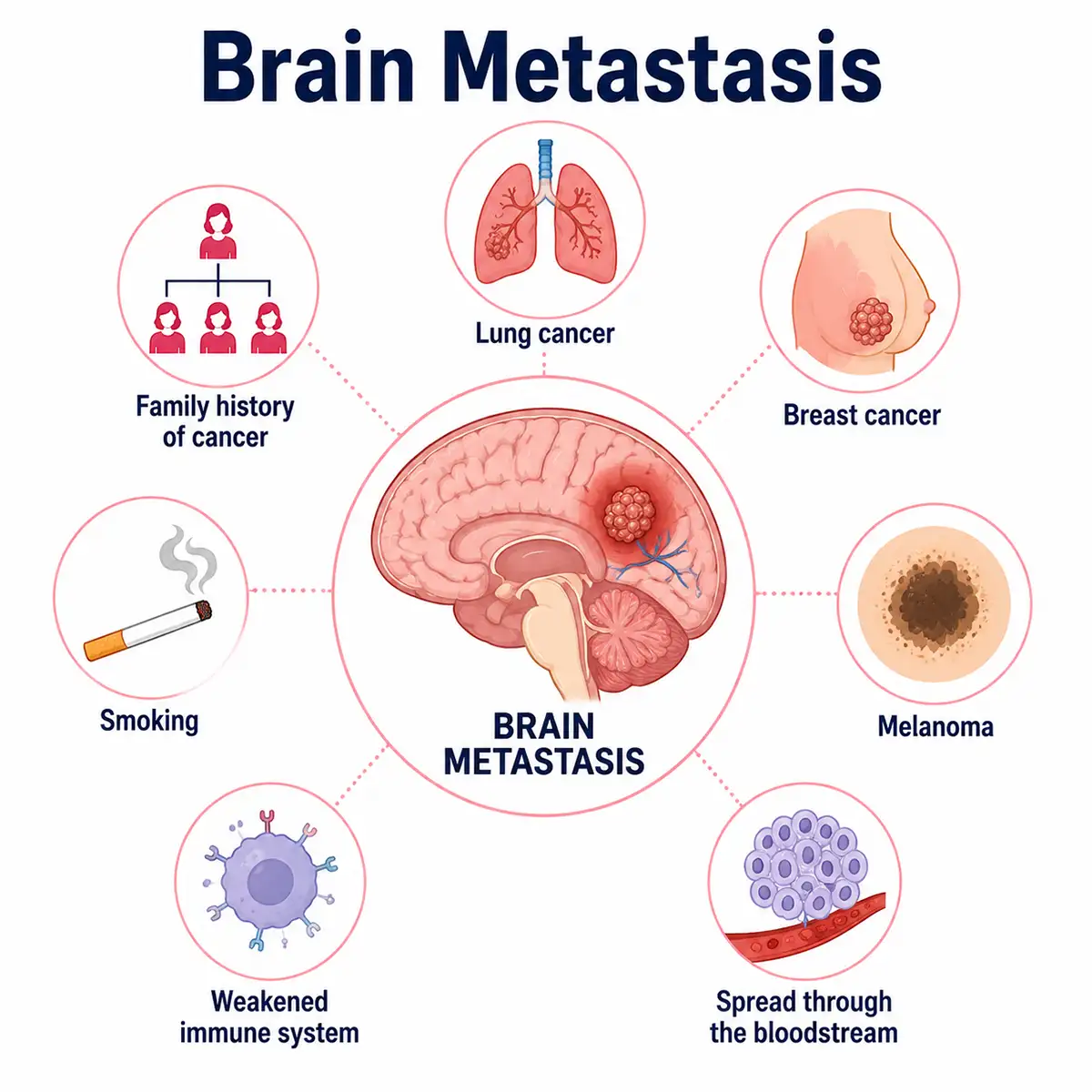
1. Lung cancer metastasis
Lung cancer is the most common source of brain metastases, accounting for approximately 40%–50% of all brain metastases; small-cell lung cancer is particularly prone to early metastasis.
2. Breast cancer metastasis
Breast cancer is a common source of brain metastases in women; the incidence of brain metastasis is higher in HER2-positive and triple-negative breast cancers.
3. Hematogenous dissemination
Hematogenous dissemination to the brain is the primary route of metastasis; tumor cells pass through the pulmonary circulation before entering the systemic circulation to reach the brain.
4. Blood-brain barrier
Disruption of the blood-brain barrier during tumor growth facilitates the entry of tumor cells into the brain parenchyma, leading to the formation of metastatic lesions.
5. Melanoma
Although the incidence of malignant melanoma is relatively low, the rate of brain metastasis is extremely high; approximately half of patients with advanced-stage disease develop brain metastases, and the prognosis is poor.
6. Gastrointestinal tumors
Gastrointestinal malignancies, such as colorectal and gastric cancers, can metastasize to the brain; although the incidence is relatively low, vigilance is required in patients with advanced disease.
7. Kidney cancer metastasis
Renal cell carcinoma can metastasize to the brain via extensive hematogenous spread; brain metastases from renal cancer are often associated with hemorrhage and show some sensitivity to radiotherapy.
Conclusion
Brain metastases result from the hematogenous spread of a primary tumor to the brain;they are the most common type of intracranial malignancy and pose a serious health risk.It is crucial for cancer patients experiencing headaches, vomiting, or neurological symptoms to undergo timely examinations to ensure early detection and intervention.


