


Global disease prevalence: Bladder cancer is a common malignant tumor of the urinary system worldwide; it has a high incidence rate in developed countries and regions, and the number of male patients significantly exceeds that of females.
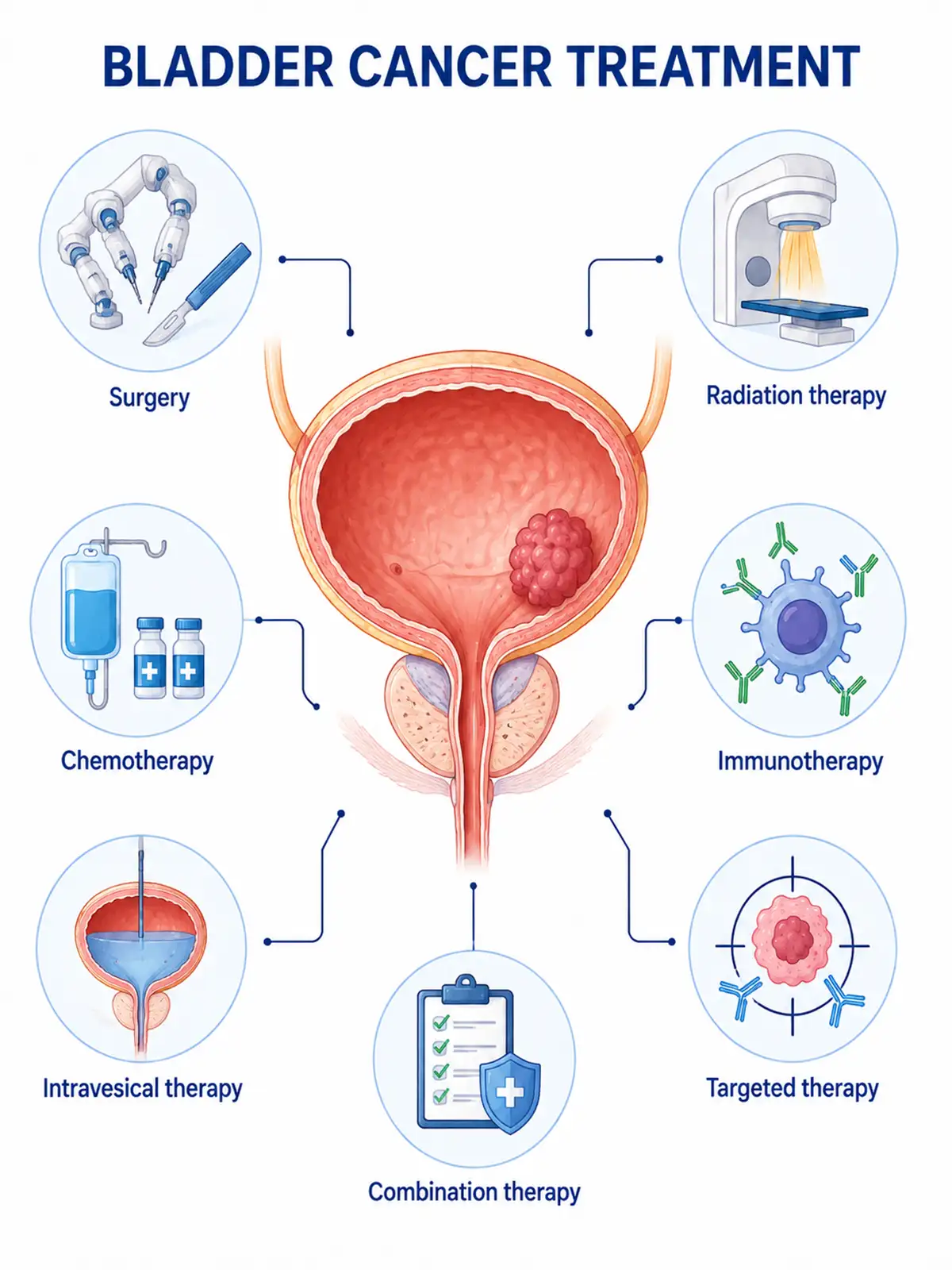
Bladder Cancer Staging and Treatment
Early treatment (involving localized tumors and tumor shrinkage with good outcomes)
utilizing transurethral resection of the lesion combined with intravesical instillation therapy—can effectively control tumor progression and preserve bladder function.
Intermediate-stage treatment (addressing local spread, inhibiting growth, and delaying progression)
employs a comprehensive approach—such as surgery combined with chemoradiotherapy and immunotherapy—to control further tumor spread and preserve bladder function to the greatest extent possible.
Treatment for advanced disease (distant metastasis; aimed at symptom relief and survival prolongation)
primarily employs systemic therapies such as chemotherapy, immunotherapy, targeted therapy, and others to alleviate clinical symptoms and extend patient survival as much as possible.
Why choose Fosun Health for bladder cancer treatment
Fosun Health’s bladder cancer diagnosis and treatment services are managed by a specialized urologic oncology center; the team possesses extensive experience in transurethral resection of bladder tumor (TURBT), radical cystectomy, and comprehensive bladder-sparing therapies.Leveraging a global medical network, patients can access advanced, internationally aligned treatments such as transurethral laser/plasma resection, da Vinci robot-assisted radical cystectomy with orthotopic neobladder reconstruction, intravesical immunotherapy, PD-1/PD-L1 inhibitors, and antibody-drug conjugates (ADCs).
For complex cases such as muscle-invasive or metastatic bladder cancer, a Multidisciplinary Team (MDT)—comprising experts in urology, medical oncology, radiation oncology, and radiology—formulates the optimal treatment plan; a cross-border consultation mechanism enables patients to obtain second opinions from top-tier overseas medical centers.
Foshan Fosun Chancheng Hospital is equipped with the da Vinci surgical robot and the CyberKnife M6 precision radiotherapy system.The hospital has extensive experience in neoadjuvant chemotherapy and bladder-sparing trimodality therapy (surgery, radiotherapy, and chemotherapy) for muscle-invasive bladder cancer, providing personalized, comprehensive care for patients at various stages of the disease.
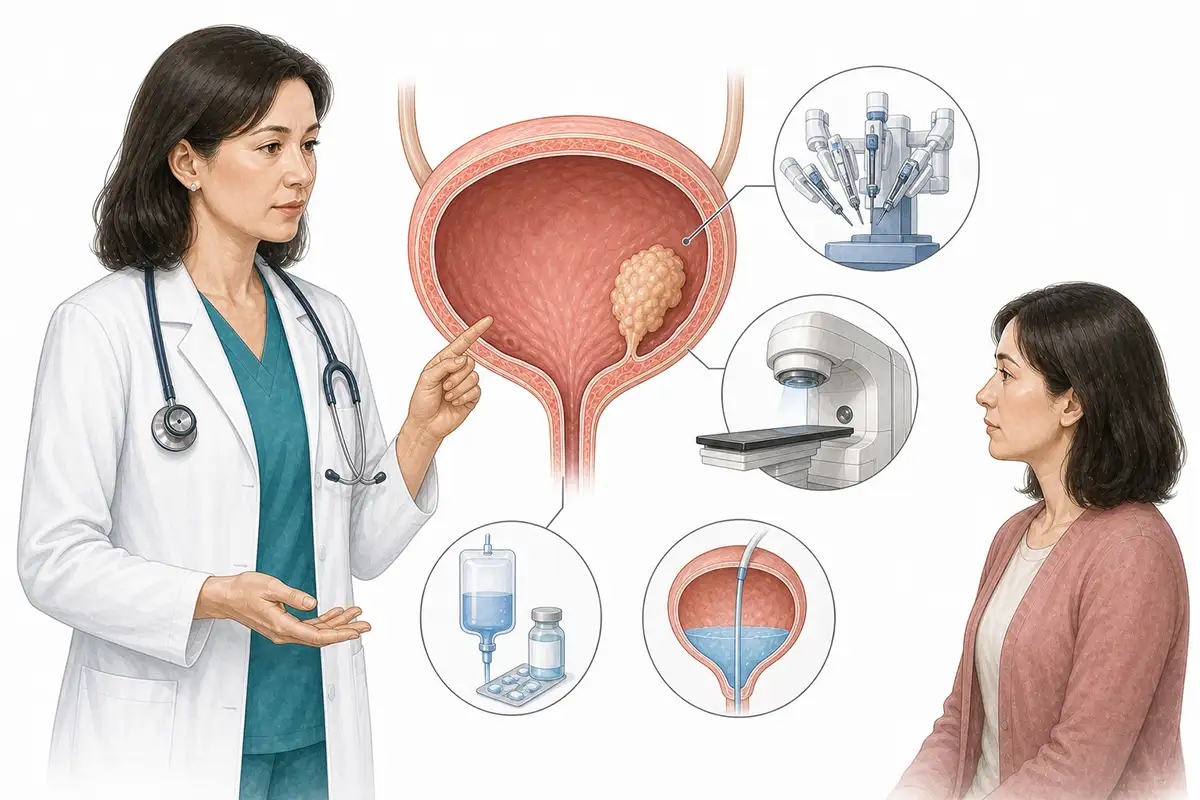
Bladder Cancer Treatment Methods
1.Transurethral resection of bladder tumor
For patients with indications such as non-muscle-invasive bladder cancer, transurethral resection of bladder tumor (TURBT) may be performed to remove visible tumors and obtain pathological tissue.
Treatment advantages:
① Minimally invasive procedure: Tumor resection performed via the urethra, eliminating the need for an open abdominal incision.
② Tumor resection: Allows for the direct resection of visible tumors within the bladder.
③ Clarify pathology: Tissue specimens obtained for pathological grading and staging.
④ Repeat treatment: For some cases of recurrent non-muscle-invasive bladder cancer, repeat transurethral resection may be performed depending on the clinical situation.
2.Da Vinci robot-assisted bladder cancer surgery
For patients eligible for radical cystectomy, Da Vinci robot-assisted surgery for bladder cancer may be considered based on tumor stage, lymph node status, and overall health status.
Treatment advantages:
① Minimally invasive procedure: Complex pelvic surgery performed with robotic assistance.
② Precise dissection: Magnified surgical field facilitates the management of complex anatomical structures surrounding the bladder.
③ Lymph node management: Pelvic lymph node dissection can be performed as part of the radical surgical plan.
④ Personalized urinary diversion: Select an appropriate urinary diversion method based on the patient's condition.
3.CyberKnife precision radiotherapy
For patients who are unsuitable for surgery or who opt for bladder-sparing therapy, precise radiotherapy may be considered based on disease stage and the status of adjacent organs; this is typically combined with radiosensitizing treatments, such as chemotherapy.
Treatment advantages:
① Precise localization: Formulate an individualized radiotherapy plan based on the location of the bladder tumor.
② Local control: Concentrates action on the bladder tumor region.
③ Protects surrounding tissues: Minimizes radiation exposure to surrounding tissues such as the intestines and rectum as much as possible.
④ Bladder-sparing option: May serve as part of a comprehensive treatment plan for selected patients eligible for bladder-sparing therapy.
4.VitalBeam linear accelerator precision radiotherapy
Utilizing the VitalBeam linear accelerator platform, precise radiotherapy can be administered based on the extent of bladder tumors and pelvic lymph nodes, with the option to combine treatment with chemotherapy as needed.
Treatment advantages:
① Precision irradiation: Formulate a radiotherapy plan based on the tumor and regions at risk.
② Dose optimization: Optimizes target area coverage and the protection of normal tissues.
③ Reduce radiation exposure to normal tissue: Minimize the radiation dose to adjacent organs such as the intestine and rectum.
④ Suitable for comprehensive therapy: Can be used in bladder-sparing treatment regimens for select cases of muscle-invasive bladder cancer.
5.Bladder perfusion therapy
For non-muscle-invasive bladder cancer, intravesical therapies—such as postoperative intravesical chemotherapy or BCG instillation—may be selected based on the risk of recurrence.
Treatment advantages:
① Local drug delivery: Direct administration of medication into the bladder cavity.
② Reduce recurrence risk: Can be used for postoperative adjuvant therapy in certain cases of non-muscle-invasive bladder cancer.
③ Reduction of systemic exposure: Regional perfusion can reduce systemic exposure to certain drugs.
④ Bladder preservation: Adjuvant therapy may be administered while preserving the bladder.
6.Chemotherapy
Kills cancer cells via instillation or systemic administration to effectively control the rate of tumor progression; commonly used for patients with intermediate-to-advanced bladder cancer.
7.Immunotherapy
Activates the body's immune system to recognize and attack cancer cells, providing a new, effective treatment option for patients with advanced bladder cancer to improve therapeutic efficacy.
8.Targeted therapy
Delivers precision strikes against specific molecular targets; offers good efficacy with relatively mild side effects; suitable for select patients with advanced-stage disease.Helps improve therapeutic outcomes.
9.Comprehensive therapy
Formulate an individualized comprehensive treatment plan based on the patient's specific condition, combining modalities such as surgery, perfusion therapy, and chemotherapy to enhance therapeutic efficacy.
10 Supportive care
Approaches such as nutritional support, psychological counseling, and symptom management can comprehensively improve the patient's physical condition and quality of life.
Post-treatment care
Increase fluid intake and maintain a regular daily routine; avoid smoking and exposure to chemical substances; attend scheduled follow-ups and actively cooperate with further treatment as advised.
Post-treatment examinations
Regular cystoscopy, urinary exfoliative cytology, and follow-up imaging are required after treatment to detect tumor recurrence or changes in the condition in a timely manner.
Conclusion
Bladder cancer poses a serious threat; the key to treatment lies in early detection, diagnosis, and intervention. Selecting an appropriate treatment plan and adhering to follow-up care helps improve quality of life.


