


Bladder cancer is a tumor formed by the malignant proliferation of transitional epithelial cells in the bladder mucosa.The bladder is a muscular, sac-like organ located in the pelvic cavity that stores urine; its inner wall is lined with transitional epithelium.
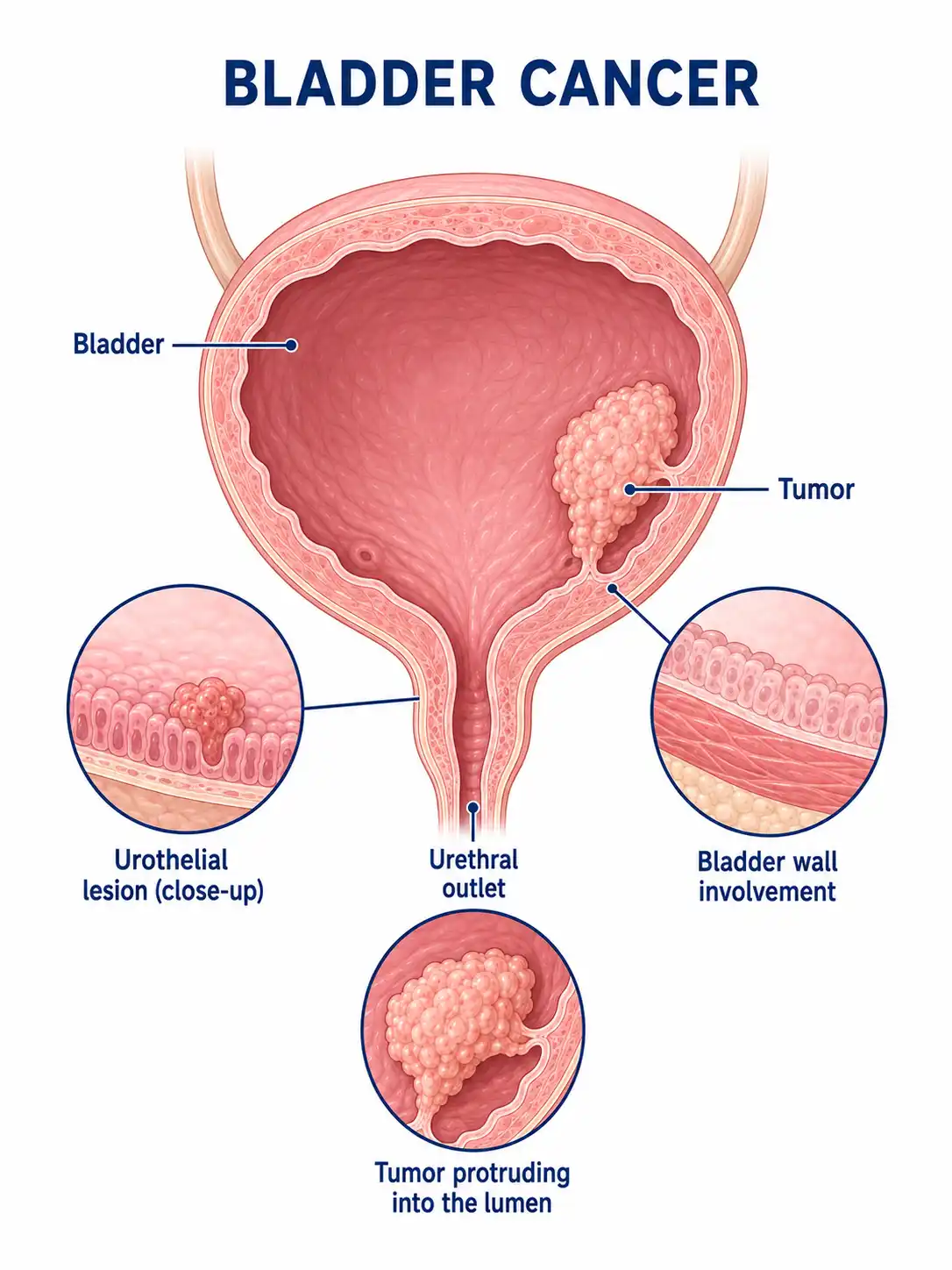
Global overview of bladder cancer
Bladder cancer ranks high among malignant tumors globally. The incidence rate in men is approximately 3–4 times that in women, and the disease is closely linked to smoking and occupational exposure.The incidence of bladder cancer in my country is rising year by year.
Consult a doctor regarding cancer-related issues
Individuals presenting with symptoms such as painless gross hematuria, urinary frequency, urgency, dysuria, or lower abdominal discomfort—particularly those with a history of long-term smoking or occupational exposure to chemical substances—should promptly consult a urologist.
Main types of bladder cancer
1. Urothelial carcinoma
It is the most common type of bladder cancer, accounting for over 90% of cases; it originates from the transitional epithelium of the bladder and is classified into papillary and invasive types.
2. Squamous cell carcinoma
Accounts for approximately 2%–5% of bladder cancers; it is associated with chronic bladder irritation, such as that caused by bladder stones or indwelling catheters, and carries a poorer prognosis than urothelial carcinoma.
3. Adenocarcinoma types
Accounts for approximately 1%–2% of bladder cancer cases; includes primary adenocarcinoma and urachal adenocarcinoma. It is relatively rare and carries a poor prognosis.
4. Carcinoma in situ
A flat, high-grade tumor confined to the mucosal layer is classified as non-muscle-invasive carcinoma; however, it is highly malignant and prone to progression.
5. Small-cell carcinoma
Extremely rare; it is highly malignant, grows rapidly, metastasizes early, and requires aggressive multimodal therapy.
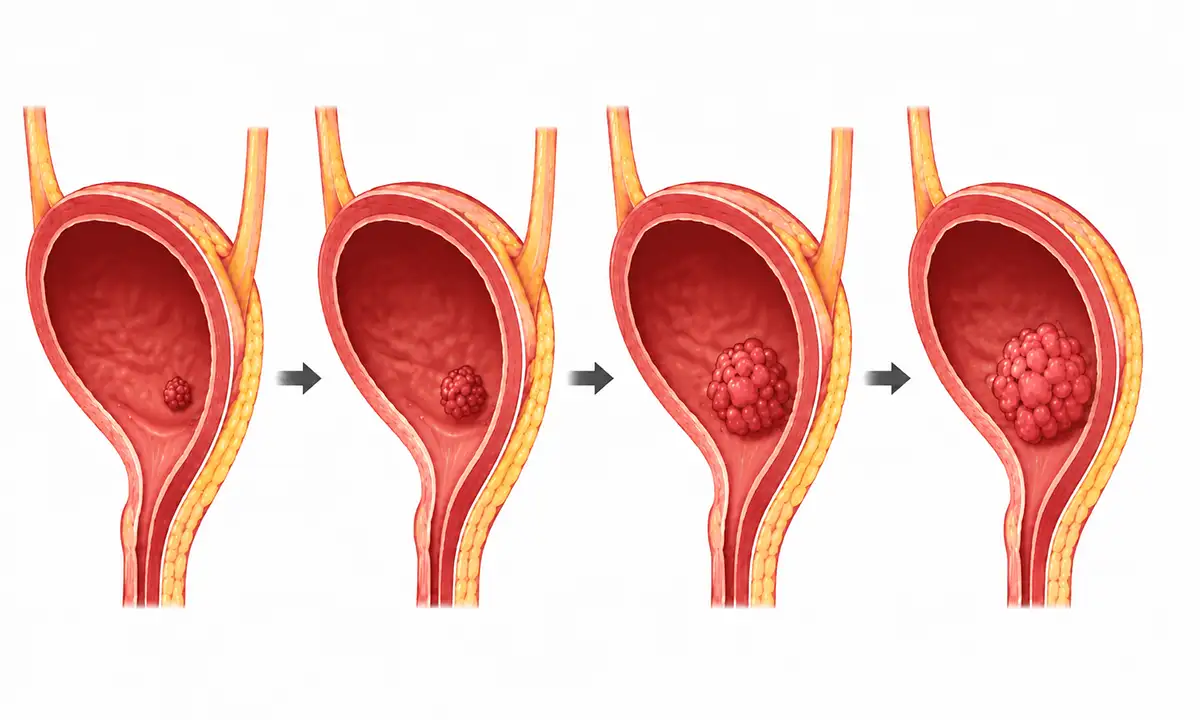
Typical symptoms and signs of bladder cancer
1. Painless hematuria
Intermittent, painless gross hematuria is the most typical symptom of bladder cancer; it may present as total hematuria (throughout the urinary stream) or terminal hematuria (at the end of urination).As the bleeding can stop spontaneously, patients often delay seeking medical attention.
2. Bladder irritation symptoms
Symptoms of bladder irritation—such as urinary frequency, urgency, and dysuria—occur; this is particularly relevant for patients with carcinoma in situ, where symptoms persist despite ineffective pharmacological treatment.
3. Dysuria (difficulty urinating)
When the tumor is located at the bladder neck or the internal urethral orifice, it can cause difficulty in urination, a narrowed urinary stream, or even urinary retention.
4. Lower abdominal pain
Persistent lower abdominal or pelvic pain occurs when the tumor invades the deep layers of the bladder or surrounding tissues.
5. Lumbar pain
Aching pain in the lumbar region occurs when the tumor invades the ureteral orifice, causing upper urinary tract obstruction and hydronephrosis.
6. Systemic symptoms
Patients in the advanced stage exhibit systemic symptoms such as weight loss, anemia, and bone pain, suggesting possible distant metastasis.
Diagnostic methods for bladder cancer
1. Cystoscopy
Cystoscopy is the gold standard for diagnosing bladder cancer; it allows for direct observation of the tumor's location, size, shape, and number, and enables biopsies to obtain a pathological diagnosis.
2. Urine cytology
Urinary exfoliative cytology detects cancer cells in the urine and offers high sensitivity for diagnosing high-grade tumors and carcinoma in situ.
3. Urinary tract ultrasound
Ultrasound can detect space-occupying lesions within the bladder and assess tumor size as well as the presence of hydronephrosis; it is a commonly used screening method.
4. Contrast-enhanced CT or MRI
Contrast-enhanced pelvic CT or MRI can assess the depth of tumor invasion into the bladder wall, as well as lymph node and distant organ metastases.
5. Fluorescence in situ hybridization (FISH)
FISH testing for chromosomal abnormalities in exfoliated urinary cells serves as an adjunct tool for diagnosing bladder cancer and monitoring for postoperative recurrence.
6. Chest CT scan
Chest CT is used to rule out pulmonary metastasis and is an essential component of routine preoperative staging examinations.
Bladder Cancer Treatment Methods
1. Transurethral resection
Transurethral resection of bladder tumor (TURBT) is the primary method for diagnosing and treating non-muscle-invasive bladder cancer, involving the resection of the tumor and acquisition of pathological specimens via the urethra.
2. Intravesical instillation therapy
Postoperative intravesical instillation of chemotherapy drugs or BCG can reduce recurrence rates; BCG instillation is the standard adjuvant therapy for high-risk non-muscle-invasive bladder cancer.
3. Radical cystectomy
The standard surgical procedure for muscle-invasive bladder cancer, involving the removal of the bladder and surrounding tissues, accompanied by pelvic lymph node dissection.
4. Urinary diversion
Urinary diversion is required following cystectomy (bladder removal); options include ileal conduit, orthotopic neobladder, and cutaneous ureterostomy.
5. Chemotherapy
Gemcitabine combined with cisplatin is the standard chemotherapy regimen for muscle-invasive and metastatic bladder cancer.
6. Immunotherapy
PD-1/PD-L1 inhibitors are used as second-line therapy for advanced bladder cancer, and some patients achieve durable disease control.
7.Bladder-sparing therapy
For patients with a strong desire for bladder preservation, a comprehensive treatment regimen combining transurethral resection with chemoradiotherapy may be considered.
8. Follow-up monitoring
Regular postoperative cystoscopy and urinary cytology are required to monitor for recurrence; long-term follow-up is crucial.
Conclusion
Bladder cancer is a common malignancy of the urinary system, and painless gross hematuria is its most characteristic symptom.Early detection, standardized treatment, and long-term follow-up help improve patient prognosis and quality of life.


