


Bladder cancer is the 10th most common malignancy worldwide.The incidence rate in men is three to four times higher than in women.Smoking is the primary risk factor.Approximately 75% of cases are diagnosed as non-muscle-invasive bladder cancer, which carries a relatively favorable prognosis, while 25% are muscle-invasive, carrying a poorer prognosis.
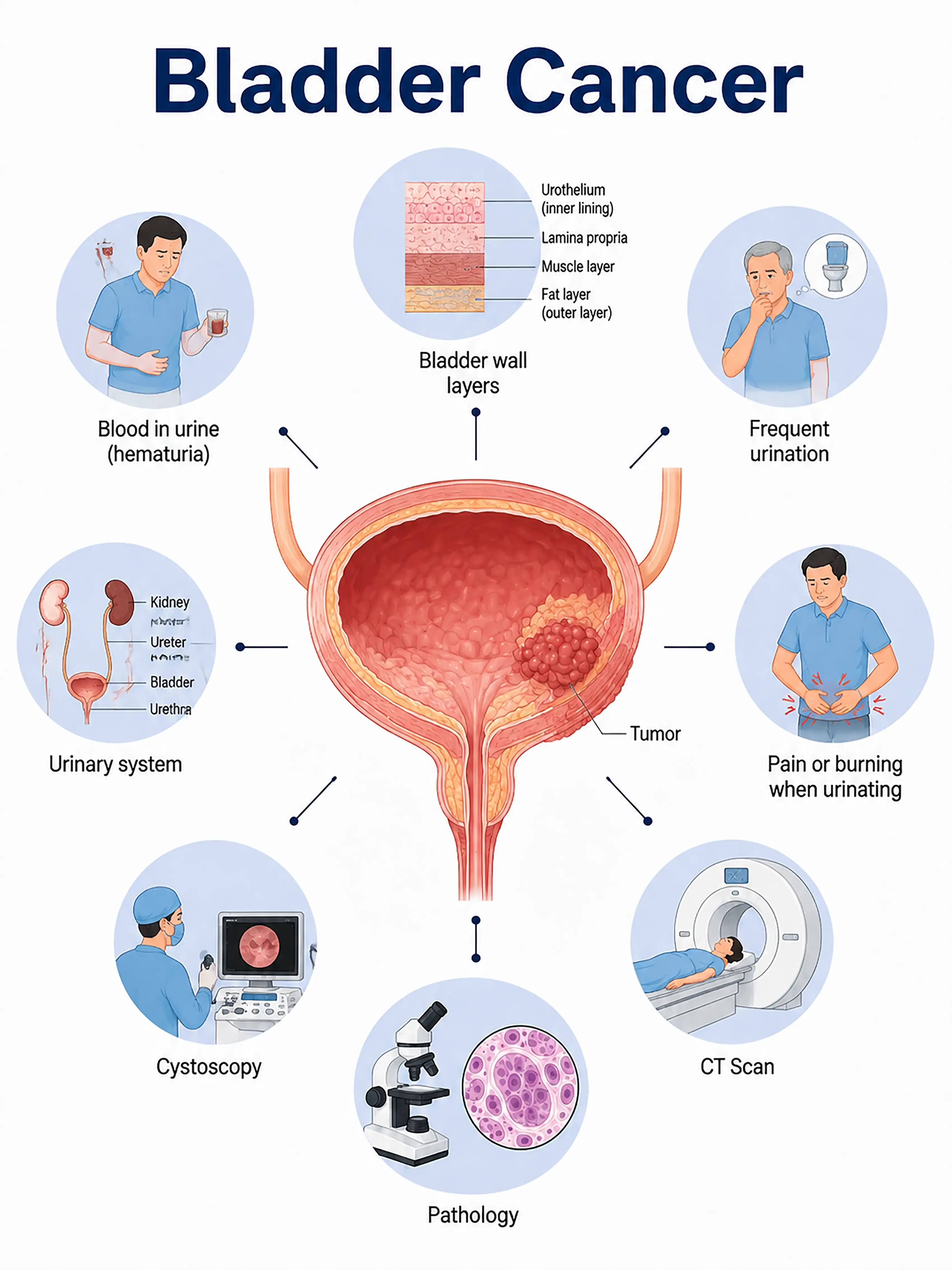
Bladder Cancer Staging and Diagnosis
1.Early diagnosis of bladder cancer
The tumor is confined to the mucosal layer (Ta or Tis) and presents with painless hematuria.Cystoscopy reveals papillary or flat lesions; urine cytology is positive; diagnosis is confirmed via biopsy.
2.Diagnosis of intermediate-stage bladder cancer
Tumor invasion of the muscularis (T2) leads to urinary frequency and urgency.Contrast-enhanced CT is used to assess tumor extent and lymph node metastasis, while diagnostic TURBT is performed to obtain tissue samples.
3.Diagnosis of advanced bladder cancer
Tumor invasion of surrounding organs or distant metastasis to the lungs, bones, and liver.Whole-body CT and bone scans assess the extent of metastasis, while needle biopsy confirms the pathology.
If bladder cancer is not diagnosed in time, muscle-invasive tumors can progress and metastasize to distant sites, potentially requiring total bladder removal and severely impacting quality of life.
When to Seek Medical Attention
Early signs of bladder cancer include painless visible blood in the urine (hematuria), urinary frequency and urgency, and difficulty urinating.Please consult a doctor via the "Chat with a Doctor" feature to facilitate early detection.During the online consultation, the doctor will ask about your symptoms and smoking history, and guide you through a cystoscopy.
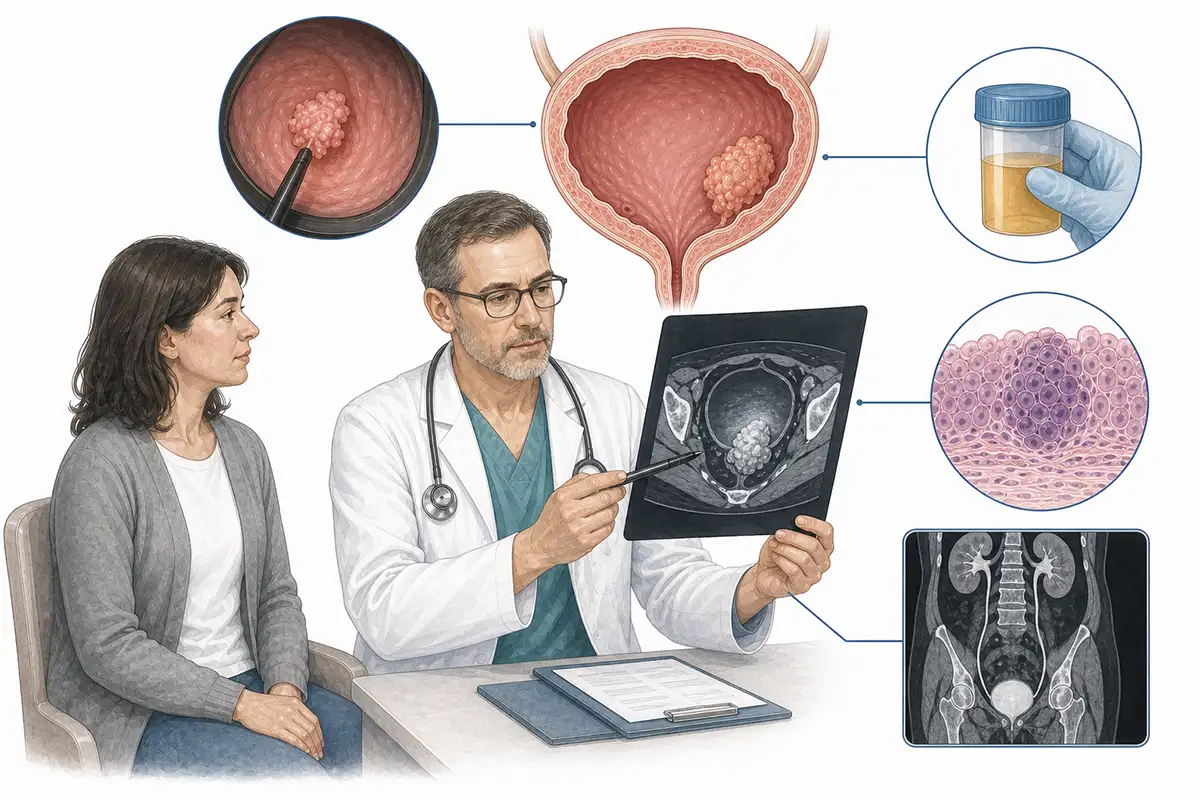
Basis for bladder cancer diagnosis
1.Cystoscopy
Cystoscopy is the gold standard for diagnosing bladder cancer; it allows for direct observation of the tumor's location, size, shape, and number, as well as the performance of biopsies or TURBT procedures.
2.Urine cytology
Microscopic examination of exfoliated cancer cells in urine shows high sensitivity for high-grade tumors and carcinoma in situ, serving as an important tool for auxiliary diagnosis and postoperative follow-up.
3.Diagnostic TURBT
Transurethral resection of bladder tumor (TURBT) serves as both a diagnostic and therapeutic procedure, allowing for the acquisition of tissue samples to determine the pathological type, grade, and stage.
4.Pelvic CT/MRI
Contrast-enhanced CT and MRI assess the depth of tumor invasion into the bladder wall, involvement of surrounding tissues, and pelvic lymph node metastasis, guiding treatment plans for muscle-invasive carcinoma.
5.Urinary tract ultrasound
Ultrasound can detect space-occupying lesions within the bladder and assess tumor size as well as the presence of hydronephrosis; it is a non-invasive initial screening tool.
6.CT urography
CTU allows for a comprehensive assessment of the upper urinary tract (renal pelvis and ureters) for synchronous urothelial carcinoma and is a routine staging examination for muscle-invasive bladder cancer.
7.Fluorescence cystoscopy
Uses photosensitizers (e.g., 5-ALA) to induce red fluorescence in tumor tissue, improving the detection rate of early-stage lesions and carcinoma in situ, and reducing the rate of postoperative recurrence.
8.Tumor marker testing
Detects markers such as urinary NMP22, BTA, and FISH to assist in diagnosis and recurrence monitoring, though it cannot replace cystoscopy.
9.Bone scan
Radionuclide bone scanning assesses the entire skeleton for metastases; it is particularly recommended for patients with advanced disease presenting with bone pain or elevated alkaline phosphatase levels.
Daily Self-Check
Seek immediate medical attention if painless gross hematuria occurs, as this is the most typical symptom of bladder cancer.Smokers should undergo regular urine testing.
Conclusion
Bladder cancer is diagnosed through cystoscopy and biopsy. Painless visible blood in the urine is the most important warning sign;early detection allows for bladder-sparing treatment via minimally invasive surgery.


