


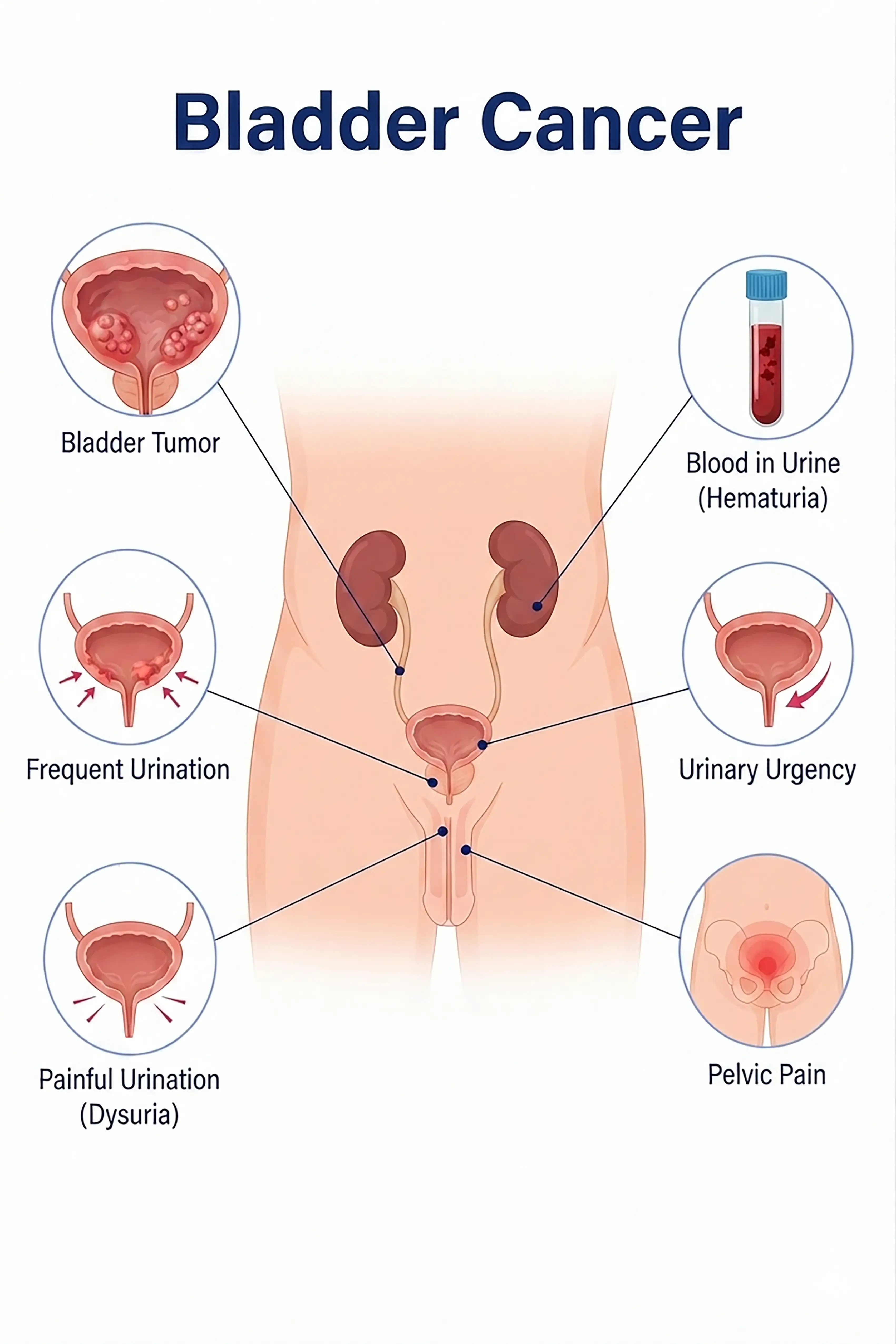
Bladder cancer arises from the malignant transformation of bladder mucosal epithelial cells and is the most common malignancy of the urinary system.Hematuria occurs in approximately 80%–90% of patients, typically manifesting as painless gross hematuria, urinary frequency, urgency, and dysuria.
Global incidence of bladder cancer
Bladder cancer is one of the ten most common malignant tumors worldwide.The incidence rate in men is significantly higher than in women, with a ratio of approximately 3–4:1.The peak age of onset is between 50 and 70 years old.Smoking is the most significant risk factor; approximately 50% of bladder cancer cases are associated with smoking.Occupational exposure to aromatic amines is another major risk factor.About 75% of patients present with non-muscle-invasive bladder cancer at the time of initial diagnosis.
Bladder Cancer Staging and Symptoms
1.Early symptoms of bladder cancer
The tumor is confined to the bladder mucosa. It primarily presents as intermittent, painless gross hematuria; while the bleeding may stop spontaneously, it recurs frequently and is easily mistaken for a urinary tract infection.
2.Symptoms of intermediate-stage bladder cancer
Hematuria worsens and becomes persistent, accompanied by bladder irritation symptoms (frequency, urgency, and dysuria), difficulty urinating, and lower abdominal pain, with blood clots obstructing the urethra.
3.Symptoms of advanced bladder cancer
Tumor invasion of surrounding tissues or distant metastasis results in persistent severe pain, gross hematuria, hydronephrosis due to ureteral obstruction, lower extremity edema, and systemic debility.
When to Seek Medical Attention
Early signs of bladder cancer include painless visible blood in the urine (hematuria), urinary frequency and urgency, and difficulty urinating.Please consult a doctor via the "Chat with a Doctor" feature to facilitate early detection.During the online consultation, the doctor will ask about your smoking history and symptoms, and guide you through necessary tests such as urinalysis and cystoscopy.
Bladder Cancer Staging
Bladder cancer: Stage 0
Cancer cells are confined to the bladder mucosal epithelium; this is classified as carcinoma in situ. It primarily presents with hematuria and is detected via cystoscopy.
Bladder cancer: Stage I
The tumor invades the submucosa but not the muscularis; it primarily presents as intermittent, painless hematuria and represents the most common stage of bladder cancer.
Bladder cancer: Stage II
When the tumor invades the bladder muscle layer, hematuria worsens, and symptoms of bladder irritation and difficulty urinating appear.
Bladder cancer: Stage III
Tumor penetrates the bladder wall and invades surrounding tissues; symptoms include persistent pain, worsening urinary frequency and urgency, and hematuria with blood clots.
Bladder cancer: Stage IV
The tumor metastasizes to the bones, lungs, and liver, presenting with persistent severe pain, cachexia, and multi-organ failure.

Detailed Symptoms of Bladder Cancer
1.Presence of painless hematuria
Intermittent, painless gross hematuria is the most typical symptom of bladder cancer. The urine may appear "meat-wash" colored (pinkish-red) or bright red; while the bleeding may stop on its own, it tends to recur.Total hematuria suggests the lesion is located within the bladder.
2.Urinary frequency and urgency
Tumor irritation of the bladder wall or concurrent infection leads to urinary frequency and urgency, characterized by a marked increase in voiding frequency, reduced urine volume per void, and a sensation of incomplete emptying.
3.Difficulty urinating
When the tumor is located at the bladder neck or the internal urethral orifice, it causes difficulty in urination, a narrowed urinary stream, or interrupted urination; blockage by blood clots can lead to acute urinary retention.
4.Painful/burning urination
When the tumor is complicated by infection or invades the muscular layer, painful urination and a burning sensation in the urethra occur; symptoms resemble those of cystitis but are recurrent.
5.Lower abdominal pain
Persistent dull or aching pain in the lower abdomen occurs when the tumor invades the deep layers of the bladder or surrounding tissues; pain intensifies in the advanced stage.
6.Lumbar aching/distension present
Tumor invasion of the ureteral orifice leads to ureteral obstruction and hydronephrosis, resulting in aching pain in the lumbar region on the affected side and impaired renal function.
7.Rapid weight loss
Due to tumor-induced wasting and reduced food intake, patients in the advanced stage experience significant weight loss over a short period, accompanied by fatigue and anemia.
8.Lower extremity edema
Tumor metastasis to pelvic lymph nodes compresses lymphatic vessels or obstructs venous return, causing lower-extremity edema, which is most pronounced in the distal lower limbs.
9Bone pain and cough present
Tumor metastasis to bones causes localized bone pain and pathological fractures; lung metastasis leads to cough, hemoptysis, and dyspnea.
Conclusion
Painless gross hematuria is the most important warning sign of bladder cancer; medical attention should be sought immediately upon its appearance.Smoking cessation and the avoidance of occupational exposures are key preventive measures.Early-stage bladder cancer has a favorable prognosis, but the recurrence rate is high, necessitating long-term follow-up.


