


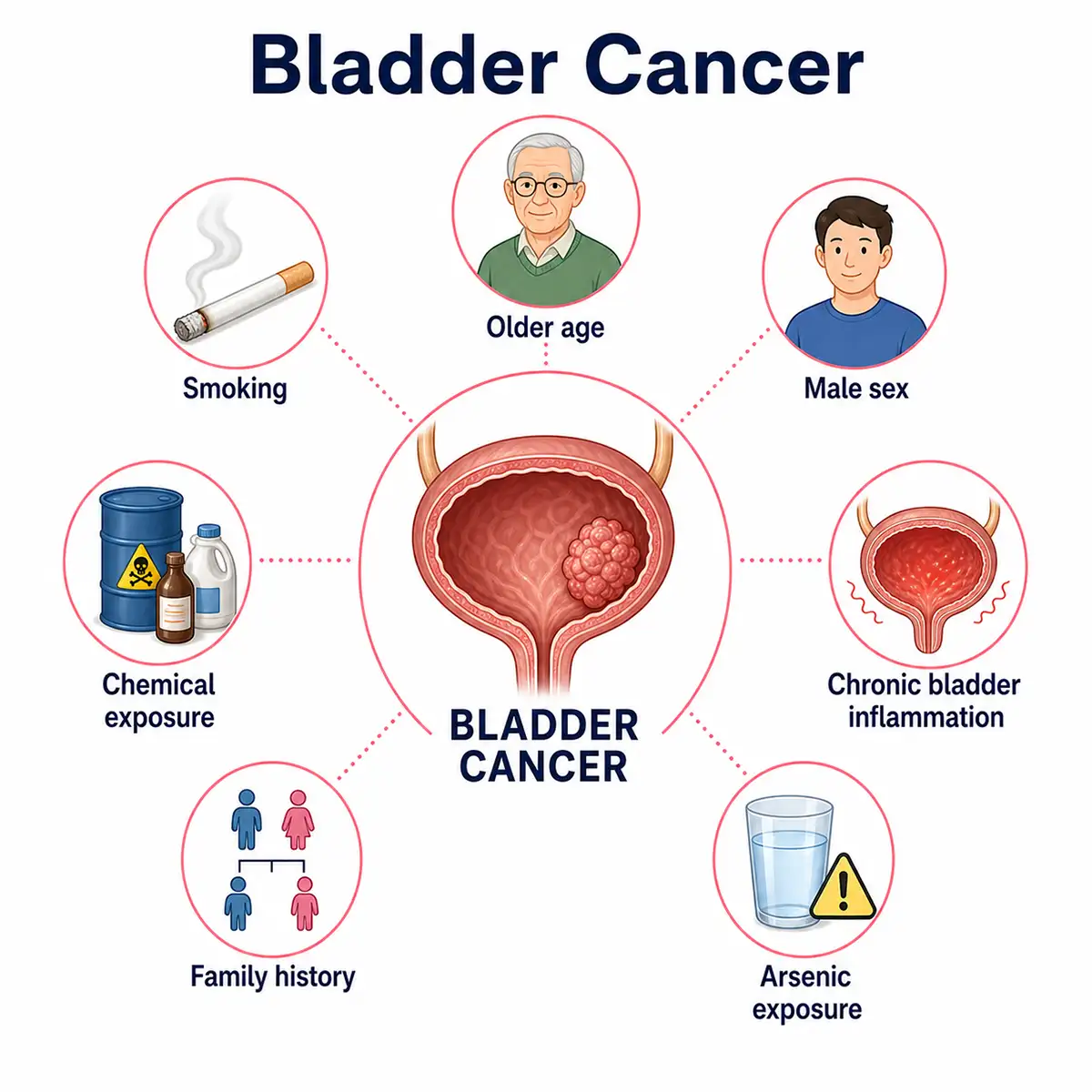
1. Smoking factor
Smoking is the primary risk factor for bladder cancer; more than 70 carcinogens in tobacco irritate the bladder mucosa as they are excreted in urine, and smokers face a risk two to four times higher than non-smokers.
2. Occupational exposure
Workers in the dye, rubber, and leather industries with long-term exposure to aromatic amines such as benzidine face a four- to twenty-five-fold increase in disease risk; these are significant occupational carcinogens.
3. Chronic infection
Recurrent bacterial cystitis and *Schistosoma* infection cause chronic mucosal inflammation, which can progress to squamous cell carcinoma; this is particularly common in regions where *Schistosoma haematobium* is endemic.
4. Genetic factors
Approximately 5%–10% of bladder cancers are linked to genetic susceptibility; individuals with a family history of tumors face a significantly increased risk of developing the disease.
5. Chemical drugs
Metabolites of chemotherapy drugs such as cyclophosphamide exhibit bladder toxicity; long-term use can increase the risk of developing bladder cancer.
6. Drinking water factors
Long-term consumption of drinking water with excessive arsenic levels increases the risk of bladder cancer; water source contamination in certain regions is linked to higher incidence rates.
7. Age and gender
Bladder cancer is most common in men over the age of fifty; the incidence rate in men is three to four times that in women, and the risk increases with age.
Conclusion
Bladder cancer is caused by the combined effects of various factors, such as smoking and occupational exposure; it is a common and serious malignant tumor of the urinary system.Quitting smoking, implementing occupational safety measures, and undergoing regular medical check-ups are crucial for early detection and timely intervention.


