


Global disease prevalence: Astrocytoma is a common primary brain tumor worldwide; it affects both children and adults, with high-grade types generally having a relatively poor prognosis.
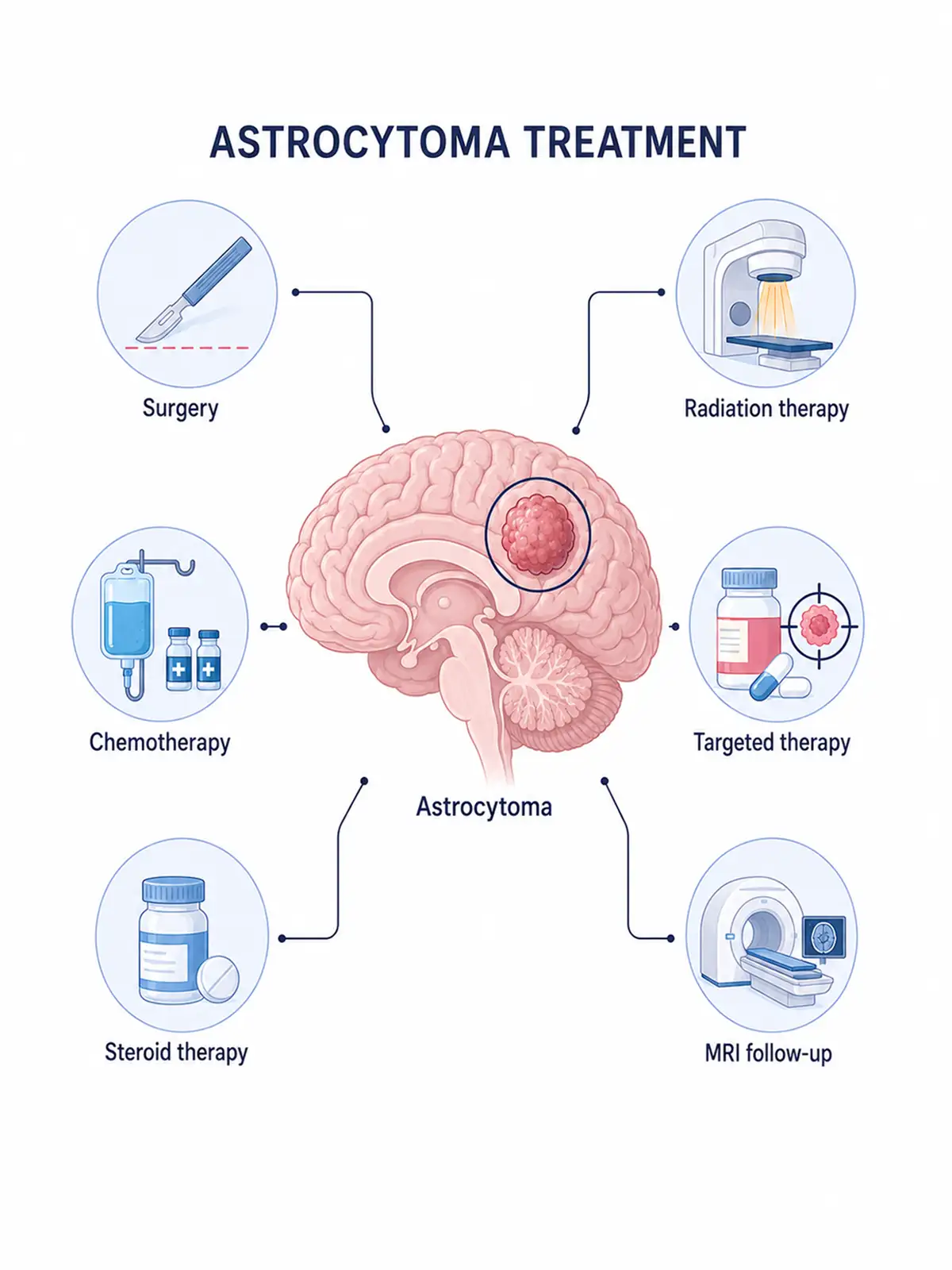
Treatment based on astrocytoma stage
Early treatment (involving a localized, small tumor with a favorable response)
specifically surgical resection combined with adjuvant therapy—can effectively control tumor progression, and the patient's prognosis is relatively good.
Treatment for the intermediate stage (involving local spread; aiming to inhibit growth and delay progression)
employs a comprehensive approach—such as surgery combined with radiotherapy and chemotherapy—to control further tumor spread and slow the rate of disease deterioration.
Treatment for advanced disease (distant metastasis; aimed at symptom relief and survival prolongation)
primarily employs systemic therapies such as chemoradiotherapy, targeted therapy, and others to alleviate clinical symptoms and extend patient survival as much as possible.
Why choose Fosun Health for astrocytoma treatment
Leveraging the neurosurgery, M6 CyberKnife, VitalBeam, imaging, and molecular pathology platforms of its affiliated hospitals, Fosun Health facilitates multidisciplinary consultations involving experts in neurosurgery, radiotherapy, medical imaging, pathology, medical oncology, and rehabilitation.Based on WHO grading, tumor location, and biomarkers such as IDH, MGMT, and BRAF, the team plans appropriate interventions, including maximal safe resection, adjuvant radiotherapy, and pharmacological treatment.
Neuronavigation and microsurgery facilitate tumor resection while preserving critical brain regions involved in speech and motor functions; precision radiotherapy optimizes radiation dosage to the surgical cavity, residual lesions, and areas at risk of infiltration, thereby minimizing exposure to normal brain tissue and reducing the risk of adverse effects on neurological and cognitive functions.Post-treatment care may include epilepsy management, control of cerebral edema, functional rehabilitation, and MRI follow-up.
Astrocytoma treatment methods
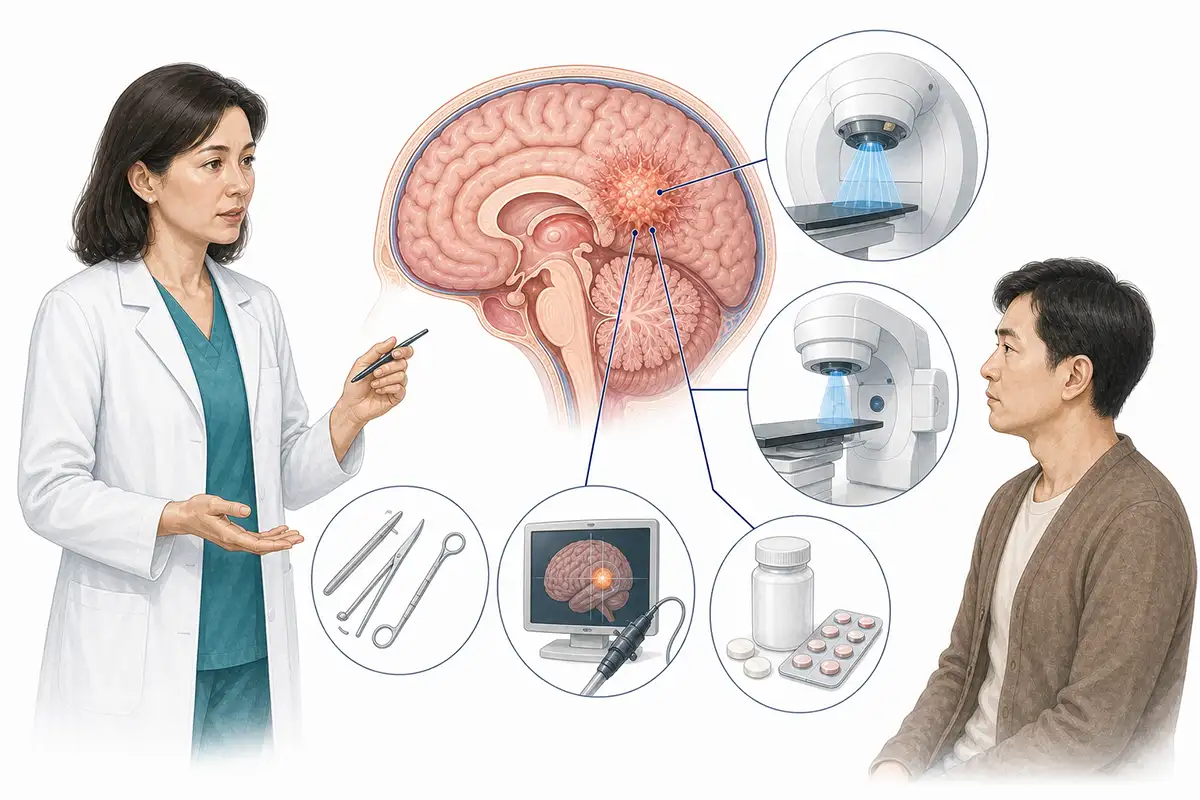
1.M6 CyberKnife treatment
Indicated for astrocytoma lesions assessed by MDT as small-volume nodular residual or localized recurrent disease, or cases suitable for safe re-irradiation following prior radiotherapy.
Treatment advantages:
① Targeting recurrent nodules: Suitable for select small lesions with clear imaging boundaries.
② Protect normal brain tissue: Reduce radiation dose to functional areas, the brainstem, and visual pathways.
③ Hypofractionated treatment: Reduces the number of sessions for re-treatment.
④ Limited applicability: Cannot replace standard fractionated radiotherapy for diffuse lesions.
2.VitalBeam precision radiotherapy
Involves irradiating the surgical cavity, residual tumor, and areas identified by MRI as at risk for infiltration; indicated for high-grade, postoperatively residual, or unresectable astrocytomas.
Treatment advantages:
① Covers areas at risk of infiltration: Addresses visible lesions and surrounding high-risk brain tissue.
② Protect neurological function: Reduce radiation dose to normal brain tissue and critical functional areas.
③ Tailored to grading: Determines the dose based on WHO grading and the extent of resection.
④ Facilitates combination chemotherapy: Can be integrated with drug therapies guided by molecular subtyping.
3.Microsurgical maximal safe resection
Utilizes neuronavigation, intraoperative monitoring, or microsurgical techniques to excise the tumor as completely as possible while preserving critical nerve function.
4.Chemotherapy
Uses anticancer drugs such as temozolomide to kill cancer cells and effectively control the rate of tumor progression; commonly used for patients with high-grade astrocytoma.
5.Targeted therapy
Precision targeting of specific targets such as IDH mutations offers good efficacy and relatively mild side effects, making it suitable for patients with specific gene mutations.
6.Tumor Treating Fields (TTFields) therapy
Utilizes low-intensity electric fields to disrupt cancer cell division and proliferation, offering a new adjuvant treatment option for patients with high-grade astrocytoma.
Post-treatment care
Maintain a regular daily routine and a balanced diet; avoid strenuous exercise; attend scheduled follow-up appointments and actively cooperate with subsequent treatment as advised.
Post-treatment examinations
Periodic cranial MRI, tumor marker testing, and neurological function assessments are required after treatment to timely detect changes in the disease status.
Conclusion
Astrocytomas pose a serious threat; the key to treatment lies in early detection, diagnosis, and intervention. Selecting an appropriate treatment plan and adhering to follow-up care helps improve quality of life.


