


1. IDH mutation
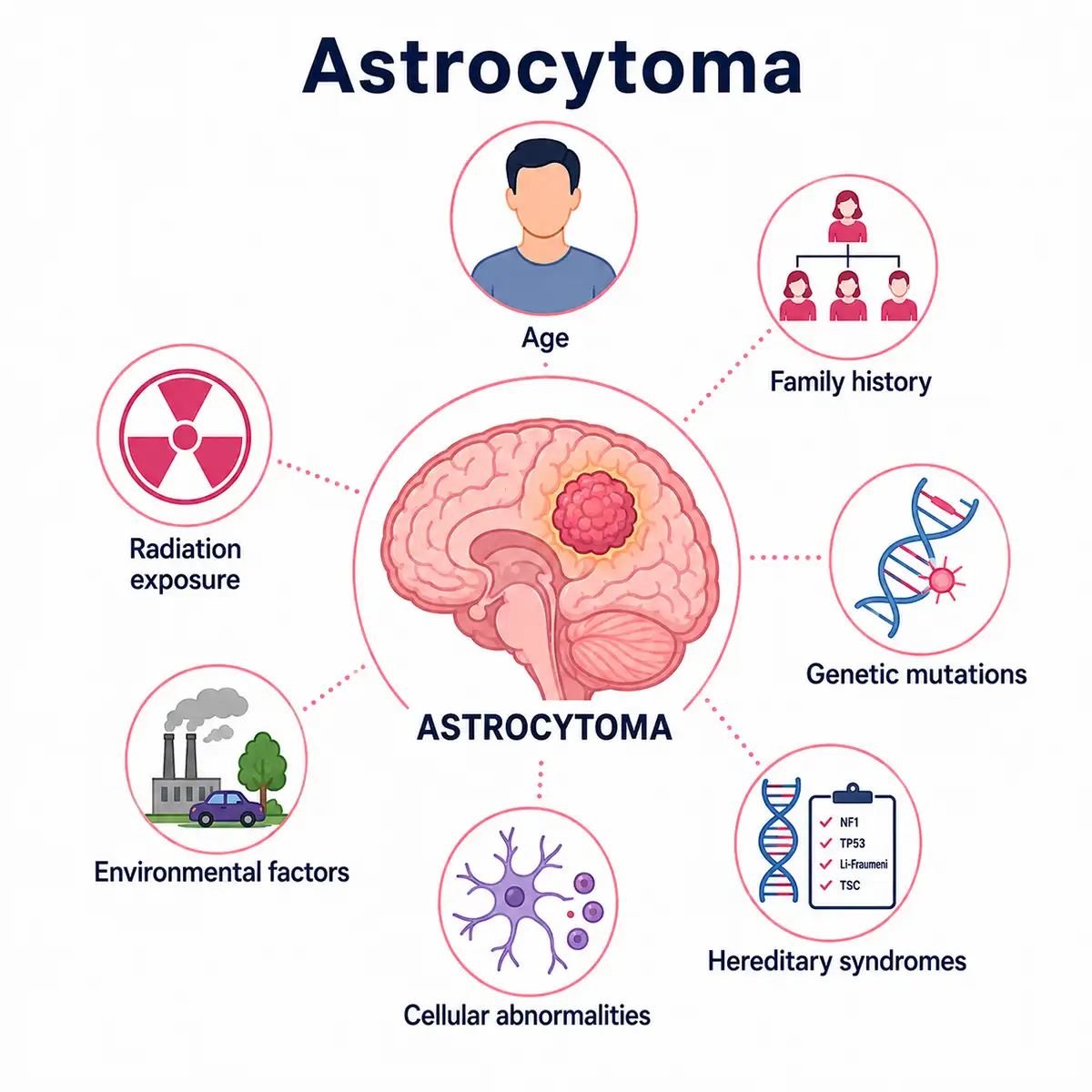
Mutations in the IDH1 and IDH2 genes are characteristic molecular alterations in low-grade astrocytomas, leading to the abnormal accumulation of metabolites and promoting tumor growth.
2. TP53 mutation
Mutations in the *TP53* tumor suppressor gene result in the loss of DNA damage repair capabilities in cells, playing a crucial role in the development and progression of astrocytomas.
3. Ionizing radiation
Exposure of the head to high doses of ionizing radiation is the only established environmental risk factor that increases the risk of developing astrocytoma.
4. Genetic factors
Genetic disorders such as Li-Fraumeni syndrome and neurofibromatosis are associated with the development of astrocytomas; family history is a significant risk factor.
5. ATRX mutation
ATRX gene mutations affect chromatin remodeling and telomere maintenance and frequently co-occur with IDH and TP53 mutations in astrocytomas.
6. BRAF mutation
BRAF gene mutations are common in pilocytic astrocytomas; they lead to the sustained activation of cell growth signaling, resulting in slow tumor growth.
7. Age factors
Low-grade astrocytomas are more common in young adults, whereas high-grade glioblastomas typically occur in middle-aged and elderly populations; age is a significant factor.
Conclusion
Astrocytoma is caused by a combination of factors, including IDH gene mutations and ionizing radiation;it is the most common type of glioma and poses serious health risks.Seek medical attention promptly if symptoms such as headaches or seizures occur to ensure early detection and timely intervention, thereby improving prognosis.


