


Astrocytoma is a tumor resulting from the malignant transformation of astrocytes and belongs to the broader category of gliomas. Symptoms vary based on tumor location and growth rate, with common manifestations including headaches, seizures, and neurological deficits.
Global prevalence of astrocytoma
Astrocytomas are the most common type of glioma and can occur in the brain and spinal cord.They are classified by the WHO into grades I through IV, with grade IV being glioblastoma.Low-grade astrocytomas grow slowly, whereas high-grade ones progress rapidly.Pilocytic astrocytomas are more common in children, while high-grade tumors predominate in adults.
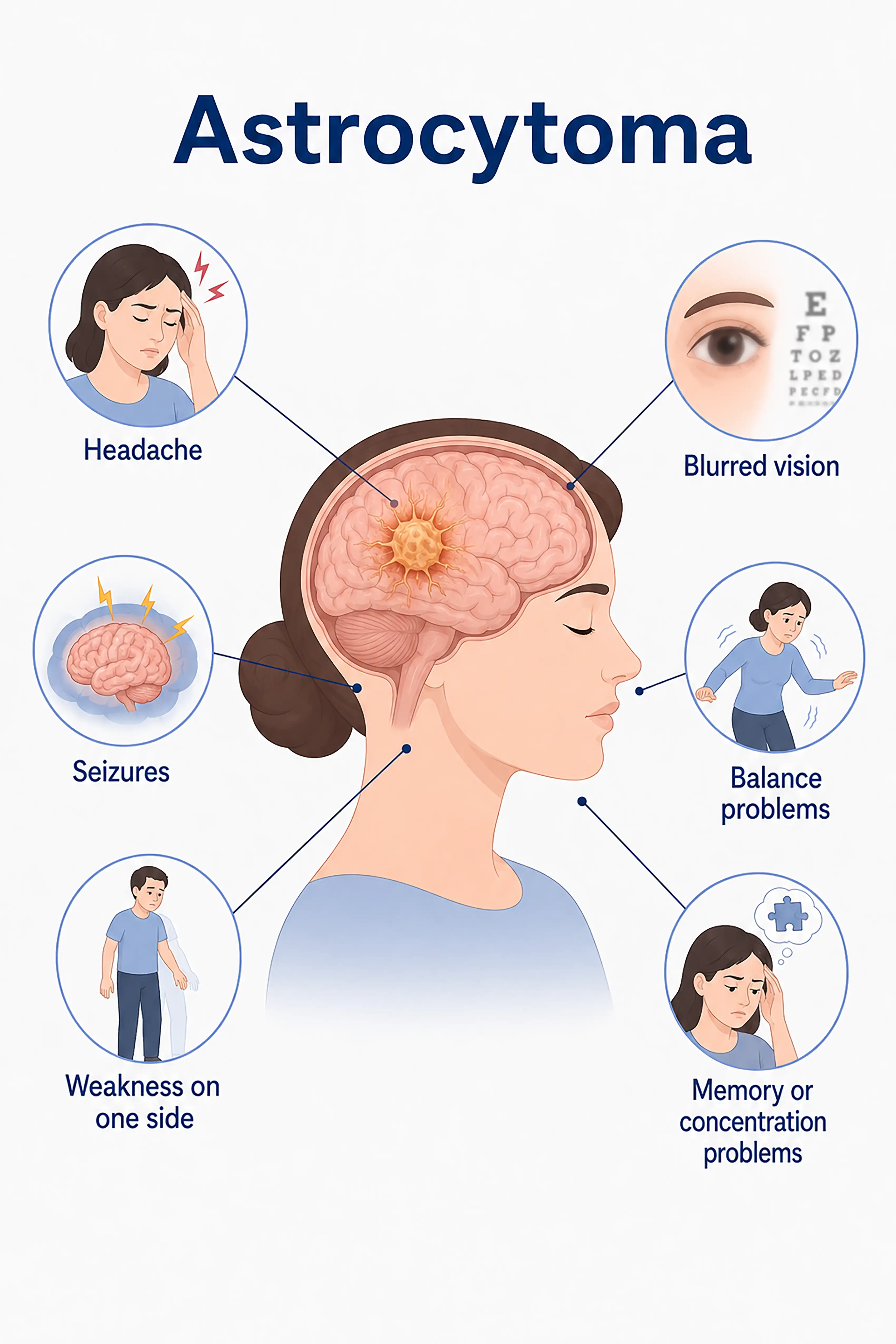
Symptoms associated with astrocytoma stages
1.Early symptoms of astrocytoma
Low-grade tumors may only trigger symptoms once they have grown significantly; manifestations such as mild headaches, subtle changes in thought processes or mood, difficulty finding words, or clumsiness on one side of the body are easily overlooked.
2.Intermediate-stage astrocytoma symptoms
Worsening headache (especially in the morning or upon coughing), nausea and vomiting, persistent weakness, speech or visual disturbances, cognitive decline, and impaired balance.
3.Advanced astrocytoma symptoms
Extensive tumor invasion causing severely elevated intracranial pressure, deep coma, multiple cranial nerve deficits, and brain herniation crisis, presenting with generalized paralysis and vital sign instability.
When to Seek Medical Attention
Early signs of astrocytoma include new-onset seizures, persistent headaches, speech difficulties, and limb weakness.Please consult a doctor via the "Chat with a Doctor" feature for early detection.During the online consultation, the doctor will ask about your symptoms and disease progression, and guide you through the process of obtaining a cranial MRI.
Staging of astrocytoma
Astrocytoma, Stage 0
This staging system is not applicable to astrocytomas.Astrocytomas are graded using the WHO grading system (Grades I–IV) based on cellular atypia, proliferative activity, and molecular characteristics.
Astrocytoma (Grade I)
WHO Grade I (e.g., pilocytic type); a benign, slow-growing tumor with well-defined margins and mild symptoms; prognosis is favorable following complete surgical resection.
Astrocytoma, Stage II
WHO Grade II; low-grade malignancy; infiltrative growth; may present with seizures and focal neurological deficits; carries a risk of recurrence and progression.
Astrocytoma, Stage III
WHO Grade III (anaplastic); characterized by active cell proliferation and rapidly progressive symptoms, including marked intracranial hypertension and neurological deficits.
Astrocytoma (Grade IV)
WHO Grade IV (glioblastoma); highest degree of malignancy; rapid growth; severe symptoms; median survival is approximately 15 months.
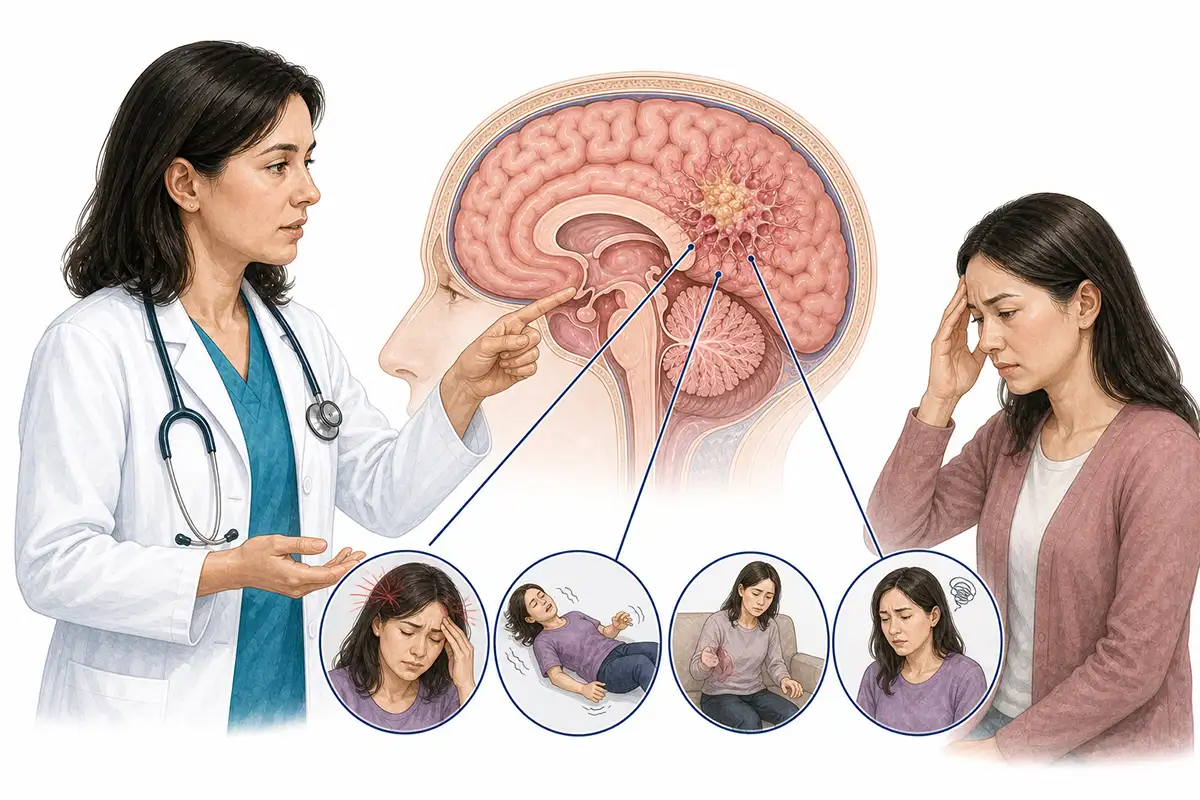
Detailed description of astrocytoma symptoms
1.Headache worsening in the morning
Increased intracranial pressure causes persistent headache that is pronounced in the morning and worsens with coughing or exertion; it responds poorly to ordinary painkillers and is the most common symptom of brain tumors.
2.Epileptic seizures
New-onset epilepsy is an initial symptom of slow-growing tumors; tumor irritation of brain tissue triggers focal or generalized seizures, which may manifest as limb convulsions or loss of consciousness.
3.Decline in cognition and memory
Subtle changes in cognition, mood, and memory—manifesting as impaired attention, memory loss, and diminished judgment—affect daily work and life.
4.Limb weakness/numbness
Compression of the motor cortex and conduction tracts by the tumor leads to reduced muscle strength, numbness, or tingling on one side of the body; severe cases may progress to hemiplegia.
5.Speech impairment
Difficulty finding the right words when speaking, as well as expressive or receptive language impairments, are associated with tumor involvement of the language centers.
6.Significant visual changes
Tumor compression of the visual pathways causes blurred vision, diplopia, or visual field defects; brainstem tumors can cause ocular motility issues.
7.Poor balance and coordination
Cerebellar tumor causing impaired balance, a staggering gait, ataxia, and intention tremor, affecting walking stability.
8.Personality and mood changes
Frontal lobe tumors cause personality changes, mood swings, irritability, or apathy; family members are often the first to notice these changes.
9.Frequent nausea and vomiting
Elevated intracranial pressure stimulates the vomiting center, causing projectile vomiting; this is often accompanied by headache, which may temporarily subside after vomiting.
Conclusion
Symptoms of astrocytoma depend on the tumor's location, size, and grade.Early detection and treatment are crucial for improving prognosis; surgical resection is the primary treatment, while molecular testing can guide personalized therapy.


