


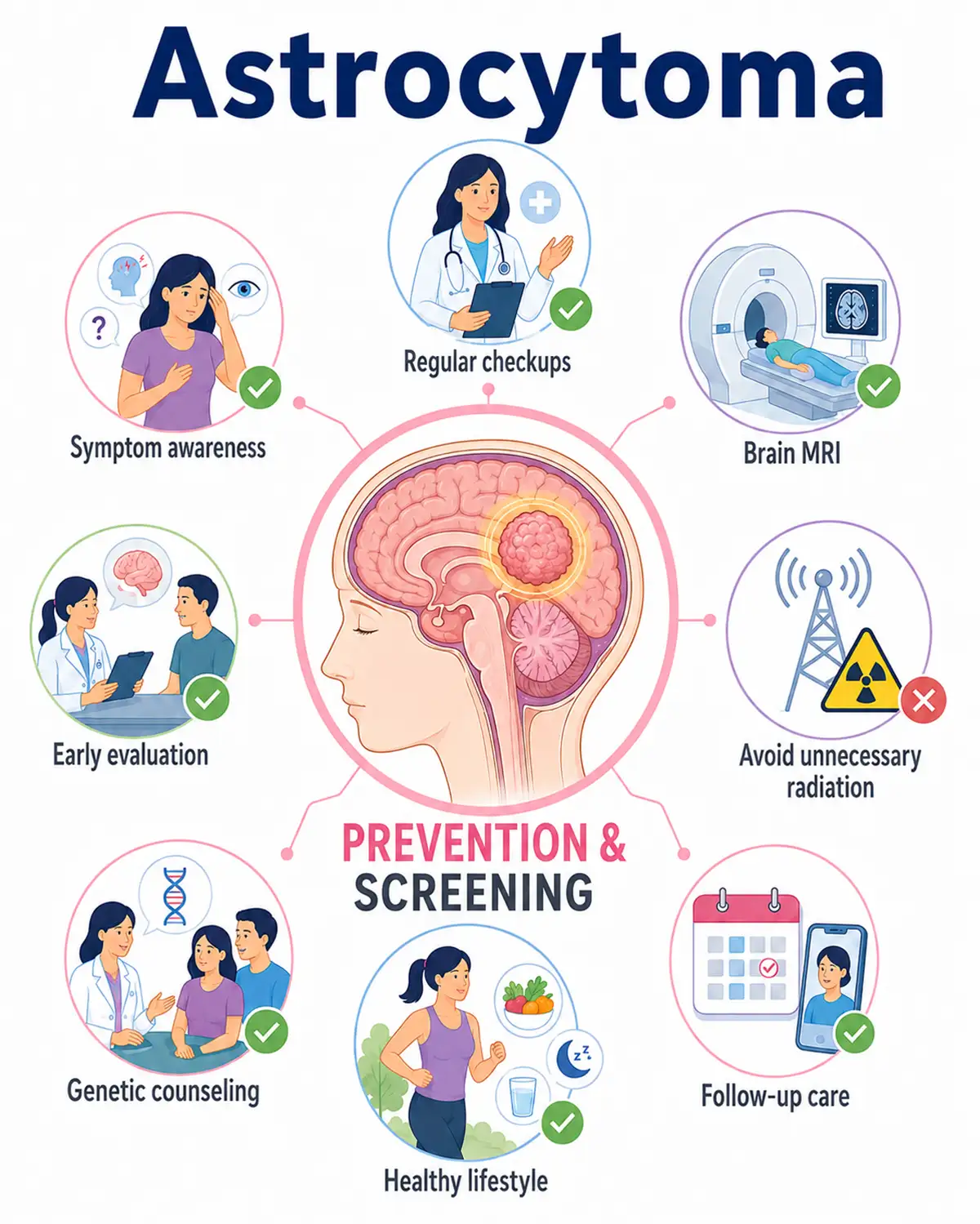
1. Avoidance of radiation
Minimize exposure to ionizing radiation in the head and neck region; radiotherapy should be avoided, particularly during childhood, as radiation is a known causative factor for astrocytomas.
2. Genetic screening
Individuals with a family history of Li-Fraumeni syndrome or tuberous sclerosis should undergo genetic counseling; these genetic conditions significantly increase the risk of astrocytoma.
3. Healthy diet
Increase the intake of vegetables, fruits, and whole grains, while reducing processed meats and high-fat foods; antioxidants can protect cells and reduce DNA damage.
4. Smoking and alcohol cessation
Smoking and excessive alcohol consumption increase the risk of cancer; carcinogens in tobacco can damage the nervous system. Quitting these unhealthy habits reduces the risk of developing the disease.
5. Regular exercise
Moderate exercise boosts immunity and improves cerebral blood flow, helping to maintain nervous system health and reduce levels of chronic inflammation.
6. Adequate sleep
Ensuring seven to eight hours of high-quality sleep daily helps the brain clear metabolic waste and repair cellular damage, thereby reducing the risk of tumors.
7. Regular imaging
Individuals with hereditary high-risk factors should undergo regular cranial MRI examinations; early detection of suspicious intracranial lesions allows for timely evaluation and management.
Conclusion
Astrocytoma is caused by a combination of factors, including genetic mutations and radiation exposure;it is the most common type of glioma and poses serious health risks. Avoiding radiation, being aware of genetic risks, and undergoing regular imaging examinations are crucial for early detection and timely intervention.


