


Prevalence worldwide
Thyroid cancer is a malignancy with rapidly increasing incidence worldwide. It is more common in women, and most types have a relatively favorable prognosis.
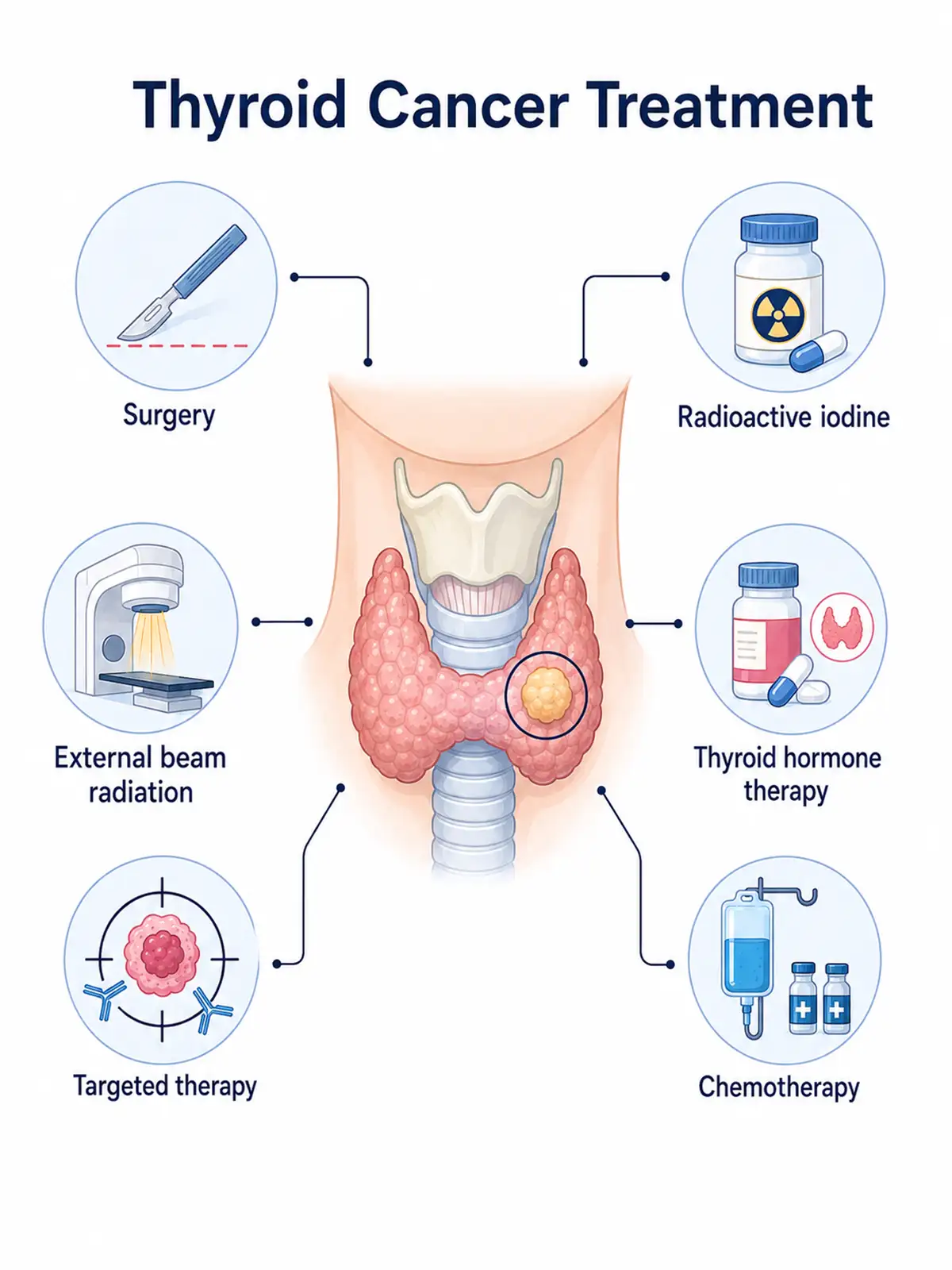
Thyroid cancer treatment by stage
Early treatment (involving a localized, small tumor with a favorable response)
specifically surgical resection combined with adjuvant therapy—can effectively control tumor progression, and the patient's prognosis is relatively good.
Advanced-stage treatment (distant metastasis, symptom relief, prolonged survival)
Systemic treatments such as targeted therapy and chemotherapy relieve clinical symptoms and extend survival as much as possible.
Consequences of failing to receive timely treatment in the early stage: If standardized treatment is not administered promptly in the early stage, the tumor will continue to grow and spread/metastasize to surrounding tissues and distant organs, resulting in a missed opportunity for optimal intervention and a worsening of the condition.
Why choose Fosun Health for thyroid cancer treatment
Fosun Health draws on its hospitals' thyroid surgery, pathology, nuclear medicine, ultrasound intervention, VitalBeam, and molecular testing platforms for multidisciplinary consultations involving surgery, endocrinology, nuclear medicine, radiotherapy, imaging, and medical oncology specialists. The team first distinguishes differentiated, medullary, and anaplastic thyroid cancers, then develops plans based on risk stratification and molecular markers.
Meticulous surgery and image-guided ablation help reduce effects on the recurrent laryngeal nerve, parathyroid glands, trachea, and esophagus. In selected patients, precision radiotherapy minimizes exposure of the larynx, spinal cord, and normal neck tissues, reducing some treatment-related adverse effects. Fosun Health provides continuous management from surgery, radioactive iodine, or targeted therapy to monitoring voice, calcium, thyroid function, and recurrence.
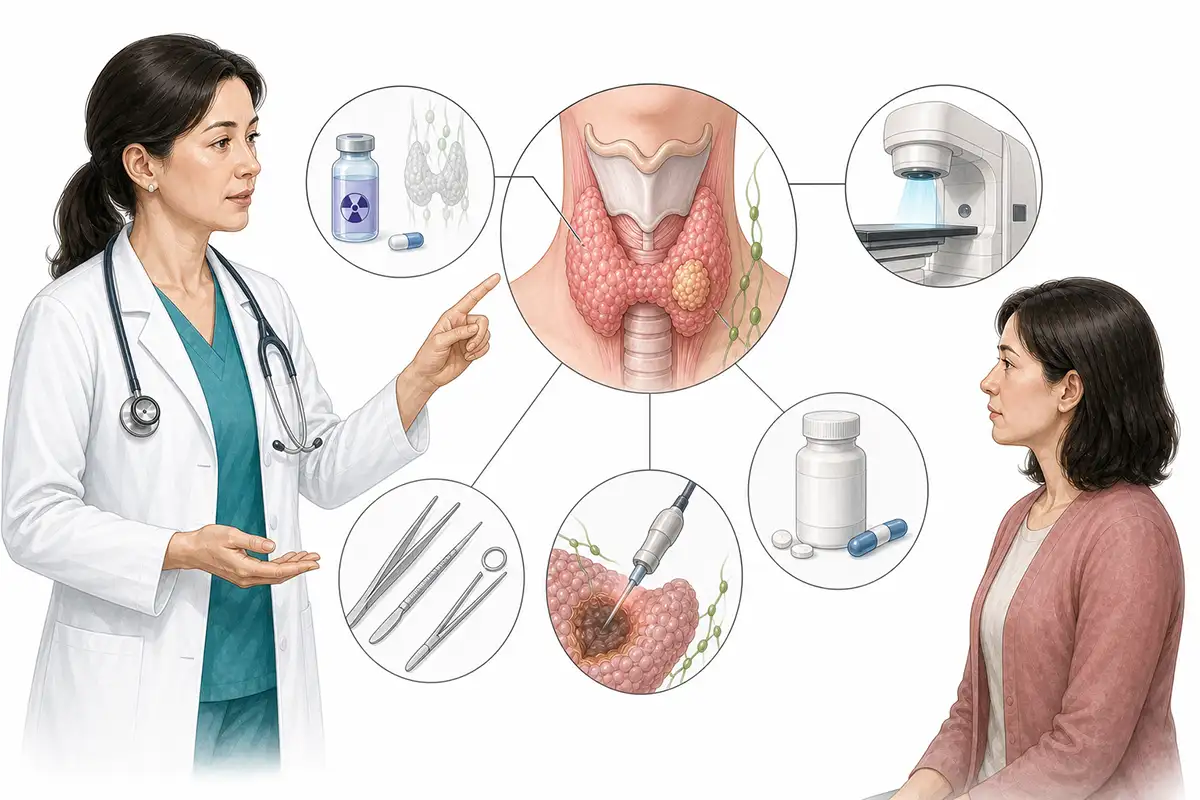
Thyroid cancer treatment methods
1.VitalBeam precision radiotherapy
Suitable for unresectable locally advanced disease, postoperative residual disease, radioactive iodine-refractory local recurrence, or symptomatic metastases in sites such as bone or brain.
Treatment advantages:
①Covers complex neck targets: Adapts to recurrent lesions close to the trachea and esophagus.
②Protects critical organs: Reduces doses to the spinal cord, larynx, trachea, and esophagus.
③Controls symptomatic metastases: Provides local treatment for bone pain, brain metastases, and similar conditions.
④Flexible combinations: Can be coordinated with surgery, radioactive iodine, or targeted therapy.
2.Radioactive iodine therapy
Uses iodine uptake by differentiated thyroid cancer cells to treat postoperative residual tissue or iodine-avid metastases.
Treatment advantages:
①Biological targeting: Radioactive iodine preferentially accumulates in iodine-avid tumor cells.
②Helps control risk: Suitable for selected intermediate- and high-risk differentiated thyroid cancers.
③Supports whole-body assessment: Nuclear imaging shows the distribution of iodine-avid lesions.
④Clear indications: Not suitable for medullary thyroid cancer.
3.Ultrasound-guided radiofrequency or microwave ablation
Suitable for selected MDT-assessed small low-risk lesions, localized recurrent postoperative lymph nodes, or patients unable to tolerate surgery.
Treatment advantages:
①Real-time imaging guidance: Directly covers localized thyroid or neck lesions.
②Reduces open surgery burden: Offers an option for some older or high-risk patients.
③Protects neck structures: Avoids the recurrent laryngeal nerve, trachea, and esophagus as much as possible.
④Strict selection required: Cannot replace standard surgery for high-risk thyroid cancer.
4.Thyroid cancer surgery
Thyroidectomy and necessary cervical lymph node management are performed according to tumor risk, laterality, and lymph node status.
5.TSH suppression and targeted therapy
Selected according to histological type, iodine uptake, and molecular alterations such as RET, NTRK, and BRAF for long-term postoperative management or progressive lesions.
6.Endocrine therapy
Thyroid hormone suppresses thyroid-stimulating hormone secretion, blocking tumor growth signals to prevent recurrence.
7.Chemotherapy
Anticancer drugs systemically eliminate potential cancer cells and control progression, commonly used for anaplastic thyroid cancer.
8.Ablation therapy
Radiofrequency or microwave thermal energy directly destroys tumor tissue, suitable for small thyroid cancer lesions in patients unable to tolerate surgery.
9.Seed implantation:
Suitable as selective salvage treatment for MDT-assessed unresectable local recurrence with limited external beam radiotherapy options and clearly defined lesion extent.
Follow-up care after treatment
Maintain regular routines and a balanced diet, take thyroid hormone on schedule, attend follow-up appointments as instructed, and cooperate with subsequent treatment.
Post-treatment examinations
Regular thyroid ultrasound, thyroid function tests, and tumor marker testing are needed to detect changes promptly.
Conclusion
The harm of thyroid cancer should not be overlooked. Early detection, diagnosis, and intervention, appropriate treatment, and continued follow-up help improve quality of life.


