


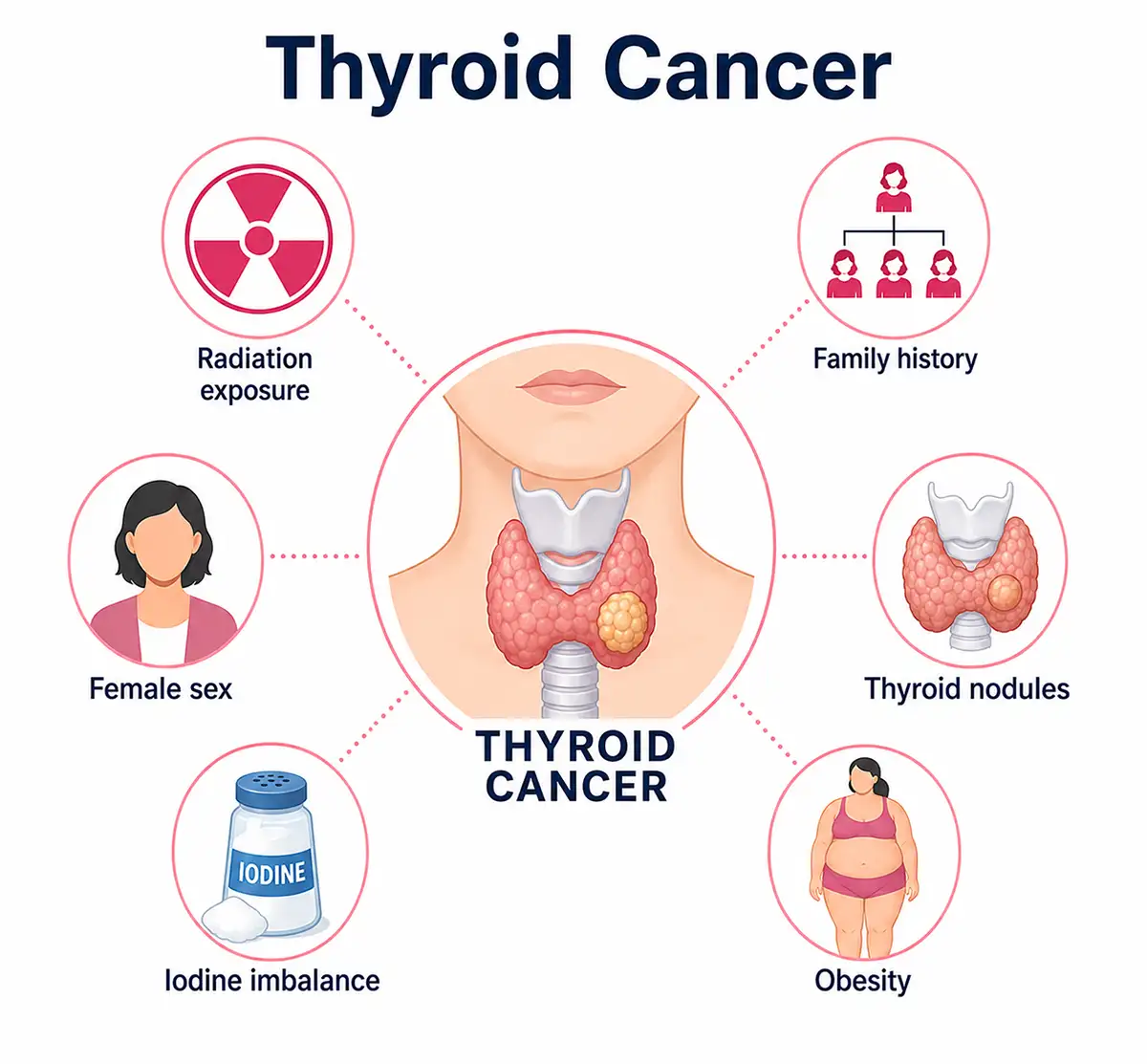
1. Ionizing radiation
Childhood head and neck radiotherapy or radiation exposure is an established cause of thyroid cancer. Radiation can induce genetic mutations in thyroid cells.
2. Abnormal iodine intake
Iodine deficiency is associated with follicular carcinoma, while excess iodine may be associated with increased papillary carcinoma. Maintaining appropriate iodine intake is essential for prevention.
3. Genetic factors
Medullary thyroid cancer has a familial hereditary tendency. BRAF, RAS, and other gene mutations are closely associated with development and progression of papillary and follicular carcinoma.
4. Hormonal factors
Persistently elevated TSH stimulates thyroid cell proliferation. Higher incidence in women suggests estrogen may play a role.
5. Genetic syndromes
Hereditary conditions such as familial adenomatous polyposis and Carney complex increase thyroid cancer risk and require closer screening and monitoring.
6. Obesity-related factors
Obesity increases thyroid cancer risk. Inflammatory factors from adipose tissue and hormonal changes may affect normal thyroid cell growth.
7. Age and gender
Thyroid cancer can occur at any age and is significantly more common in women, at about three to one. Young and middle-aged women have high incidence.
Conclusion
Thyroid cancer results from the combined effects of ionizing radiation, abnormal iodine intake, and other factors. Most types have a favorable prognosis but remain harmful. Avoiding radiation, appropriate iodine supplementation, and regular ultrasound for early detection and timely intervention are essential.


